
Yoga Asanas: A Complete Guide to Yoga Poses for Beginners
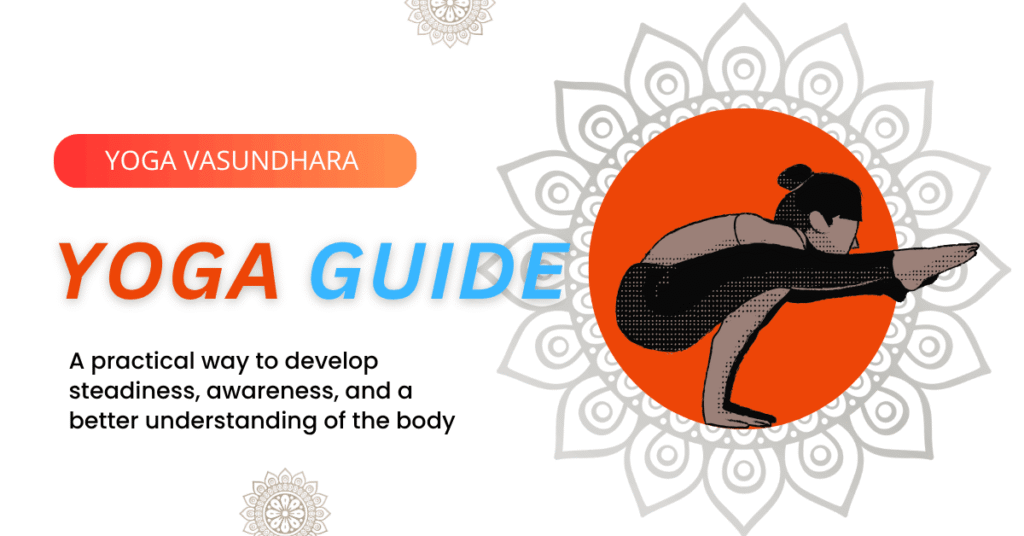
Yoga Asanas are an important part of the yogic path, helping the practitioner develop steadiness, awareness, balance, and a more conscious relationship with the body. Although many people today approach asanas mainly as physical exercises, traditional Yoga views them as more than movements or stretches. A steady posture can become a foundation for deeper awareness, breath regulation, and meditation.
For a beginner, however, the wide variety of Yoga Asanas can sometimes feel confusing. There are standing postures, seated postures, forward bends, backbends, twists, balancing poses, and restorative positions, each with its own method and purpose.
This guide introduces the meaning and different types of Yoga Asanas, explains how beginners can approach their practice, and connects you with detailed Yoga Vasundhara guides for individual postures. The aim is not to force the body into difficult positions, but to develop a steady and mindful approach to Yoga practice.
What Are Yoga Asanas?
The Sanskrit word asana is commonly translated as “posture” or “seat.” In Yoga, an asana refers to a physical posture practiced with awareness and steadiness.
Yoga Asanas are therefore not simply about stretching the muscles or achieving a particular shape with the body. The way a posture is entered, maintained, and released can all become part of the practice. Attention to alignment, breathing, physical sensations, and mental steadiness helps turn the posture into a mindful yogic practice.
In the broader practice of Yoga, asana is closely connected with other aspects such as pranayama and meditation. Contemporary descriptions of Yoga also commonly recognize this combination of physical postures, breathing practices, and meditation, although Yoga has a much broader philosophical and spiritual foundation.
For beginners, the most important principle is not to perform the most advanced posture. A suitable asana is one that can be practiced with reasonable comfort, stability, awareness, and controlled breathing.
As your practice develops, Yoga Asanas can become an opportunity to observe the body and mind more carefully rather than simply trying to make the body more flexible.
Why Are Yoga Asanas Practiced?
Yoga Asanas are practiced to develop steadiness, awareness, balance, and a more conscious connection between the body and mind. Their value is not limited to physical flexibility or strength. With regular and attentive practice, asanas can become a way of preparing the body and mind for deeper yogic practices.
Developing Strength and Stability
Many Yoga Asanas require the practitioner to support, stabilize, or carefully align different parts of the body. Standing and balancing postures, for example, can encourage greater awareness of posture, stability, and controlled movement.
Improving Flexibility and Mobility
Some asanas involve gentle lengthening and movement through different areas of the body. Practiced gradually, they can help develop flexibility and mobility without requiring the practitioner to force the body into a particular position.
For example, Gomukhasana can be explored as part of a practice focused on mobility and flexibility. See our detailed guide to Gomukhasana for its method and practice considerations.
Cultivating Body Awareness
An asana gives the practitioner an opportunity to observe posture, breathing, physical sensations, and muscular effort. This awareness can help make the practice more mindful rather than mechanical.
Even a simple posture such as Tadasana (Mountain Pose) can encourage attention to standing alignment, balance, and the relationship between the body and breath.
Supporting a Steady Mind
Yoga practice is not concerned only with the physical body. Remaining attentive while holding a posture can encourage qualities such as patience, concentration, and steadiness.
This does not mean that every asana needs to be difficult. A simple posture practiced with awareness can be meaningful within a regular yogic discipline.
Preparing for Pranayama and Meditation
Traditionally, physical practice can serve as preparation for subtler practices. Developing greater steadiness and awareness through asana can help a practitioner approach pranayama and meditation with greater attention.
For this reason, Yoga Asanas are best understood as part of a broader yogic discipline rather than as isolated physical exercises.
Different Types of Yoga Asanas
Yoga Asanas can be grouped in different ways according to body position, movement, and purpose. There is no single classification used across every Yoga tradition, so the categories below are intended as a practical way for beginners to understand the wide range of postures.
Standing Asanas
Standing postures are practiced with the feet supporting the body and often involve attention to balance, alignment, and stability. They can also help a beginner become familiar with maintaining awareness while moving or holding a posture.
Tadasana (Mountain Pose) is a simple foundational standing posture, while Virabhadrasana (Warrior Pose) introduces greater physical engagement and stability.
Seated Asanas
Seated postures are performed with the body supported by the floor and are often associated with practices requiring stillness and concentration.
Traditional seated postures such as Sukhasana, Siddhasana, Padmasana, and Vajrasana can be useful to understand in the context of meditation and pranayama. You can explore these postures together in our guide to four sitting positions for meditation and pranayama.
Forward-Bending Asanas
Forward-bending postures generally involve folding the body forward from the hips or creating length through the back while moving into a forward position.
These postures are often approached gradually, with attention to the movement of the spine and the limits of individual flexibility. Paschimottanasana (Seated Forward Bend) is one traditional example.
Backbending Asanas
Backbending postures involve extending the front of the body while creating movement through the spine. They should be approached progressively rather than forced.
Bhujangasana (Cobra Pose) is a well-known example of a gentle backbending posture. For detailed instructions and practice guidance, see our guide to Bhujangasana.
Twisting Asanas
Twisting postures involve rotation of the trunk and can range from gentle seated movements to more demanding variations.
As with other postures, the movement should be controlled and appropriate to the practitioner’s experience and physical ability. Twists should not be forced in an attempt to achieve greater range of motion.
Balancing Asanas
Balancing postures challenge the practitioner to maintain stability while distributing the body’s weight in a controlled way. They can encourage concentration and awareness of body position.
Some balancing postures are relatively accessible to beginners, while others require considerable strength, coordination, and practice. Beginners should progress gradually rather than attempting advanced balances immediately.
Prone Asanas
In prone postures, the abdomen or front of the body faces the floor. These include several postures that involve strengthening, stretching, or extending the back and other areas of the body.
Bhujangasana is one example of a prone asana.
Supine Asanas
Supine postures are practiced while lying on the back. They can include gentle stretches, strengthening movements, twists, and relaxation-oriented positions.
Because the floor provides support, some supine postures can be accessible to beginners, although the suitability of any particular posture depends on the individual.
Relaxation and Restorative Postures
Some Yoga postures are practiced primarily to encourage physical stillness and relaxation after more active practice.
These positions can provide an opportunity to observe the breath and allow the body to settle before concluding a session or moving into practices such as pranayama or meditation.
The categories above can overlap. For example, an asana may be both standing and balancing, or both seated and twisting. The purpose is not to place every posture into one fixed category, but to help beginners understand the different forms that Yoga Asana practice can take.
Inverted postures such as Sarvangasana (Shoulder Stand) offer another example of the variety found within Yoga Asana practice.
Beginner-Friendly Yoga Asanas
Beginners do not need to start with difficult or advanced postures. A balanced practice can begin with simple asanas that develop familiarity with standing, seated, stretching, strengthening, and relaxation.
The right posture for you will depend on your experience, mobility, physical condition, and the way the posture feels during practice. Begin gradually and focus on steady, mindful practice rather than trying to achieve a particular shape.
Tadasana (Mountain Pose)
Tadasana is a simple standing posture that can help a beginner become more aware of standing alignment, balance, and the position of the body. Although the posture appears straightforward, practicing it with attention can introduce important principles of steadiness and awareness.
Read our detailed guide to Tadasana (Mountain Pose) to learn more about its practice and benefits.
Bhujangasana (Cobra Pose)
Bhujangasana is a prone backbending posture in which the practitioner lifts the chest while keeping the lower body grounded. It can be included in a broader Yoga practice involving spinal movement and awareness.
Learn how to practice Bhujangasana (Cobra Pose) correctly, including its practice method and precautions.
Virabhadrasana (Warrior Pose)
Virabhadrasana refers to a family of standing postures that can develop stability, coordination, and physical engagement. The different Warrior variations require progressively different combinations of balance, strength, and mobility.
Explore our guide to Virabhadrasana (Warrior Pose) for detailed guidance on the different variations.
Gomukhasana (Cow Face Pose)
Gomukhasana is a seated posture that involves positioning the legs and arms in a coordinated way. However, the ultimate pose may be difficult for beginners; instead, they can try simpler versions based on their individual flexibility and comfort.
For detailed instructions and practice guidance, see our guide to Gomukhasana (Cow Face Pose).
Adho Mukha Svanasana (Downward-Facing Dog)
Adho Mukha Svanasana is a familiar posture in many modern Yoga practices. It combines elements of standing support, forward movement, and stretching while the hands and feet remain grounded.
Beginners should learn the posture progressively and avoid forcing the shoulders, hamstrings, or spine into a position that feels uncomfortable. For detailed instructions on how to practice this posture, see our guide to Adho Mukha Svanasana (Downward-Facing Dog).
Seated Postures for Meditation and Pranayama
There are certain seated postures which are used for meditation and pranayama. Sukhasana, Siddhasana, Padmasana, and Vajrasana are among the seated postures discussed in our guide to four sitting positions for meditation and pranayama.
How to Begin Practicing Yoga Asanas
Starting Yoga Asanas does not require immediately learning advanced postures. For a beginner, the foundation is regular practice, appropriate preparation, steady breathing, and awareness of the body’s signals.
Prepare the Body
Begin with a few minutes of gentle movement to help the body transition into practice. Simple joint movements or Sukshma Vyayam can be useful as preparation before moving into more demanding postures.
Avoid beginning with a difficult asana when the body is still stiff or unprepared.
Choose Suitable Asanas
Start with postures that match your current level of experience and physical ability. A beginner may begin with simple standing, seated, or gently stretching postures before gradually exploring more challenging asanas.
There is no need to practice every type of asana in a single session.
Learn the Basic Technique
Before trying to hold a posture for longer, understand how to enter and leave it safely. Pay attention to the position of the feet, hands, spine, shoulders, and other areas involved in the posture.
If you are learning an unfamiliar or more demanding asana, guidance from a qualified Yoga teacher can be valuable.
Coordinate Movement and Breath
Breathing is an important part of mindful Yoga practice. Whenever appropriate, allow the breath to remain steady and natural rather than holding it unnecessarily.
The relationship between movement, posture, and breath can help shift the practice away from simply performing physical shapes and toward greater awareness.
Practice Without Forcing
Flexibility develops gradually. Do not push, bounce, or force the body to reach a position simply because someone else can perform it more deeply.
A sensation of gentle effort or stretching may occur during some postures, but sharp, severe, or persistent pain is a reason to stop and reassess the practice.
Progress Gradually
As your familiarity with Yoga Asanas develops, you can gradually explore different categories of postures and longer or more structured practices.
Progress should be based on steadiness and understanding rather than difficulty alone. A posture that looks simple can still provide valuable practice when performed with attention.
Practice Regularly
A beginner does not need to practice for a long time every day to begin learning Yoga Asanas. What matters more is developing a regular practice that can be maintained comfortably.
Start with a manageable routine and give yourself enough time to become familiar with the postures. As your practice becomes more established, you can gradually adjust the duration and frequency according to your experience, physical condition, and daily routine.
Regular practice can help you become more familiar with the asanas and observe changes in your steadiness, breathing, and awareness over time.
End the Practice Calmly
Allow some time at the end of your practice for the body and breath to settle. A short period of quiet relaxation can help you transition from physical practice toward pranayama, meditation, or normal daily activity.
A consistent practice that respects your present ability is generally more useful than occasionally attempting an intense session.
Yoga Vasundhara Tips for Beginners
Yoga Vasundhara Tips for Beginners
A Simple Beginner Yoga Asana Sequence
A beginner does not need a long or complicated sequence to begin practicing Yoga Asanas. A short practice with a few suitable postures can be enough to become familiar with the body, breath, and basic principles of practice.
A simple session may follow this order:
- Gentle preparation: Begin with a few minutes of Sukshma Vyayam or other comfortable movements to prepare the body.
- Tadasana: Spend some time observing standing alignment, balance, and steadiness.
- Virabhadrasana: Practice a suitable Warrior variation to introduce greater stability and physical engagement.
- Bhujangasana: Include a gentle backbending posture while paying attention to the movement of the spine and breath.
- A comfortable seated posture: Sit in a suitable position such as Sukhasana or Vajrasana and allow the body to become still.
- Quiet relaxation: Finish by giving the body and breath a few moments to settle.
This is only a starting example, not a fixed sequence that every beginner must follow. The choice and order of asanas can vary according to individual ability, experience, and the purpose of the practice. As familiarity develops, additional postures can be introduced gradually.
Which Type of Yoga Should a Beginner Start With?
A beginner may come across different approaches to Yoga, with some practices giving greater emphasis to physical postures, while others place more attention on breathing, meditation, relaxation, or a combination of these.
There is no single approach that is suitable for every student. Your choice may depend on your experience, physical ability, purpose of practice, and the tradition in which you wish to learn Yoga.
If you are new to Yoga Asanas, begin with practices that allow you to understand the basic postures without rushing into demanding sequences. Learning from a knowledgeable Yoga teacher can also help you understand the method of practice and develop a sound foundation.
As your understanding grows, you can explore other aspects of Yoga according to your needs and the tradition you follow.
What Do I Need to Begin Practicing Yoga?
You do not need elaborate equipment to start practicing basic Yoga Asanas. A clean, reasonably quiet space and comfortable clothing are usually enough for simple practices. A suitable mat or stable surface can provide support, while props may be useful for some postures when recommended by a knowledgeable teacher.
More important than having specialised equipment is understanding the postures you intend to practice and giving yourself enough space to move without distraction. For unfamiliar or demanding asanas, appropriate instruction is more important than having additional equipment.
Begin with what is necessary for a simple and steady practice, and allow your understanding to develop gradually through regular practice.
Yoga Asanas, Pranayama and Meditation
Yoga Asanas, Pranayama, and meditation are distinct practices, but they can be understood as complementary aspects of a broader yogic discipline. Asana works primarily with the body and posture, pranayama involves conscious regulation and awareness of the breath, while meditation develops a more sustained quality of inner attention.
For many practitioners, a physical practice can provide a natural transition toward quieter practices. After practicing suitable Yoga Asanas, the body can be allowed to settle before moving into pranayama or meditation.
From Asana to Pranayama
A steady and comfortable posture is important when practicing pranayama. For this reason, learning to sit with reasonable stability and awareness can be a useful part of preparing for breath-based practices.
If you are new to pranayama, you can explore our guide to Anulom Vilom Pranayama to understand this traditional alternate-nostril breathing practice.
Other breathing practices, such as Bhramari Pranayama, can also be explored separately according to one’s experience and appropriate guidance.
You can also learn about Bhastrika Pranayama, and Kapalbhati Pranayama including their practice methods, benefits, and safety precautions.
From Asana to Meditation
Meditation generally requires the practitioner to remain still and attentive for a period of time. Comfortable sitting positions can therefore become an important consideration.
Our guide to four sitting positions for meditation and pranayama explores traditional seated positions including Sukhasana, Siddhasana, Padmasana, and Vajrasana.
Beginners who want to understand how to approach meditation can also read our guide to starting meditation.
A Broader Yogic Practice
Asana need not be viewed as the final goal of Yoga practice. For some practitioners, physical postures become an opportunity to develop steadiness and awareness that can support a gradual movement toward pranayama, meditation, and deeper yogic inquiry.
The appropriate sequence and emphasis will differ according to the individual’s tradition, experience, and purpose of practice. What matters is approaching each practice with awareness rather than treating Yoga as a collection of unrelated physical techniques.
Safety Guidelines for Practicing Yoga Asanas
Yoga Asanas should be practiced with patience and respect for the body’s present ability. A posture does not need to be performed to its deepest expression to be beneficial or meaningful.
Keep the following principles in mind:
- Begin gradually: Start with postures appropriate to your experience and physical ability rather than attempting advanced asanas immediately.
- Do not force a posture: Avoid pushing, bouncing, or using excessive effort to increase flexibility.
- Pay attention to pain: Mild effort or stretching can occur during practice, but sharp or persistent pain should not be ignored. Stop the posture if something feels wrong.
- Learn unfamiliar postures properly: A qualified Yoga teacher can help you understand alignment, technique, modifications, and appropriate progression.
- Use appropriate modifications: Props or simpler variations may make certain postures more accessible when recommended or taught appropriately.
- Consider your individual circumstances: Previous injuries, physical limitations, pregnancy, or medical conditions may affect which postures are suitable.
- Progress with patience: Strength, flexibility, balance, and familiarity with Yoga develop over time. Avoid comparing your practice with another person’s ability.
If you have a medical condition, are recovering from an injury, or are unsure whether a particular posture is appropriate for you, consult an appropriate healthcare professional and, where possible, practice under qualified guidance. NCCIH also recommends learning Yoga from a qualified instructor and taking appropriate precautions when beginning or progressing a practice.
For additional information about the potential benefits and safety considerations of Yoga, readers can refer to the NCCIH guide to Yoga: Effectiveness and Safety.
Frequently Asked Questions About Yoga Asanas
I am just beginning Yoga. Which asanas should I learn first?
My body is not very flexible. Should I wait before starting Yoga?
No, you do not have to become flexible before beginning Yoga. Start with simple postures and practice them gradually. Do not measure your practice by how far another person can bend or stretch. With regular practice, your body can gradually become more familiar with the movements and develop flexibility.
I would like to start Yoga. What should be the ideal practice duration?
Can I start practicing Yoga at home?
Yes, once you have understood the basic method of the postures you are practicing. A quiet and clean place is enough for many simple practices. However, when you are learning an unfamiliar asana, personal guidance from a knowledgeable Yoga teacher can help you understand the posture more clearly and prevent you from developing an incorrect habit.
There are so many asanas. Do I need to learn all of them?
No. Yoga is not a race to collect asanas. A student may benefit more from practicing a few postures with understanding than from moving through many postures without awareness. As your practice matures, you can learn additional asanas according to your needs, capacity, and guidance.
What points should I keep in mind while practicing asanas?
Do not be concerned only with whether the body has reached the final shape of the posture. Observe yourself while you are there. Is the breath comfortable? Is the body steady? Are you using more effort than necessary? Can you remain attentive?
These observations are part of learning Yoga. Gradually, the student begins to understand that an asana is not merely a physical position.
Can Pranayama be practiced along with Yoga Asanas?
Why are Yoga Asanas connected with meditation?
A student may wonder why so much attention is given to the body when the deeper aim of Yoga is inward.
The body needs a certain degree of steadiness if one is to sit quietly for meditation. Asana practice can help the practitioner become more familiar with stillness, bodily awareness, and disciplined attention. But meditation is not simply a matter of sitting after physical exercise. It asks the practitioner to turn attention inward and cultivate a quieter state of awareness.
If I feel pain while doing asanas, should I stop practicing?
When and how will I be able to understand that my body is ready to move on to more difficult asanas?
There is no need to hurry. Your body should become familiar with the simpler Yoga practices before moving on to difficult asanas. When a basic posture becomes steadier and your understanding of the practice grows, you may gradually explore more challenging asanas with suitable guidance.
Final Thoughts
Disclaimer
The information provided in this article is for general educational purposes and is not intended to replace medical advice, diagnosis, or treatment from a qualified healthcare professional.
Yoga Asanas should be practiced according to your individual abilities and circumstances. If you have an injury, health condition, or other physical concern, consult an appropriate healthcare professional and, where needed, a qualified Yoga teacher before beginning or changing your practice.
Stop practicing an asana if it causes pain or discomfort and seek appropriate guidance when necessary.
About the Author
Yogacharya Dhruv Ji is a yoga teacher and practitioner committed to preserving and sharing the authentic wisdom of traditional Yoga and Kriya Yoga. He received his training in Yoga and Kriya Yoga under the guidance of Swami Birajananda Giri Maharaj, a respected spiritual teacher known for his teachings on yogic philosophy, meditation, and the traditional practices of self-realization.