
4 Best Sitting Positions for Meditation and Pranayama
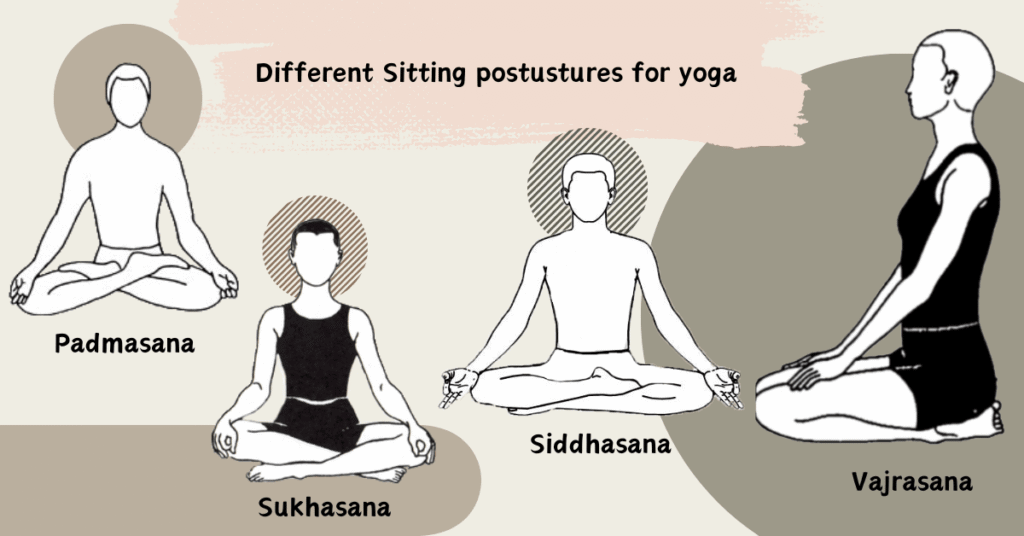
Meditation, pranayama (breathing exercises), and other seated yogic practices can be performed in several positions. Among them, four traditional sitting positions are especially useful: Siddhasana, Sukhasana, Padmasana, and Vajrasana. Each posture offers unique benefits and may suit different practitioners and practices.
Each of these postures offers unique benefits and is suited for different purposes. Here’s a brief overview of four common sitting positions: Siddhasana, Sukhasana, Padmasana, and Vajrasana.
Quick Answer
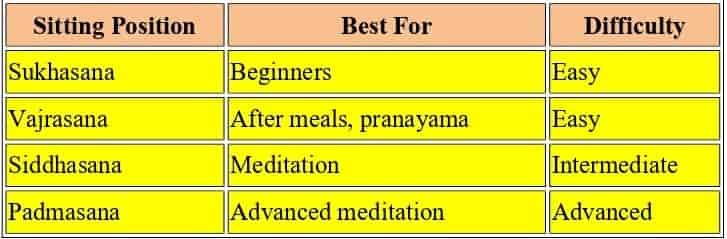
The best sitting position for meditation and pranayama is the one that allows you to keep your spine naturally upright, your body relaxed, and your breathing comfortable. Beginners usually find Sukhasana or Vajrasana easier, while experienced practitioners may prefer Siddhasana or Padmasana for longer meditation sessions.
- Siddhasana
- Sukhasana
- Padmasana
- Vajrasana
How to Choose the Best Sitting Position for Meditation and Pranayama
- If you are a beginner → Sukhasana
- If you have flexibility in your hips → Siddhasana
- If your knees can withstand the pressure of kneeling → Vajrasana
- If you are an experienced practitioner → Padmasana
Siddhasana Pose
Siddhasana, also known as the “Accomplished Pose,” is one of the most revered postures in yoga, especially in the context of meditation and pranayama (breath control). It is considered a powerful pose for spiritual practice and is mentioned in various ancient yogic texts. Here’s an overview of Siddhasana:
Traditional and Scriptural Endorsement
Scriptural Importance: Siddhasana is highly regarded in traditional yogic texts, such as the Hatha Yoga Pradipika and the Gheranda Samhita, for its effectiveness in facilitating deep meditation and pranayama. These texts often describe Siddhasana as one of the most suitable postures for achieving higher states of consciousness.
Why Siddhasana is Ideal for Meditation
Siddhasana provides a stable and comfortable base for meditation and pranayama, helping practitioners maintain an upright posture with minimal movement. This stability reduces physical distractions, making it easier to focus on breath awareness and meditation. Although it may require practice to master, Siddhasana becomes increasingly comfortable over time, allowing for longer and more mindful practice sessions.
Alignment and Posture
- Spinal Alignment: Siddhasana helps in keeping the spine erect, which is essential for maintaining alertness and preventing slouching during meditation or breathing exercises.
- Balanced Posture: The pose promotes a symmetrical alignment of the body, aiding in even distribution of weight and minimizing strain on any particular part of the body.
Benefits of Siddhasana
- Meditative Stability: Siddhasana provides a stable and comfortable seated posture, making it ideal for long periods of meditation and pranayama.
- Nadi Balancing: Siddhasana is believed to balance the body’s energy channels (nadis). Specifically, it helps in harmonizing the Ida and Pingala nadis, which run along either side of the spine, and facilitates the flow of energy through the central channel, the Sushumna nadi.
- Chakra Activation: The pose stimulates the Muladhara (Root) and Svadhisthana (Sacral) chakras, which are the foundational energy centers of the body. This stimulation is thought to help in awakening Kundalini energy, which rises up through the spine.
- Calmness and Concentration: Regular practice helps in calming the mind and improving concentration, essential for deep meditation.
- Pelvic Health: It promotes flexibility and strength in the pelvic region, which can be beneficial for overall health.
Physical Benefits
- Pelvic Health: Siddhasana helps in stretching and strengthening the pelvic muscles, which can improve overall pelvic health and flexibility.
- Hip Flexibility: Regular practice of Siddhasana increases hip flexibility, which can be beneficial for other yoga poses and daily activities.
How to Practice Siddhasana
- Starting Position: Sit on the floor with your legs extended in front of you.
- Leg Placement: Bend the left leg and place the heel against the perineum (the area between the anus and genitals). The sole of the foot should rest against the inner thigh of the right leg.
- Right Leg Placement: Bend the right leg and place the heel against the pubic bone, just above the genitals. The right ankle should be over the left ankle.
- Knees and Hands: Let your knees touch the ground or as close as possible. Rest your hands on your knees in a mudra (gesture) such as Chin Mudra or Jnana Mudra.
- Spine and Head Alignment: Keep your spine erect and head aligned with the spine, ensuring that your body is relaxed but alert.
- Breathing: Breathe deeply and slowly, focusing on your breath to enhance concentration.
🟩 Yoga Vasundhara Tip:
- Flexibility: Beginners might find it challenging to maintain this posture. Gradual practice and flexibility exercises can help.
- Support: Use a cushion or folded blanket under the hips to provide support and comfort.
- Duration: Start with a few minutes and gradually increase the duration as you become more comfortable with the pose.
🟥 Who Should Avoid Siddhasana
- Individuals with severe knee or hip issues should avoid this posture or practice it under the guidance of an experienced yoga teacher.
Siddhasana is a cornerstone of meditative yoga practice, providing a strong foundation for mental and spiritual development. Sitting in Siddhasana (the Accomplished Pose) for specific asanas, particularly for meditation, pranayama (breathing exercises), and other seated yogic practices, offers several benefits. With consistent practice, it can lead to profound inner peace and a deeper connection with the self.
If the flexibility of your lower back—particularly the hips—is limited, meditating in Sukhasana (Easy Pose) might be easier for you.
Sukhasana (Easy Pose)
Sukhasana, commonly known as Easy Pose, is a simple cross-legged sitting posture that is often used for meditation and pranayama practices. The name “Sukhasana” comes from the Sanskrit words “sukha” (meaning ease, comfort, or happiness) and “asana” (meaning pose or posture).
Traditional and Cultural Significance
Sukhasana has been a traditional posture in various cultures, particularly in India, where sitting on the floor in a cross-legged position is a common practice. This pose is frequently seen in depictions of meditators, yogis, and spiritual practitioners, symbolizing peace and calmness.
Physical Benefits of Sukhasana:
- Improves Flexibility: Regular practice enhances flexibility in the hips, knees, and ankles.
- Supports Posture: It encourages an upright spine, which is beneficial for maintaining good posture.
- Relaxes the Body: The pose helps in relaxing the muscles and reducing physical tension.
Mental and Emotional Benefits:
- Calms the Mind: Sukhasana promotes mental tranquility and reduces stress and anxiety.
- Enhances Concentration: The simple and stable nature of the pose helps in focusing the mind and improving concentration.
- Balances Energy: It facilitates a balanced flow of energy throughout the body, promoting a sense of well-being.
How to Perform Sukhasana
- Sit on the floor: Begin by sitting on the floor with your legs stretched out in front of you.
- Cross the legs: Cross your legs at the shins, placing each foot under the opposite knee.
- Adjust the position: Allow your knees to relax towards the floor. If necessary, sit on a folded blanket or cushion to elevate the hips and reduce strain on the knees.
- Place the hands: Rest your hands on your knees, palms facing upward or downward, and form a mudra (hand gesture) of your choice, such as Chin Mudra or Jnana Mudra.
- Maintain an upright spine: Keep your back straight, shoulders relaxed, and gaze gently forward or close your eyes.
🟨 Common Mistakes in Sukhasana
Although Sukhasana (Easy Pose) is simple, incorrect alignment can lead to discomfort and affect your meditation or pranayama practice. Avoid these common mistakes:
- Rounding the Spine
Leaning forward while sitting places unnecessary strain on the back and hinders natural breathing. Sit with your spine naturally straight and your shoulders relaxed. Avoid trying to sit excessively upright. - Forcing the Knees Towards the Floor
Do not push your knees down if your hips are tight. Allow them to relax naturally, and use a folded blanket or cushion under your hips if needed. - Sitting Directly on the Floor Without Support
If sitting upright feels difficult, sitting on a folded blanket, meditation cushion, or yoga block can provide comfort and help maintain proper spinal alignment. - Holding Tension in the Shoulders and Face
Many beginners unknowingly tighten their shoulders, jaw, or facial muscles. Keep the shoulders soft, the jaw relaxed, and the hands resting comfortably on the knees or thighs. - Ignoring Pain or Numbness
Mild stretching sensations are normal, but sharp pain or persistent numbness is not. If discomfort develops, gently adjust your posture or change position instead of forcing yourself to remain still.
🟩 Yoga Vasundhara Tip: Sitting on a cushion: Elevating the hips with a cushion or blanket can make the pose more comfortable, especially for beginners.
Variations of Sukhasana
- Hands in different mudras: Experimenting with various mudras (hand gestures) can enhance the meditative experience.
- Crossing legs differently: Alternating the crossing of legs can help maintain balance and prevent discomfort.
🟥 Precautions and Contraindications
- Avoid if Injured: Individuals with knee, hip, or back injuries should avoid this pose or seek medical advice before attempting it.
- Use Support: Using a cushion or blanket for support can help alleviate discomfort and prevent strain.
Whether you are a beginner or an experienced practitioner, Sukhasana offers a serene and stable foundation for your yoga and meditation journey. It’s simple cross-legged seated position make it a valuable addition to any yoga routine, promoting physical comfort, mental clarity, and emotional well-being. The practitioner sits with legs crossed, knees wide, and each foot tucked beneath the opposite knee. Hands rest on the knees or thighs.
For practitioners accustomed to yoga practice who wish to meditate in a more advanced posture, Padmasana (Lotus Pose)—a well-known meditative posture—can be an ideal choice.
Padmasana (Lotus Pose) for Meditation
Padmasana, commonly known as the Lotus Pose, is a classical and iconic yoga posture that holds significant importance in meditation practices. The name “Padmasana” is derived from the Sanskrit words “padma” (meaning lotus) and “asana” (meaning pose or posture).
Historical and Spiritual Significance
Padmasana has deep roots in ancient Indian traditions, particularly within the context of yoga and meditation. The pose symbolizes purity and enlightenment, much like the lotus flower that rises above murky waters to bloom beautifully. It is often depicted in statues and images of deities and enlightened beings in various spiritual traditions, signifying the connection between the physical and the spiritual.
Benefits of Padmasana
Physical Benefits of Padmasana:
- Improves Flexibility: Regular practice of Padmasana increases the flexibility of the hips, knees, and ankles.
- Enhances Posture: It encourages an upright and aligned spine, which is beneficial for maintaining good posture.
- Stimulates the Spine and Abdomen: The pose helps in improving blood circulation and stimulating the digestive organs.
Mental and Emotional Benefits:
- Calms the Mind: Padmasana is an ideal posture for meditation, promoting mental tranquility and reducing stress.
- Enhances Concentration: The stable and symmetrical nature of the pose helps in focusing the mind and improving concentration.
- Balances Energy: The pose is believed to balance the chakras, particularly Stimulates the Muladhara, Svadhisthana, and Anahata (Heart) chakras.
How to Perform Padmasana
- Sit on the floor: Begin by sitting on the floor with your legs stretched out in front of you.
- Bend the right knee: Place the right foot on the left thigh, with the sole facing upward and the heel close to the abdomen.
- Bend the left knee: Similarly, place the left foot on the right thigh, with the sole facing upward and the heel close to the abdomen.
- Adjust the position: Ensure that both knees touch the ground and the soles of the feet face upward.
- Place the hands: Rest your hands on the knees, palms facing upward, and form a mudra (hand gesture) of your choice, such as Chin Mudra or Jnana Mudra.
- Maintain an upright spine: Keep your back straight, shoulders relaxed, and gaze gently forward or close your eyes.
🟥 Who Should Avoid Padmasana
- Not for Beginners: Padmasana requires a considerable amount of flexibility in the hips and knees. Beginners should practice under the guidance of an experienced yoga instructor.
- Avoid if Injured: Individuals with knee, ankle, or hip injuries should avoid this pose or seek medical advice before attempting it.
Proper warm-up exercises and preparatory poses are essential to prevent strain or injury. Padmasana is not just a physical pose, but a powerful and transformative yoga pose that provides numerous physical, mental and spiritual benefits. Its historical significance and practical benefits make it a must-practice for those seeking physical stability, mental clarity and spiritual growth.
🟩 Yoga Vasundhara Tip: Practice Ardha Padmasana (Half Lotus Pose) before mastering Purna Padmasana (Full Lotus Pose); in this pose, you simply fold one leg and place its foot comfortably on the thigh of the other leg.
Note: Padmasana requires significant flexibility and should be approached cautiously, especially by beginners or those with knee or hip issues.
Although Padmasana (Lotus Pose) is a well-known sitting posture for meditation, some people may find it difficult to sit with their legs crossed; they can choose to kneel while practicing Pranayama or meditation.
Vajrasana (Thunderbolt Pose)
Vajrasana, also known as Thunderbolt Pose or Diamond Pose, is a kneeling yoga posture that is often used for meditation, pranayama (breathing exercises), and digestive health. The name “Vajrasana” comes from the Sanskrit words “vajra” (meaning thunderbolt or diamond) and “asana” (meaning pose or posture).
Historical and Spiritual Significance
Vajrasana holds a special place in yoga and meditation practices due to its simplicity and profound benefits. The pose is named after the vajra, a weapon of the Hindu god Indra, symbolizing strength and indestructibility. It is believed to help practitioners develop a strong and resilient body and mind.
Stability and Comfort
Vajrasana provides a stable and comfortable base for the body, making it ideal for meditation and pranayama practices. The kneeling position helps maintain an upright spine, which is crucial for proper breathing and concentration. This stability ensures that the practitioner can remain in the pose for extended periods without discomfort, allowing for deeper and more focused practice.
Grounding and Centering Effect
Vajrasana has a grounding and centering effect on the practitioner. By sitting close to the ground with the legs folded, the pose creates a sense of stability and connection to the earth. This grounding effect is particularly beneficial for kriyas and pranayama practices that aim to balance the mind and body. It helps practitioners stay present and focused, enhancing the overall effectiveness of their practice.
Physical Benefits of Vajrasana:
Long Sessions benefits of vajrasana: Vajrasana is relatively easy to maintain for long periods compared to more complex poses. This practicality makes it a preferred choice for extended meditation and pranayama sessions, as it minimizes physical distractions and discomfort. Ancient yogis and practitioners recognized the practical benefits of Vajrasana, which is why it is often recommended in traditional texts for various kriyas and pranayama techniques.
- Improves Digestion: Sitting in Vajrasana is known to aid digestion by promoting better blood flow to the stomach and intestines. This makes it an ideal posture for practicing pranayama and kriyas (cleansing techniques) that involve the abdomen, such as Ujjayi breathing. Improved digestion can enhance overall physical health, making the body more receptive to the benefits of yoga and pranayama.
- Supports Proper Breathing: Proper breathing is fundamental to effective pranayama practice. Vajrasana supports proper breathing by keeping the spine aligned and the chest open, allowing for deeper inhalations and exhalations. This posture helps practitioners maintain control over their breath, which is crucial for practices like Ujjayi pranayama, where the breath is consciously regulated to produce a specific sound and rhythm.
- Strengthens the Back and Legs: The posture helps strengthen the muscles of the back, thighs, and legs.
- Relieves Lower Back Pain: It can alleviate lower back pain by promoting proper alignment of the spine.
Mental and Emotional Benefits:
- Calms the Mind: Vajrasana promotes mental tranquility and reduces stress and anxiety.
- Promotes Concentration and Focus: Ancient yoga scriptures recommend Vajrasana for specific kriyas and pranayama practices, such as Ujjayi, because of its ability to promote concentration and focus. The stable and comfortable nature of the pose allows practitioners to maintain a steady posture, which is essential for deep and uninterrupted breathing. This stability enhances the meditative quality of pranayama practices, leading to greater mental clarity and calmness.
- Balances Energy: Vajrasana is believed to facilitate the optimal flow of prana (life force energy) throughout the body. By aligning the spine and providing a balanced base, this posture helps activate and balance the chakras, particularly the root (Muladhara) and solar plexus (Manipura) chakras. This alignment enhances the effectiveness of pranayama practices by ensuring that the energy flows smoothly and efficiently.
How to Perform Vajrasana
- Kneel on the floor: Start by kneeling on the floor with your knees together and your feet slightly apart.
- Sit back on your heels: Gently lower your hips and sit back on your heels, ensuring that your big toes are touching.
- Place the hands: Rest your hands on your thighs, palms facing downward.
- Maintain an upright spine: Keep your back straight, shoulders relaxed, and gaze gently forward or close your eyes.
🟩 Yoga Vasundhara Tip:
- Using a cushion: Placing a cushion or folded blanket between your thighs and calves can provide additional support and comfort.
Variations of Vajrasana
- Ardha Vajrasana (Half Thunderbolt Pose): If full Vajrasana is challenging, you can modify the pose by keeping one leg bent and the other extended.
- Supta Vajrasana (Reclined Thunderbolt Pose): For a deeper stretch, you can lie back while keeping your knees bent in Vajrasana. We will discuss this pose in detail separately.
🟥 Precautions and Contraindications
- Avoid if Injured: Individuals with knee or ankle injuries should avoid this pose or seek medical advice before attempting it.
- Use Support: Using a cushion or blanket for support can help alleviate discomfort and prevent strain.
- Limit Duration: Beginners should start with a short duration and gradually increase the time spent in the pose to avoid discomfort or numbness in the legs.
Is Chair Meditation Possible?
Yes. Although traditional yoga texts often describe meditation in seated postures such as Siddhasana or Padmasana, meditating on a chair is a perfectly acceptable option for many people. The purpose of meditation is to cultivate awareness and inner stillness, not to force the body into an uncomfortable position.
Chair meditation is especially helpful for:
- Older adults with reduced flexibility.
- People with knee, hip, ankle, or lower back discomfort.
- For those who cannot sit on the floor—especially those who have just started practicing—meditating while seated on a chair would be convenient.
- Anyone recovering from an injury, as advised by a healthcare professional.
To practise meditation or pranayama while sitting on a chair:
- Sit on a chair with both feet placing on the floor.
- Keep your spine naturally upright without becoming rigid.
- When you sit in this position, keep your shoulders relaxed and ensure that your head and neck remain in a straight line with your spine.
- hands will be placed comfortably on your knees.
- Breathe slowly and evenly while maintaining a relaxed yet alert posture.
Whether you sit on the floor or on a chair, the most important factors are a stable posture, a comfortable body, and a calm, focused mind.
Frequently Asked Questions
Which sitting position is best for beginners?
Sukhasana (Easy Pose) is generally a simple option for beginners; it is the primary choice of posture for meditation and pranayama. If sitting in cross-legged pose is uncomfortable for you, Vajrasana or chair meditation can also be good alternatives.
Is Padmasana necessary for meditation?
No, padmasana (Lotus Pose) is usually practiced but not essential for meditation practice.
You can meditate effectively in any stable and comfortable position that allows you to maintain an upright spine and relaxed breathing.
How long should I sit in one posture?
Beginners may start with 5 to 10 minutes and gradually increase the duration as their comfort and flexibility improve. The goal is to remain steady without experiencing significant pain or strain.
What should I do if my legs become numb during meditation?
If you are new to meditation, you might find it difficult to sit for a long time; in that case, it is a good idea to gently change your position, stretch your legs, or use a folded blanket or meditation cushion to improve your sitting posture.
Can I practise pranayama while sitting on a chair?
Yes. If sitting on the floor is difficult, you can safely practise most pranayama techniques while sitting on a chair, provided your spine is upright, your feet are firmly placed on the floor, and your breathing remains relaxed and controlled.
Note: The most suitable posture for meditation need not be complex or advanced; rather, the most effective posture is one that allows you to sit naturally for an extended period while keeping your spine straight.
Conclusion
The best sitting position for meditation and pranayama is not necessarily the most advanced one. The right posture is the one that allows you to remain comfortable, steady, and alert while keeping your spine naturally upright and your breathing relaxed.
Beginners can start with Sukhasana or Vajrasana, while practitioners with greater flexibility and experience may explore Siddhasana or Padmasana. There is no need to force the body into a particular posture. Choose a position that suits your current ability and gradually develop your practice with patience and awareness.
About the AuthorYogacharya Dhruv Ji is a Yoga Teacher and practitioner committed to preserving and sharing the authentic wisdom of traditional Yoga and Kriya Yoga. Dhruv Ji received his training in Yoga and Kriya Yoga under the esteemed guidance of Swami Birajananda Giri Maharaj, a revered spiritual teacher known for his deep understanding of yogic philosophy, meditation, and the ancient practices of self-realization. |
Disclaimer
The information provided in this article is for educational and wellness purposes only and is not intended to diagnose, treat, cure, or prevent any disease. This article only inspires you to start Pranayama, meditation or yoga , and it also provides information about it, we do not in any way direct you towards a specific method of yoga & Pranayama practice. We always recommend that people should understand their diseases and disadvantages and take advice of experts. Because you may face many inconveniences due to your physical condition, disease, etc., it is advised that you must take the advice of a doctor and yoga expert before starting. We will not be responsible under any circumstances.