
Shyama Charan Lahiri (Lahiri Mahasaya): Life, Kriya Yoga & Teachings
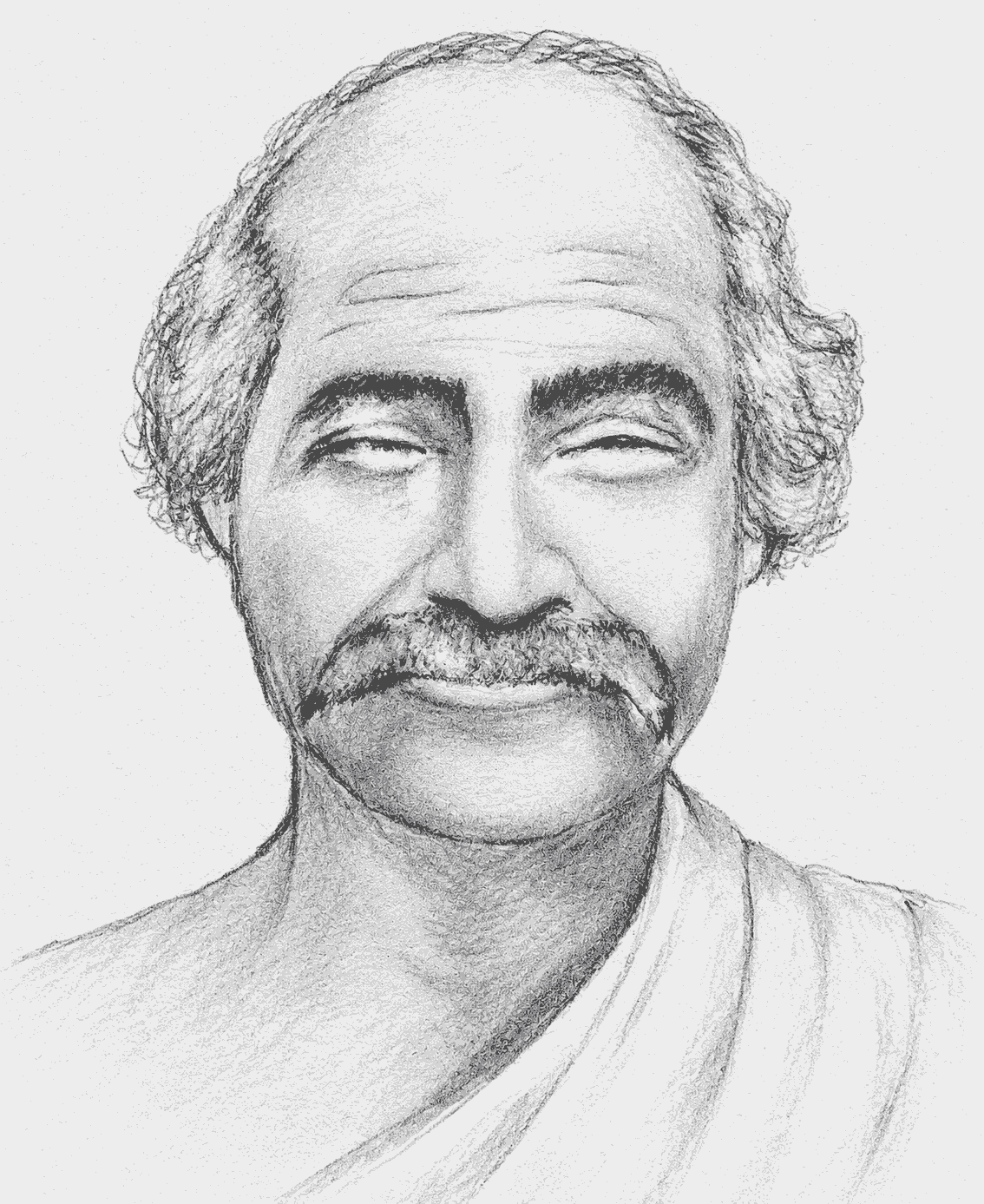
Shyama Charan Lahiri, widely known as Lahiri Mahasaya, was a 19th-century Indian yogi and householder whose life became closely associated with the Kriya Yoga tradition. Born in 1828 in Ghurni, Nadia, Bengal, he later lived much of his life in Varanasi, where he maintained his family and professional responsibilities while practising and teaching yoga.
Within the Kriya Yoga tradition, Lahiri Mahasaya is regarded as a central figure in the transmission of Kriya Yoga in modern times. Traditional accounts describe his initiation by Mahavatar Babaji in the Himalayan region near Ranikhet in 1861, after which he returned to his life as a householder in Varanasi and taught Kriya Yoga to sincere seekers.
His significance lies not only in his association with Kriya Yoga, but also in the example of a yogi who pursued spiritual realization while living an ordinary family and professional life. Through his disciples, including Sri Yukteswar Giri, and later through Paramahansa Yogananda, his teachings became part of a lineage that reached a much wider audience.
Early Life and Family
Shyama Charan Lahiri was born on 30 September 1828 in the village of Ghurni, in the Nadia district of Bengal, to Gour Mohan Lahiri and Muktakashi (Muktakeshi) Devi. He was born into a Bengali Brahmin family, and his early upbringing was connected with the family’s religious and cultural traditions.
His childhood in Ghurni was relatively brief. In the early 1830s, flooding associated with the changing course of the Jalangi River destroyed the Lahiri family’s ancestral home. The family subsequently moved to Varanasi (Benares), where Shyama Charan spent most of the remainder of his life.
In Varanasi, he received an education that included Sanskrit and other languages, while also developing an interest in Hindu scriptures and philosophical discussions. Accounts preserved in the Lahiri Mahasaya tradition describe his father as maintaining a disciplined religious household, with regular worship, charity, and scriptural study.
Shyama Charan married Kashi Moni in 1846 and entered the responsibilities of family life. In 1851, he joined the British Indian government’s Military Engineering Department, where he worked as an accountant. His professional responsibilities and family life would remain an important part of his identity throughout his later years as a yogi and teacher.
This combination of family life, professional responsibility, and spiritual practice later became one of the defining features of Lahiri Mahasaya’s example. Rather than presenting renunciation of ordinary life as the only path to serious spiritual practice, the tradition surrounding him emphasizes the possibility of pursuing yoga while fulfilling one’s responsibilities as a householder.
Shyama Charan Lahiri Mahasaya’s Initiation into Kriya Yoga by Mahavatar Babaji
The traditional account of Kriya Yoga traces an important turning point to the meeting between Shyama Charan Lahiri Mahasaya and Mahavatar Babaji in the Himalayan region near Ranikhet in 1861. The encounter is described in Paramahansa Yogananda’s Autobiography of a Yogi and has become an important part of the Lahiri Mahasaya–Sri Yukteswar–Yogananda lineage tradition.
The Divine Call
At the time, Shyama Charan Lahiri was serving as a government accountant in British India. According to the traditional account, he was unexpectedly transferred to Ranikhet in the Himalayas. While exploring the surrounding mountains, he heard a mysterious call and followed it into the hills, where he encountered a yogi who would become known in the lineage as Mahavatar Babaji.
Meeting Mahavatar Babaji
According to the lineage account, Babaji revealed himself to Lahiri Mahasaya and reminded him of a spiritual connection from a previous life. He told Lahiri that the time had come for him to resume an important spiritual role while continuing to live as a householder.
Babaji then guided Lahiri Mahasaya to a secluded Himalayan cave, where he prepared him for initiation into Kriya Yoga. Traditional accounts describe this initiation as a profound spiritual experience through which Lahiri entered deep states of meditation and samadhi.
Initiation into Kriya Yoga
Mahavatar Babaji is regarded within the Kriya Yoga tradition as the guru who initiated Lahiri Mahasaya into Kriya Yoga in 1861 near Ranikhet.
The initiation marked a decisive turning point in Lahiri Mahasaya’s spiritual life. According to the traditional Kriya Yoga accounts, Mahavatar Babaji entrusted him with the responsibility of carrying the practice into ordinary society rather than remaining permanently in the Himalayas.
Lahiri Mahasaya subsequently returned to Varanasi, where his role developed from that of a spiritual practitioner into that of a teacher and guide for Kriya Yoga seekers. His later teaching activity became central to the continuation of the tradition associated with him.
Lahiri Mahasaya’s Life After His Initiation
After his initiation by Mahavatar Babaji in 1861, Lahiri Mahasaya returned to Varanasi and continued his life as a householder. He remained engaged with his family and professional responsibilities while developing a growing role as a spiritual teacher.
As seekers began approaching him, Lahiri Mahasaya became known for guiding disciples in spiritual practice and meditation. Traditional accounts describe him as teaching sincere seekers from different backgrounds, including both householders and renunciates.
His home in Varanasi became an important setting for this teaching activity. Rather than establishing his spiritual life around permanent withdrawal from society, Lahiri Mahasaya continued to teach within the circumstances of his family and professional life.
This period was also important for the development of the teacher-disciple tradition associated with Lahiri Mahasaya. His disciples carried his teachings into different branches and lineages, with figures such as Sri Yukteswar Giri, Panchanan Bhattacharya, Swami Kebalananda Giri, and Pranabananda Giri becoming important names in the later history of the tradition.
Lahiri Mahasaya’s life after initiation therefore helps explain his distinctive place in the history of Kriya Yoga: he was not only a practitioner who received initiation, but also a householder teacher whose influence continued through successive generations of disciples.
Why Is Lahiri Mahasaya Famous?
Shyama Charan Lahiri, widely known as Yogiraj Lahiri Mahasaya, is remembered as one of the central figures in the modern history of Kriya Yoga. His importance rests on several closely connected aspects of his life: his role as a Kriya Yoga teacher, his example as a householder yogi, his spiritual teachings, and the continuing teacher-disciple traditions associated with him.
Lahiri Mahasaya is particularly significant because he became an influential teacher while continuing to live as a householder. His life challenged the idea that serious spiritual practice necessarily required withdrawal from family and society, making his example especially important within traditions that emphasize spiritual practice alongside ordinary responsibilities.
His historical and spiritual influence also grew through the disciples who carried his teachings into subsequent generations. Sri Yukteswar Giri, Panchanan Bhattacharya, Swami Kebalananda Giri, Pranabananda Giri, and other disciples became important figures in different branches of the tradition associated with Lahiri Mahasaya.
His connection with Sri Yukteswar Giri and Paramahansa Yogananda also contributed greatly to his later recognition beyond India. Through Yogananda’s writings, particularly Autobiography of a Yogi, Lahiri Mahasaya’s life and spiritual legacy reached a much wider international readership.
Lahiri Mahasaya’s significance therefore extends beyond his initiation by Mahavatar Babaji. He is remembered for establishing a lasting example of yoga practice within householder life, spiritual teaching, and transmission through successive generations of disciples.
Within the traditions that revere him, Lahiri Mahasaya is regarded as a highly realized yogi. Such descriptions belong to the spiritual traditions surrounding him and should be distinguished from independently verifiable historical claims.
Lahiri Mahasaya’s Teachings
Lahiri Mahasaya’s teachings are closely associated with Kriya Yoga, meditation, self-realization, and the integration of spiritual practice with ordinary life. His importance as a teacher lies not only in transmitting Kriya Yoga but also in demonstrating that sustained spiritual practice could be pursued while living as a householder.
Kriya Yoga and Self-Realization
Lahiri Mahasaya taught Kriya Yoga as a disciplined spiritual path directed toward inner realization. In the tradition associated with him, the practice is understood as a means of cultivating concentration, meditation, and awareness of the inner Self.
Rather than presenting spiritual realization as something limited to a particular social class or stage of life, Lahiri Mahasaya encouraged sincere seekers to pursue spiritual practice according to their circumstances and capacity.
Spiritual Practice Within Householder Life
A distinctive feature of Lahiri Mahasaya’s teaching was the integration of spiritual practice with the responsibilities of ordinary life. His example showed that the pursuit of Self-realization could be approached without making social or family withdrawal a prerequisite.
Within the tradition associated with him, this principle became particularly meaningful for householders seeking a disciplined spiritual path. Lahiri Mahasaya’s own life gave practical context to this teaching, while his guidance to disciples emphasized sincere and sustained spiritual practice.
The householder ideal was therefore not simply a feature of Lahiri Mahasaya’s biography; it became an important part of how his teachings were understood and transmitted through later generations.
Meditation and Inner Discipline
Lahiri Mahasaya emphasized regular spiritual practice rather than spirituality as an intellectual pursuit alone. Meditation and disciplined practice were central to the path associated with his teachings.
His approach placed importance on personal practice, inward attention, concentration, and direct spiritual experience. The teacher-disciple relationship also played an important role in transmitting practices and guidance within the tradition.
Lahiri Mahasaya’s Approach to Spiritual Practice
Lahiri Mahasaya’s teaching emphasized practice and direct spiritual experience rather than theoretical knowledge alone. Traditional accounts describe him encouraging disciples to use meditation and Kriya Yoga as practical means of deepening their inner awareness rather than relying only on intellectual understanding of scripture.
He also adapted his guidance to the individual seeker. Accounts of his teaching describe him respecting different religious backgrounds and encouraging disciples to maintain the sincere spiritual disciplines of their own traditions while pursuing inner realization.
This practical and inclusive approach became an important part of Lahiri Mahasaya’s legacy. His teaching placed the emphasis on regular practice, meditation, personal experience, and spiritual realization, while allowing seekers to pursue the path within the circumstances of their own lives.
Renunciation and Detachment
Lahiri Mahasaya’s life also presented a distinctive understanding of renunciation. He did not abandon his family life in order to pursue spiritual realization. Instead, his example emphasized inner detachment while continuing to fulfil worldly responsibilities.
This aspect of his life became particularly influential because it offered householders a model of spiritual discipline that did not require complete withdrawal from society.
Respect for Different Spiritual Paths
Lahiri Mahasaya is also remembered within the tradition for his broad spiritual outlook. His disciples came from different backgrounds, and the tradition associated with him emphasizes sincere spiritual practice rather than dependence on social status.
His legacy therefore connects meditation, self-discipline, devotion, scriptural understanding, and direct spiritual experience within a broader approach to spiritual life.
The teachings associated with Lahiri Mahasaya are best understood alongside his own life, his disciples, and the scriptural commentaries attributed to him. These aspects together help explain why his influence continued through different branches of the Kriya Yoga tradition after his lifetime.
Lahiri Mahasaya’s Scriptural Commentaries
Lahiri Mahasaya’s contribution to yoga was not limited to teaching Kriya Yoga. He also left a body of spiritual interpretations and commentaries on Indian scriptures, through which he explained traditional texts from the perspective of yogic practice and inner realization.
These writings are important for understanding how Lahiri Mahasaya approached spiritual knowledge. Rather than treating scripture only as theoretical philosophy, the commentarial tradition associated with him connects scriptural teachings with meditation, yoga practice, and direct spiritual experience.
Among the scriptures and texts associated with his commentarial works are the Patanjali Yoga Sutras, the Bhagavad Gita, and several Upanishadic and other spiritual texts. Collections of his scriptural commentaries also include works associated with texts such as the Manu Samhita, Tejabindu Upanishad, Dhyanabindu Upanishad, Amritabindu Upanishad, Niralamba Upanishad, Guru Gita, and Avadhuta Gita.
The commentaries attributed to Lahiri Mahasaya are particularly significant within the Kriya Yoga tradition because they provide another window into his understanding of yoga and spiritual realization. They also show that his teaching extended beyond the transmission of a meditation practice to the interpretation of India’s broader yogic and scriptural heritage.
For readers studying Lahiri Mahasaya, his scriptural commentaries therefore provide an important complement to his biography, teachings, and role in the transmission of Kriya Yoga.
Different Lineages of Kriya Yoga Yogis
The modern Kriya Yoga tradition is associated primarily with Yogiraj Shyama Charan Lahiri Mahasaya, who, according to traditional accounts, received Kriya Yoga initiation from Mahavatar Babaji in 1861. Lahiri Mahasaya subsequently taught numerous disciples, and different branches of the tradition developed through their respective teachers and spiritual institutions.
Although these branches share a connection with Lahiri Mahasaya, they are not necessarily identical in organization, teaching presentation, or method of transmission. It is therefore more accurate to speak of different branches and lineages within the broader Kriya Yoga tradition rather than treating them as one institutional lineage.
Lahiri Mahasaya’s Direct Disciples
Lahiri Mahasaya taught both householders and renunciates, and his disciples included several teachers who became important figures in the later history of Kriya Yoga. Among the better-known direct disciples of Lahiri Mahasaya are:
Sri Yukteswar Giri — One of Lahiri Mahasaya’s prominent disciples and the guru of Paramahansa Yogananda. He became an important link in the transmission of the tradition to the next generation.
Swami Kebalananda Giri — A disciple of Lahiri Mahasaya who is mentioned by Paramahansa Yogananda in Autobiography of a Yogi.
Panchanan Bhattacharya — A prominent disciple associated with the dissemination of Lahiri Mahasaya’s teachings and the publication of Kriya-related literature.
Pranabananda Giri — A disciple of Lahiri Mahasaya known within the tradition for his spiritual practice and teaching.
These were only some of the disciples associated with Lahiri Mahasaya. His wider network of students contributed to the development of different teacher-disciple lineages and branches of the Kriya Yoga tradition after his lifetime.
Sri Yukteswar Giri’s Lineage
Sri Yukteswar Giri occupies a particularly important position in the modern transmission of Kriya Yoga because he became the guru of Paramahansa Yogananda.
Yogananda later carried the teachings to the United States and introduced Kriya Yoga to a much wider international audience through his lectures, writings, and Autobiography of a Yogi.
Lahiri Mahasaya
↓
Sri Yukteswar Giri
↓
Paramahansa Yogananda
Another important disciple of Sri Yukteswar was Swami Satyananda Giri (1896–1971). Satyananda Giri dedicated his life to spiritual practice, service, and the preservation and teaching of the tradition associated with Sri Yukteswar. He established Sevayatan Satsang Mission at Jhargram, West Bengal, as a center for spiritual and educational activities.
The tradition continued through later generations of teachers. Swami Birajananda Giri, a disciple of Swami Satyananda Giri, is the present head of Satsanga Mission, Sevayatan, Jhargram, continuing the spiritual work associated with the institution established by Swami Satyananda Giri.
Lahiri Mahasaya
↓
Sri Yukteswar Giri
↓
Swami Satyananda Giri
↓
Swami Birajananda Giri
Other Branches of Lahiri Mahasaya’s Tradition
Because Lahiri Mahasaya had numerous disciples, Kriya Yoga was transmitted through several teacher-disciple lines. Some remained relatively small, while others developed organized institutions and international communities.
Among later teachers associated with branches of the Lahiri Mahasaya tradition was Hariharananda Giri, whose teachings were subsequently carried forward through Kriya Yoga organizations and teachers in India and abroad.
There are also later teachers connected through family or teacher-disciple relationships to Lahiri Mahasaya’s tradition. Shibendu Lahiri, a great-grandson of Lahiri Mahasaya, is one such contemporary teacher who has taught Kriya Yoga internationally.
These later branches should not necessarily be treated as interchangeable. Each has its own history of transmission, teachers, institutions, and ways of presenting Kriya Yoga.
A Shared Spiritual Heritage
Despite differences among branches, many Kriya Yoga traditions recognize Lahiri Mahasaya as a central figure in their spiritual heritage. Different branches trace their teacher-disciple succession through Lahiri Mahasaya and his various disciples.
The diversity of these branches reflects the way Kriya Yoga was transmitted through individual teachers and successive generations rather than through a single worldwide institution. At the same time, many of these traditions share an emphasis on disciplined spiritual practice, meditation, pranayama, guru-disciple transmission, and the pursuit of Self-realization.
Lahiri Mahasaya and Paramahansa Yogananda
The connection between Lahiri Mahasaya and Paramahansa Yogananda is one of the most important links in the modern history of Kriya Yoga. Although Yogananda was not a direct disciple of Lahiri Mahasaya, his life and writings helped bring Lahiri Mahasaya’s story and spiritual legacy to a much wider audience.
Yogananda’s guru, Swami Sri Yukteswar Giri, was a disciple of Lahiri Mahasaya. This placed Yogananda within the teacher-disciple tradition that extended from Lahiri Mahasaya through Sri Yukteswar.
Lahiri Mahasaya in Autobiography of a Yogi
Lahiri Mahasaya occupies an important place in Paramahansa Yogananda’s Autobiography of a Yogi, first published in 1946. The book presents Lahiri Mahasaya’s life, spiritual attainment, householder example, and role in the modern transmission of Kriya Yoga.
According to the YSS account of the book’s history, Lahiri Mahasaya had predicted that an account of his life would be written about fifty years after his passing as interest in yoga grew in the West. Sri Yukteswar later instructed Yogananda to fulfil this role, and Yogananda completed Autobiography of a Yogi in 1945, fifty years after Lahiri Mahasaya’s passing.
Yogananda also gathered information for the book by contacting direct disciples and relatives of Lahiri Mahasaya and collecting historical material about his life.
Yogananda’s Role in Preserving Lahiri Mahasaya’s Legacy
Through Autobiography of a Yogi, Yogananda helped make Lahiri Mahasaya known to readers far beyond India. The book became an influential introduction to Indian yoga and spiritual traditions for an international audience.
For this reason, Yogananda’s importance to Lahiri Mahasaya’s legacy is primarily historical and literary as well as spiritual. He presented Lahiri Mahasaya as an important modern yogi and highlighted his distinctive example of pursuing spiritual realization while remaining a householder.
The relationship can therefore be understood as:
Mahavatar Babaji
↓
Lahiri Mahasaya
↓
Sri Yukteswar Giri
↓
Paramahansa Yogananda
This is the direct guru lineage associated with Yogananda and the YSS/SRF tradition.
Lahiri Mahasaya’s influence on modern Kriya Yoga is therefore not limited to the disciples he personally taught. Through Sri Yukteswar and later through Yogananda’s writings and worldwide teaching mission, his name and teachings became part of a much broader international history of yoga.
Lahiri Mahasaya’s Final Years and Mahasamadhi
Lahiri Mahasaya continued his spiritual practice and teaching in Varanasi during the later years of his life. Even while fulfilling his responsibilities as a householder, he remained closely associated with the guidance of disciples and the transmission of Kriya Yoga.
His final years reinforced the distinctive example for which he became known: a yogi who pursued spiritual realization while continuing to live within ordinary family and social responsibilities.
According to the traditional accounts preserved by the Kriya Yoga tradition, Lahiri Mahasaya attained mahasamadhi on 26 September 1895 in Varanasi, at the age of 66.
In yogic traditions, mahasamadhi refers to the conscious final departure of a realized yogi from the physical body. The term carries a profound spiritual significance within the traditions that revere Lahiri Mahasaya and reflects the yogic understanding of his final transition.
His passing did not end his influence. Through his disciples and subsequent generations of teachers, the tradition associated with Lahiri Mahasaya continued to develop through different teacher-disciple lineages in India and, later, internationally.
Legacy of Lahiri Mahasaya
The legacy of Shyama Charan Lahiri, or Lahiri Mahasaya, extends beyond his own lifetime through the disciples, teachings, writings, and teacher-disciple traditions associated with him.
One of the most distinctive aspects of his legacy is his example as a householder yogi. By continuing his family and professional responsibilities while maintaining a dedicated spiritual life, Lahiri Mahasaya demonstrated a model of yoga that did not depend upon complete withdrawal from ordinary society.
His disciples carried his teachings into subsequent generations through different teacher-disciple relationships and spiritual institutions. Among these, the lineage through Sri Yukteswar Giri became particularly influential, later connecting Lahiri Mahasaya’s tradition with teachers such as Paramahansa Yogananda and Swami Satyananda Giri.
Lahiri Mahasaya’s influence also continued through his scriptural interpretations and commentaries, which remain an important part of the literary heritage associated with him. These works provide insight into his understanding of yoga, meditation, scripture, and spiritual realization.
Today, different Kriya Yoga traditions may vary in their organizations, methods of transmission, and presentation of the teachings. Yet Lahiri Mahasaya remains a central historical and spiritual figure in many of these traditions.
His enduring significance lies in the combination of spiritual realization, disciplined practice, householder life, scriptural insight, and the continuing transmission of teachings through successive generations of disciples.
Note on Traditional Accounts
This article presents information about Shyama Charan Lahiri (Lahiri Mahasaya) from historical sources, published accounts, and the spiritual traditions associated with Kriya Yoga. Some accounts concerning Mahavatar Babaji, Lahiri Mahasaya’s spiritual experiences, and other yogic events are preserved primarily through traditional and devotional sources.
Where appropriate, the article distinguishes between historical information and traditional spiritual accounts. Descriptions of spiritual attainment, mystical experiences, or yogic phenomena reflect the beliefs and traditions in which Lahiri Mahasaya is revered and are not presented as independently verified scientific or historical facts.
About the AuthorYogacharya Dhruv Ji is a Yoga Teacher and practitioner committed to preserving and sharing the authentic wisdom of traditional Yoga and Kriya Yoga. Dhruv Ji received his training in Yoga and Kriya Yoga under the esteemed guidance of Swami Birajananda Giri Maharaj, a revered spiritual teacher known for his deep understanding of yogic philosophy, meditation, and the ancient practices of self-realization. |