
Bhramari Pranayama (Bee Breath): Steps, Benefits, How to Practise & Precautions
Busy schedules, prolonged screen time, constant notifications, and little space for quiet can make it difficult to pause and settle the mind. This is one reason simple breathing practices such as Bhramari Pranayama continue to appeal to people looking for a practical way to create moments of calm and focused attention in a hectic routine.
Bhramari Pranayama is a simple yogic breathing practice that can fit easily into a busy routine. It may be practised on its own or included before meditation, with attention given to the breath, the humming sound, and a relaxed approach.
In this guide, you’ll learn what Bhramari Pranayama is, its traditional background, potential benefits, how to practise it step by step, common mistakes, useful variations, precautions, and what current research says about the practice.
What Is Bhramari Pranayama?
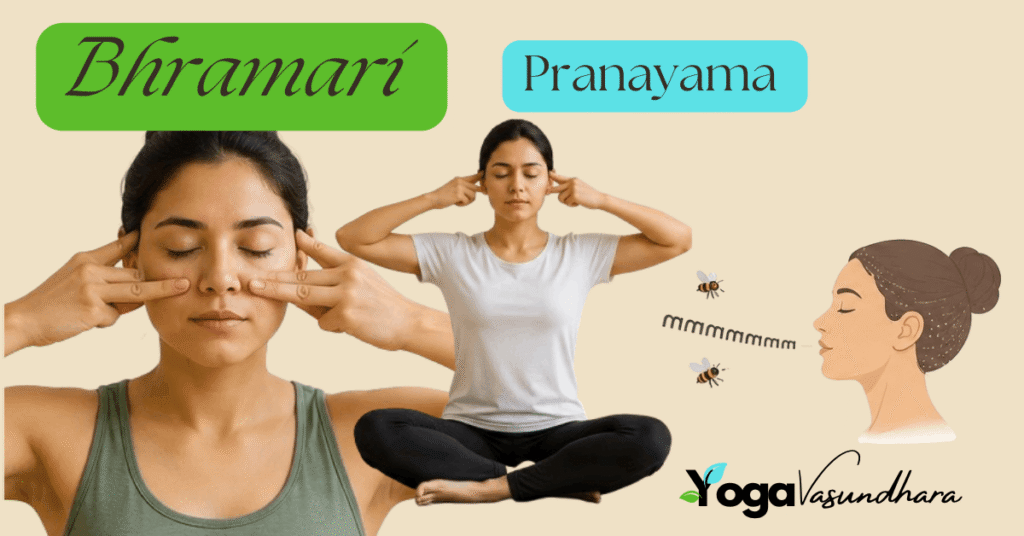
Bhramari Pranayama, also known as Bee Breath or Humming Bee Breath, is a traditional yogic breathing practice in which a gentle humming sound is produced during exhalation. The name Bhramari comes from the Sanskrit word associated with a bee, referring to the humming sound created during the practice.
Unlike breathing practices that may emphasize particular patterns of inhalation, exhalation, or breath retention, Bhramari combines a steady breath with a soft humming sound. The vibration produced by the humming can make the practice a calming and inward-focused experience, especially when the breath remains smooth and unforced.
Bhramari is simple to learn, requires no equipment, and can be adapted for beginners as well as experienced practitioners. It may be practised on its own or included as part of a broader yoga or meditation routine.
Bhramari Pranayama in the Yogic Tradition
One classical reference appears in Chapter 2, Verse 68 of the Hatha Yoga Pradipika, where Bhramari is described through the humming sounds associated with bees during inhalation and exhalation. The verse also connects the practice with a particular state of inner experience for the practising yogi. Read the Bhramari verse in the Hatha Yoga Pradipika.
It is worth noting that classical descriptions of Bhramari are not always identical to the simplified form commonly introduced to beginners today. This article presents a gentle beginner approach, while the classical text describes a more specific breathing pattern. Understanding this distinction helps preserve the traditional context without making advanced practices necessary for someone learning Bhramari for the first time.
Benefits of Bhramari Pranayama
Bhramari brings together controlled breathing, a gentle humming sound, and focused attention. This combination can make it a useful practice when you want to slow down, settle your attention, or create a quieter transition into meditation or evening rest.
May Help Settle Mental Activity
The steady sound and unhurried breathing give the mind something simple to attend to. For some practitioners, this can make it easier to step back from a busy stream of thoughts and approach the practice with greater steadiness.
May Support Focus and Mental Clarity
Listening to the humming sound while noticing the breath creates a clear object for attention. This can be useful when preparing for meditation, studying, or any activity that benefits from a quieter and more focused state of mind.
Encourages Breath Awareness
Bhramari encourages attention to the pace, smoothness, and comfort of each inhalation and exhalation. Over time, this can help practitioners become more observant of their own breathing patterns during practice.
May Support Relaxation and Stress Management
The combination of humming, controlled breathing, and focused attention may be useful during periods when you want to unwind or create a calmer pause in the day. Research has also examined Bhramari in relation to stress and anxiety, although the strength of evidence varies across studies.
May Support an Evening Wind-Down and Sleep Routine
Bhramari can be included in a quiet evening routine when a slower pace feels appropriate. Some practitioners use it before meditation or rest because the practice encourages a shift from active engagement toward quieter attention. It should be approached as a relaxation practice rather than as a treatment for sleep problems.
Other Areas Being Studied
Researchers have also examined Bhramari in relation to autonomic activity, sleep, cardiovascular measures, and pulmonary function. These findings are discussed in more detail in the research section below and should not be treated as guaranteed effects for every practitioner.
What Does Research Say About Bhramari Pranayama?
Bhramari Pranayama has been practised within yoga traditions for centuries, and modern researchers have begun investigating how its combination of controlled breathing, humming, and focused attention may influence the body and mind. Research has explored Bhramari in relation to psychological, cardiovascular, pulmonary, and other physiological outcomes, but the quality and design of the available studies vary.
What Research on Bhramari Has Found
A comprehensive 2024 literature review on Bhramari Pranayama examined 46 experimental studies published between 2006 and 2023, including 18 single-arm clinical trials, 22 clinically controlled trials, and six randomised controlled trials. Across the included studies, Bhramari was associated with findings such as lower stress, anxiety, depression, sympathetic activity, and blood pressure, along with higher attention, sleep quality, parasympathetic activity, and pulmonary function. The review also identified areas where stronger and more extensive research is still needed.
These findings are encouraging, but they should not be interpreted as proof that Bhramari can treat or cure specific medical conditions. Different studies used different participants, practice protocols, comparison groups, and outcome measures, so their results cannot all be interpreted in the same way.
How Might Bhramari Work?
Bhramari combines a slow, controlled breath with a prolonged humming exhalation and focused attention. These elements may influence the experience of the practice in different ways. Slow, regulated breathing can affect breathing rhythm and autonomic activity, while the humming provides a steady sound and sensation for attention.
Recent research on Bhramari suggests that some of its physiological effects may be related more to the slow breathing pattern and extended exhalation than to the humming vibration itself. This is still an emerging area of research, so the mechanisms behind Bhramari should not be considered fully established.
Slow, Controlled Breathing and Bhramari
Bhramari combines a controlled breathing pattern with a gentle, prolonged humming exhalation. Research on slow breathing more generally has examined its effects on cardiovascular and autonomic measures and provides useful context for understanding why controlled breathing may contribute to a calmer practice. However, evidence from slow-breathing research should not automatically be presented as direct evidence for every effect of Bhramari itself.
Humming and Nasal Nitric Oxide
One particularly interesting area of research concerns nasal nitric oxide. A study on humming and nasal nitric oxide found that humming increased nasal nitric oxide about 15-fold compared with quiet exhalation. The researchers proposed that the oscillating airflow created by humming increases gas exchange between the nasal cavity and the paranasal sinuses.
A 2023 paper on nitric oxide, humming, and Bhramari Pranayama specifically examines the relationship between humming and Bhramari. The authors note that humming is an integral part of Bhramari and propose that it may facilitate endogenous nitric-oxide production. The paper also distinguishes between general and classical versions of Bhramari, but this proposed connection should not be interpreted as proof that Bhramari treats sinus or respiratory disease.
How Much Do We Know About Bhramari?
Current research makes Bhramari an interesting area of study, particularly because it combines humming, controlled breathing, and focused attention. However, the available evidence does not yet allow all reported effects to be treated as established health outcomes. Some findings are encouraging, while other questions about Bhramari’s effects and mechanisms still require further research.
Bhramari Pranayama Practice: A Simple Step-by-Step Guide
Bhramari can be introduced into a regular yoga routine without any equipment. Start with a few comfortable rounds and become familiar with the rhythm of the breath and the humming sound before extending the practice.
Step 1: Sit Comfortably
Begin from a seated posture in which you can remain at ease, whether that means sitting on the floor or using a firm chair. Sukhasana (Easy Pose) is one possibility, but you can choose any position that gives you steady support. Learn more about comfortable sitting positions for meditation.
Keep the:
- Spine comfortably upright
- Shoulders relaxed
- Neck neutral
- Face and hands at ease
Step 2: Relax Your Face
Let the muscles around the forehead, eyes, cheeks, and jaw become loose. Keep the tongue in a natural position rather than pushing it against the palate.
Step 3: Inhale Gently
Keep the lips together and draw a quiet breath in through the nose. Allow the inhalation to happen at an easy pace; there is no need to take an unusually large breath or raise the shoulders.
Step 4: Create the Humming Sound
As you breathe out through the nose, make a steady humming tone with the lips lightly closed. Keep the jaw relaxed and allow the teeth to remain slightly apart rather than clenching them. The sound is often compared with the hum of a bee.
The humming should be:
Gentle
Even
Comfortable
Unforced
Let the exhalation finish naturally without forcing it or trying to make the humming louder or longer. Keep the throat relaxed and allow the sound to arise comfortably with the breath. A gentle vibration around the lips, face, nose, or head may be noticed, but there is no need to create or intensify any particular sensation.
Step 5: Repeat Comfortably
Once the humming exhalation has ended, allow the next breath to come naturally and begin another round.
Continue for a few comfortable rounds, keeping the breath and sound steady rather than trying to extend the practice.
One round = one inhalation through the nose followed by one slow humming exhalation.
Bhramari with Shanmukhi Mudra
Shanmukhi Mudra is a traditional hand arrangement that may be combined with Bhramari when a practitioner wants to lessen outside sensory input and turn attention inward. It is optional, and the basic practice can be done without using the hands in this way.
How to Practise Bhramari with Shanmukhi Mudra
- Settle into a comfortable seated posture and keep the spine naturally upright.
- Bring both hands toward the face.
- Use the thumbs to rest lightly on the ear cartilage.
- Rest the index fingers gently along the area above the eyebrows.
- Rest the middle fingers gently over the closed eyelids.
- Set the ring fingers near the sides of the nose, taking care not to obstruct either nostril.
- Allow the little fingers to rest above the upper lip.
- Breathe in quietly through the nose.
- Breathe out with a smooth humming tone.
Keep the contact around the ears, eyes, and face very light. Nothing should feel compressed, and the hands should not interfere with normal nasal breathing.
An Easier Variation for Beginners
The full hand arrangement is not necessary for Bhramari. For a simpler approach, use only the thumbs to lightly cover the ear cartilage and let the other fingers remain relaxed.
This option can soften outside sounds while making the hand position easier to maintain.
A note on the basic and classical forms: The practice described here is a simple, beginner-friendly form of Bhramari, using a comfortable inhalation followed by a slow humming exhalation. Traditional yoga texts describe Bhramari in somewhat different ways, including variations in the sound produced and the use of breath control. These classical forms are more specialised and are best learned from an experienced yoga teacher.
When and How Often Should You Practise Bhramari?
Bhramari can be included at different points in a daily routine. The most suitable time is one when you can practise without rushing and give your attention to the breath and sound.
Choosing a Time to Practise
Morning: A short session can provide a quiet start to the day and bring attention to the breath before other activities begin.
Evening: A session after your usual activities can mark a transition from a busy part of the day to a quieter routine.
Before Meditation: Bhramari can be used before meditation as a way of settling attention and becoming more aware of the breath.
At Night: A gentle session may be included in an evening routine when it feels comfortable. Avoid practising immediately after a heavy meal.
How Long and How Often Should You Practise?
Beginners can start with 5–8 comfortable rounds once a day. With regular practice, the number of rounds can be increased gradually as long as the breathing and humming remain easy and relaxed.
There is no need to follow a fixed number of sessions or extend the practice when it starts to feel tiring. Comfort and regularity matter more than making each session longer. If you feel dizzy or experience unusual discomfort, stop and return to normal breathing.
Yoga Vasundhara Tips for Beginners
- Choose a quiet place where you can practise without frequent interruptions.
- Give yourself a few unhurried minutes rather than trying to fit the practice into a rushed moment.
- Do not worry about producing a perfect or loud humming sound; a natural, comfortable tone is enough.
- Stay attentive to how the breath and body respond instead of trying to achieve a particular sensation.
- After the final round, sit quietly for a few moments before returning to other activities.
- Make regular, comfortable practice a priority before increasing the length of each session.
Common Mistakes to Avoid
Beginners may add unnecessary effort while trying to produce a stronger humming sound. Watch for these common mistakes:
- Breathing through the mouth
- Making the humming excessively loud
- Lifting or tightening the shoulders
- Pushing the exhalation beyond a comfortable range
- Holding the breath unnecessarily
- Tightening the jaw or throat
- Pressing too firmly on the ears or face when using Shanmukhi Mudra
The aim is to keep the breath, sound, and body as relaxed and natural as possible.
Precautions and Modifications
Bhramari is generally practised gently, without force or prolonged breath retention. Keep the humming comfortable and avoid putting strong pressure on the ears, eyes, or face when using Shanmukhi Mudra.
If you have an active ear infection, ear pain, or are recovering from recent ear surgery, avoid the ear-closing variation and seek appropriate guidance before practising Bhramari.
Modify or stop the practice if it causes pain, dizziness, breathlessness, or unusual discomfort. People who are pregnant, recovering from an injury or surgery, or managing a health condition should consider individual guidance from a qualified healthcare professional and an experienced yoga teacher before beginning a new pranayama practice.
If the full hand position feels uncomfortable, practise the basic form without covering the ears or face. A seated chair variation may also be used when sitting on the floor is difficult.
When using the ear-closing variation, place the fingers gently on the outer ear cartilage rather than inside the ear canal.
Frequently Asked Questions About Bhramari Pranayama
Is the hand position necessary for Bhramari?
No. Shanmukhi Mudra is an optional variation. Bhramari can be practised in its basic form without covering the ears, eyes, or face.
What if sitting on the floor is uncomfortable?
Yes. You can use a stable chair as long as you can sit comfortably and keep the body naturally upright. The practice does not depend on one particular seated posture.
What if the humming does not feel comfortable?
Reduce the volume and length of the sound and return to an easy, natural breath. Do not force the exhalation or strain the throat, jaw, or face. Stop the practice if discomfort persists.
Is Bhramari Pranayama suitable for beginners?
Yes. Bhramari can be introduced to beginners in a simple form using a comfortable nasal inhalation followed by a gentle humming exhalation. There is no need to use Shanmukhi Mudra or practise breath retention when first learning the technique. Start with a few comfortable rounds and focus on keeping the breath and humming relaxed.
What is the purpose of the humming in Bhramari?
The humming is the defining feature of Bhramari. It gives the practice a steady sound to listen to and a vibration to notice, which can help bring attention inward.
How is Bhramari different from other pranayama practices?
Bhramari is distinctive because it combines breathing with a gentle humming sound during exhalation. Unlike practices that emphasize alternate-nostril breathing, forceful exhalation, or specific breath ratios, Bhramari gives the practitioner a steady sound and sensation to notice while breathing remains comfortable and controlled. Different pranayama practices have different traditional methods and purposes, so Bhramari should be understood as one practice within the broader range of yogic breathing techniques.
Can Bhramari be included before meditation?
Yes. Its combination of controlled breathing, humming, and focused attention can make it a suitable transition into a quieter meditation practice.
Can Bhramari Pranayama be practised daily?
Yes. Bhramari can be practised daily when the breathing and humming remain comfortable. Beginners can start with a few rounds once a day and gradually adjust the practice according to their comfort. There is no need to increase the number of rounds simply because you practise regularly.
Final Thoughts
Bhramari Pranayama brings together breath, sound, and focused attention in a simple yogic practice. Its gentle humming can offer a quiet change of pace within a busy routine and may be especially useful when you want to settle attention or prepare for meditation.
Rather than trying to make the humming louder, longer, or more intense, approach the practice with a comfortable breath and steady awareness. With regular practice, Bhramari can become a simple part of a mindful yoga or meditation routine.
About the AuthorYogacharya Dhruv Ji is a Yoga Teacher and practitioner committed to preserving and sharing the authentic wisdom of traditional Yoga and Kriya Yoga. Dhruv Ji received his training in Yoga and Kriya Yoga under the esteemed guidance of Swami Birajananda Giri Maharaj, a revered spiritual teacher known for his deep understanding of yogic philosophy, meditation, and the ancient practices of self-realization. |
Disclaimer
The information in this article is provided for educational and general wellness purposes. It is not intended to diagnose, treat, cure, or prevent any disease or replace individualized medical or professional advice. Yoga and pranayama practices may not be suitable in the same way for everyone. Practise within your own limits, and stop if a technique causes pain, dizziness, or unusual discomfort. If you have a health condition, are recovering from an injury or surgery, are pregnant, or have concerns about whether Bhramari is appropriate for you, seek guidance from a qualified healthcare professional and an experienced yoga teacher before beginning the practice.