
Adho Mukha Svanasana (Downward-Facing Dog): Steps, Benefits, Alignment & Precautions
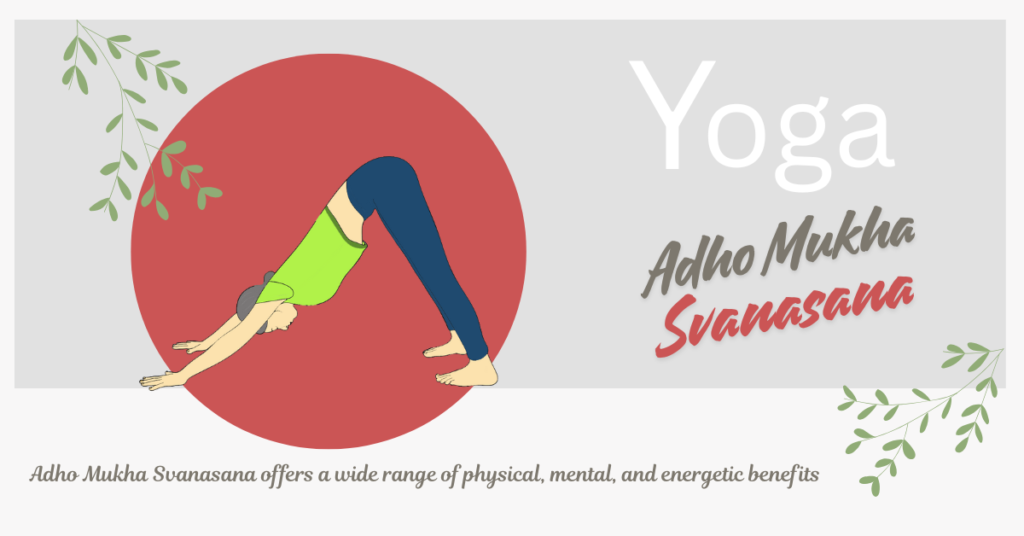
Adho Mukha Svanasana, commonly known as the Downward-Facing Dog Pose, is one of the most iconic and foundational poses in yoga. It is part of the traditional Sun Salutation (Surya Namaskar) sequence and is practiced in many yoga styles, from Hatha and Ashtanga to Vinyasa and Power Yoga.
The name comes from Sanskrit:
- “Adho” means downward
- “Mukha” means face
- “Svana” means dog
- “Asana” means pose
The pose mimics a dog stretching forward, hence the name. Although it appears simple, it provides a deep stretch and builds strength and balance in the body.
In this guide, we’ll explore the benefits, step-by-step method, alignment, common mistakes, modifications, precautions, and practical ways to make the posture more comfortable.
What are the Benefits of Adho Mukha Svanasana?
Adho Mukha Svanasana works several parts of the body at the same time. It combines stretching, active muscle engagement, balance, and steady breathing, making it a useful posture in many yoga sequences.
Physical Benefits
- Stretches and strengthens: This pose gives the shoulders, backs of the legs, calves, hands, and feet a good stretch while the arms, legs, and abdomen work to support the body.
- Supports better posture: As you work on lifting the hips and creating length through the back, you become more aware of how your spine, shoulders, and hips are positioned. With regular practice, this awareness can carry into other yoga postures as well.
- Eases muscle tension: When practised comfortably, the pose may help release tension in areas such as the back, shoulders, and legs.
- Supports healthy circulation: Downward-Facing Dog places the body in a different relationship with gravity, with the head lower than the heart. For many practitioners, this change feels refreshing and can be a pleasant part of a balanced yoga sequence.
- Engages multiple muscle groups: The arms, shoulders, core, legs, and feet all contribute to maintaining the posture.
- Improves flexibility: Regular, comfortable practice can gradually improve flexibility in the hamstrings, calves, shoulders, and other areas involved in the pose.
Mental Benefits
- May promote relaxation: Slow breathing and a steady posture can help create a calmer, more settled practice.
- Encourages mindful focus: There is plenty to notice in this pose—the pressure of the hands, the movement of the breath, the position of the shoulders, and the stretch through the legs. Bringing your attention to these sensations can help you stay present rather than simply trying to “hold” the posture.
Muscles Involved in Adho Mukha Svanasana
Adho Mukha Svanasana engages several muscle groups at once, combining active support with stretching throughout the body.
Primary muscles involved:
- Deltoids (shoulders)
- Triceps
- Latissimus dorsi (upper back)
- Core muscles
- Gluteal muscles
- Quadriceps
- Hamstrings
- Calf muscles
How to Prepare for Adho Mukha Svanasana
Take a few gentle movements first so your body is ready before you settle into Downward-Facing Dog. Gentle movements for the wrists, shoulders, hips, and spine can make the pose feel more familiar and comfortable, especially when you are practising after sitting for a long time or when the body feels stiff.
Sukshma Vyayam
Sukshma Vyayam is one of the simplest ways to prepare the body before practising Adho Mukha Svanasana. These gentle joint movements gradually improve mobility in the wrists, shoulders, hips, knees, and ankles while helping the muscles become more responsive. Spending a few minutes on Sukshma Vyayam before beginning your yoga practice can make Downward-Facing Dog feel more stable, comfortable, and easier to maintain.
→ Read our complete guide to Sukshma Vyayam
Marjaryasana–Bitilasana (Cat–Cow Stretch)
Before moving into Adho Mukha Svanasana, it is helpful to spend a few moments practising Marjaryasana–Bitilasana (Cat–Cow Stretch). This gentle flowing movement gradually wakes up the spine and encourages comfortable movement through the shoulders and hips. It also helps establish a calm breathing rhythm, making the transition into Downward-Facing Dog feel smoother and more natural.
Wrist and Shoulder Mobility
The wrists and shoulders support a considerable portion of the body weight during Adho Mukha Svanasana. Spending a few moments gently rotating the wrists, opening the shoulders, and moving the arms through a comfortable range of motion can make the posture feel much more stable. These simple movements help prepare the joints for weight-bearing without placing unnecessary strain on them.
Preparing the body patiently before practising Adho Mukha Svanasana often makes the posture feel steadier, more comfortable, and easier to maintain over time.
How to Practise Adho Mukha Svanasana: 7 Easy Steps
Here’s a simple step-by-step guide to perform Downward-Facing Dog Pose correctly:
- Step-by-Step Instructions:
Start in Tabletop Position
- Come onto your hands and knees.
- Place your wrists directly under your shoulders and your knees under your hips.
- Spread your fingers comfortably and use your whole palm to create a steady base on the mat.
Tuck Your Toes and Lift Your Knees
- Tuck your toes under and lift your knees off the ground slowly.
- Start straightening your legs, lifting your hips towards the ceiling.
Form an Inverted ‘V’ Shape
- Extend your arms fully.
- Push the floor away through your palms.
- Keep your head between your arms without letting it hang.
Align Your Body
- Your heels may not touch the floor initially—don’t worry!
- Create more space along your back while gently drawing the front of your torso toward your legs.
Let the hips rise naturally as you create space through the back. There is no need to pull the chest down or force the body into a deeper stretch.
- Keep your feet hip-width apart and your hands shoulder-width apart.
Check Your Hand and Foot Distance
If the posture feels awkward, move forward into Plank for a moment. Then lift the hips back into Downward-Facing Dog without changing the basic position of your hands and feet.
Breathe and Hold
- Take deep breaths and hold the pose for 5–10 breaths or about 30 seconds to a minute.
Come Out of the Pose
- Gently bend your knees and return to the tabletop position or transition to a resting pose like Child’s Pose.
Modifications and Variations of Adho Mukha Svanasana
If your hamstrings feel tight
Many beginners find it difficult to straighten the legs comfortably during this posture. Instead of forcing the knees to remain straight, allow a slight bend. This helps you practise without unnecessary strain while giving your body time to develop flexibility gradually.
If your wrists become uncomfortable
Reduce the amount of time you stay in the posture and come out whenever discomfort increases. Placing the hands firmly on the mat and allowing the legs to participate actively often makes the pose feel more balanced. If necessary, practise under the guidance of an experienced yoga teacher. If needed, a folded towel under the wrists or yoga blocks under the hands may make the position more comfortable.
If your heels stay lifted
Let your heels remain lifted if bringing them down would make you strain or lose a comfortable position. Every practitioner has a different level of flexibility. With regular practice, the heels may naturally move closer to the mat over time.
If the posture feels difficult
Practise for a few breaths, return to Child’s Pose to relax, and then repeat. Short, mindful practice sessions usually produce better long-term results than holding the posture with excessive effort.
Who Should Avoid or Modify Adho Mukha Svanasana?
Adho Mukha Svanasana may not be appropriate for everyone. If you have an injury, medical condition, or are pregnant, seek individual guidance before practising the pose.
For additional guidance on safe and appropriate yoga practice, see the official Yoga safety guidance published through the Ministry of Ayush’s Morarji Desai National Institute of Yoga.
Avoid if You Have:
- Wrist injuries or carpal tunnel syndrome
- Severe shoulder or back problems
- High blood pressure or glaucoma (as it’s an inversion)
- Ear infections or eye problems
- During late pregnancy, unless under expert supervision
Practice with Caution:
- If you’re a beginner or have limited flexibility, use props like blocks or keep your knees slightly bent.
If you experience sharp or unusual pain, come out of the pose rather than trying to push through it.
Common Mistakes to Avoid
Rounding the Back
Many beginners concentrate only on straightening the legs and unknowingly round the back. A comfortable back is more important than perfectly straight knees. Allow the posture to develop gradually instead of forcing the body into a particular shape.
Shrugging the Shoulders
Some practitioners unknowingly tighten the shoulders while holding the posture. Keep the arms active but avoid creating unnecessary tension around the neck and upper back.
Placing Too Much Weight on the Hands
When the hands carry too much of your body weight, the wrists may become uncomfortable. Press firmly through the palms, lift the hips, and allow the legs to share more of the effort.
Looking Forward Instead of Relaxing the Neck
Some beginners instinctively lift the head to look forward while practising Adho Mukha Svanasana. Although this may feel natural at first, it can create unnecessary tension in the neck and shoulders. Instead, allow the head to rest comfortably between the arms and let the gaze fall naturally towards the mat or your feet. When the neck stays relaxed, the spine can lengthen more comfortably and the posture often feels lighter.
Holding the Breath
It is common for beginners to focus so much on the posture that they forget to breathe naturally. Slow, comfortable breathing makes the posture steadier and helps the body relax during practice.
Practicing in front of a mirror or under the guidance of a trained yoga instructor will help correct your form and avoid injuries.
Teacher’s Tips and Common Questions About Adho Mukha Svanasana
Q. My heels don’t touch the floor. Is that a problem?
Not at all. This is probably the question I hear most often from beginners.
Many people think the posture is incomplete unless the heels touch the mat, but that isn’t how yoga works. Every body has its own flexibility.
If your heels remain above the mat, that is perfectly fine as long as you can maintain the pose comfortably and breathe without strain. The heels may come closer to the floor with regular practice, but there is no need to make that happen today.
Q. Should I keep my knees perfectly straight?
Only if your body allows it without discomfort. It is also common for beginners to worry that bent knees mean the posture is being done incorrectly. It doesn’t. A gentle bend often makes the posture more comfortable, especially in the beginning. Yoga is not about proving flexibility; it is about practising with awareness.
Q. Why do my wrists become tired so quickly?
Usually because they are working harder than they need to.
Try to let your legs participate in the posture instead of leaving all the effort to your hands. If your wrists begin to feel uncomfortable, pause for a moment instead of pushing through the discomfort. Often, a small adjustment in the way you hold the posture is enough to make the entire pose feel much easier.
Q. Where should I look during the pose?
There is no need to search for a perfect point.
Simply let the neck relax and allow the eyes to rest naturally. When the face remains soft and the breathing stays smooth, the posture often becomes much easier to hold.
Q. How do I know if I’m improving?
Don’t judge your practice by comparing it with photographs or with someone else’s body.
Q. Is my breathing calm?
Can I hold the pose comfortably without forcing my body?
Does the pose feel a little more comfortable than it did a few weeks ago?
If these signs are improving, your practice is progressing naturally. In yoga, small and steady progress is far more valuable than trying to achieve perfection in a single day.
Follow-up Poses After Adho Mukha Svanasana
In many yoga practices, Adho Mukha Svanasana appears within a flowing series of poses instead of being performed on its own. After holding the pose, choosing suitable follow-up asanas helps the body transition comfortably into the next stage of practice while maintaining a smooth rhythm.
Bhujangasana (Cobra Pose)
Bhujangasana provides a gentle backward movement after the deep lengthening created in Adho Mukha Svanasana. Moving from one posture to the other allows the body to experience opposite directions of movement, helping the practice feel more balanced.
Enter Bhujangasana gradually and give your body time to settle before attempting a deeper backbend.
Balasana (Child’s Pose)
Take a brief pause before moving into the next posture, allowing your body and breath to settle. Resting briefly in Balasana allows the body to settle comfortably, making the remainder of your practice feel more relaxed and balanced.
Tadasana (Mountain Pose)
After your floor practice, stand in Tadasana for several easy breaths and take a moment to notice how your body feels before moving on. . Rather than rushing into another posture, take a moment to observe your breathing, balance, and overall sense of stability before continuing your yoga session.
Does Adho Mukha Svanasana Help Hair Growth?
This posture should be viewed as a yoga practice rather than a proven remedy for hair loss or a guaranteed way to promote hair growth. Yoga may support overall wellbeing and stress management, but there is not enough evidence to say that this particular pose stimulates hair growth. If you are experiencing persistent or significant hair loss, speak with a qualified healthcare professional to identify the underlying cause.
Teacher’s Advice for Beginners
In my experience, students often focus too much on straightening their legs or pressing their heels toward the floor. I encourage students to give more attention to maintaining a comfortable, lengthened spine, relaxed shoulders, and steady breathing. The posture does not need to look perfect from the beginning. With patient and consistent practice, the body gradually becomes more comfortable with the position.
Which Chakras Are Associated with Adho Mukha Svanasana?
In traditional yoga philosophy, Adho Mukha Svanasana may be associated with several chakras because of the posture’s grounding, focused, and inward quality. These associations belong to the energetic framework of yoga rather than established medical science.
Chakra Traditionally Associated with the Pose:
Ajna Chakra (Third Eye Chakra): From a traditional yoga perspective, Adho Mukha Svanasana may be associated with Ajna Chakra, which is linked with awareness, concentration, intuition, and inner clarity.
Other Chakras Sometimes Associated with Adho Mukha Svanasana:
Manipura Chakra (Solar Plexus): In traditional yoga philosophy, Manipura is linked with qualities such as inner strength, confidence, and determination. The core engagement involved in holding Adho Mukha Svanasana can be viewed symbolically through this association.
Muladhara Chakra (Root Chakra): Muladhara is traditionally linked with grounding and stability. The contact of the hands and feet with the floor can be viewed symbolically in this context.
Vishuddha Chakra (Throat Chakra): Vishuddha is associated in yoga philosophy with communication and self-expression. Calm, steady breathing during the posture may be incorporated into a broader contemplative practice focused on this chakra.
These chakra associations are part of the traditional energetic understanding of yoga. They can be explored as part of a personal yoga or meditation practice, but they should not be treated as medical claims or a substitute for healthcare.
Frequently Asked Questions (FAQ)
Can beginners do Adho Mukha Svanasana?
Yes, beginners can learn Adho Mukha Svanasana, but there is no need to force the full shape immediately. Start with a comfortable version, keep the knees slightly bent if needed, and focus on creating length through the spine and maintaining steady breathing.
Can beginners practise Adho Mukha Svanasana every day?
Yes. Beginners can practise Adho Mukha Svanasana daily if the posture feels comfortable.
For daily practice, begin with a short, comfortable hold and extend the time little by little as the pose becomes easier for you.
When should I stop practising Adho Mukha Svanasana?
Come out of the pose if you experience sharp pain, dizziness, unusual discomfort, or symptoms that do not settle after adjusting your position. If symptoms continue, seek appropriate professional guidance.
Can Adho Mukha Svanasana be practised during pregnancy?
Adho Mukha Svanasana should not be practised during pregnancy without professional guidance. Whether this posture is appropriate depends on the stage of pregnancy, overall health, and previous yoga experience. During pregnancy, practise this pose only with guidance from your healthcare professional and an experienced prenatal yoga instructor. If you experience dizziness, discomfort, abdominal pain, bleeding, or any unusual symptoms, stop immediately and seek medical advice.
Conclusion: Practising Adho Mukha Svanasana With Awareness
Adho Mukha Svanasana can be a useful part of a balanced yoga practice when approached with patience and awareness. Instead of trying to achieve a particular shape, pay attention to your alignment, breathing, and overall comfort.
Whether you include Downward-Facing Dog in Surya Namaskar, use it between other postures, or hold it for a few calm breaths, let the practice develop at a pace that suits your body. Consistency, steady breathing, and mindful movement are more important than pushing yourself into a deeper position.
About the AuthorYogacharya Dhruv Ji is a Yoga Teacher and practitioner committed to preserving and sharing the authentic wisdom of traditional Yoga and Kriya Yoga. Dhruv Ji received his training in Yoga and Kriya Yoga under the esteemed guidance of Swami Birajananda Giri Maharaj, a revered spiritual teacher known for his deep understanding of yogic philosophy, meditation, and the ancient practices of self-realization. |
Disclaimer
The information in this article is provided for general educational purposes and is not a substitute for medical advice, diagnosis, or individualized yoga instruction. If you have an injury, medical condition, or are pregnant, consult your healthcare provider and, where appropriate, a qualified yoga teacher before practising Adho Mukha Svanasana. Stop the practice if you experience sharp pain, dizziness, or unusual discomfort.