
Hasta Mudra: A Complete Guide to Meaning, Science, Energy Flow and Benefits

One important but often overlooked part of yoga is Mudra, especially Hasta Mudra, which are hand gestures used during meditation, pranayama, and yoga practices. Yoga is not only about physical postures or breathing exercises. It is a complete system that connects the body, mind, and energy. These simple hand positions have a deep effect on our physical health, mental balance, and energy flow.
In this article, we will explore how mudras work, how to practice them, how energy flows through the fingertips, the science behind hasta mudra, the connection between fingers and the five elements, and how different finger positions create different mudras.
How Does a Mudra Work?
The word Mudra comes from Sanskrit and means “gesture,” “seal,” or “symbol.” In yoga, a mudra is a specific position of the hands, fingers, body, or eyes that helps guide energy in the body.
Mudras work by redirecting the flow of prana, which is the vital life energy present in every living being. Our body has thousands of energy channels called nadis. When we form a mudra, we create a circuit that allows prana to flow in a balanced and controlled way.
The hands and fingers are especially powerful because they contain many nerve endings. When certain fingers touch or press each other, they send signals to the brain. This influences the nervous system, hormone balance, emotions, and even internal organs.
In simple words, a mudra works like a switch. Just as switching on a button allows electricity to flow, forming a mudra allows energy to move in a particular direction, bringing harmony to the body and mind.
Evolution of Hasta Mudras in Yoga Traditions
The practice of hand mudras has evolved over time within yoga, meditation, and spiritual traditions. While classical Hatha Yoga texts such as the Hatha Yoga Pradipika and the Gheranda Samhita describe several important mudras, many of the commonly practised hand mudras, including Gyan (Jnana) Mudra and Prana Mudra, are explained more fully in later yoga traditions and modern teaching lineages.
How Can We Make a Mudra in Yoga?
Making a mudra in yoga is very easy, but it requires awareness and patience. Anyone can practice mudras regardless of age or fitness level.
Here are some basic guidelines to practice mudras:
- Sit comfortably
You can sit in Sukhasana (easy pose), Padmasana (lotus pose), or even on a chair. Keep your spine straight. - Relax your body and mind
Take a few deep breaths to calm yourself before forming the mudra. - Place your hands correctly
Follow the instructions of the specific mudra. Usually, the hands rest on the knees or thighs, palms facing up or down. - Maintain gentle pressure
Fingers should touch lightly, not forcefully. Comfort is very important. - Breathe naturally or practice pranayama
Mudras are more powerful when combined with slow and deep breathing. - Hold the mudra for 15–30 minutes
Beginners can start with 5–10 minutes and slowly increase the duration.
Many practitioners also find it helpful to begin with a few minutes of gentle warm-up movements, such as Sukshma Vyayam, before practising mudras, meditation, or pranayama. This helps prepare the body for sitting comfortably and encourages a more relaxed practice.
Mudras can be practiced during meditation, pranayama, or even while walking or sitting quietly. Consistency is more important than duration.
How Does Prana Flow Through the Fingertips in Yoga?
In yoga philosophy, prana is the life force that keeps us alive and healthy. It flows through subtle energy channels called nadis. The fingertips are considered important exit and entry points of prana.
Each finger contains energy pathways connected to different organs and systems of the body. When the fingertips touch each other in a mudra, a closed energy circuit is formed. This prevents the energy from dispersing and helps it circulate within the body.
For example:
- Touching the thumb to another finger balances the element represented by that finger.
- Keeping palms open allows energy to flow freely.
- Pressing fingers gently stimulates nerve endings, which activates the brain.
This is why yogis say that the hands are like energy maps of the body. By using the fingers wisely, we can control how prana flows, which helps improve focus, emotional balance, and physical health.
Science Behind Hasta Mudra (Hand Gestures in Yoga)
Modern research continues to explore how yoga, meditation, breathing practices, and hand gestures may influence human health and well-being, although the specific mechanisms behind mudras are still being investigated.
Connection with the Nervous System
The fingers are directly connected to the brain through sensory nerves. When we practice a mudra, these nerves send signals to the brain, influencing brain activity and mental state.
Reflexology and Acupressure
Hasta mudras work similarly to reflexology. Different points on the fingers correspond to different organs. Stimulating these points can improve organ function.
Brain Balance
Studies show that hand gestures can influence the left and right hemispheres of the brain. This helps improve concentration, memory, and emotional stability.
Stress Reduction
Mudras activate the parasympathetic nervous system, which helps reduce stress, anxiety, and tension. This leads to relaxation and better sleep.
Hormonal Balance
Certain mudras can influence glands like the thyroid, pituitary, and adrenal glands, helping regulate hormones.
Thus, hasta mudras are not just symbolic gestures. They have real physical and psychological effects supported by scientific understanding.
How Are Our Fingers Representatives of the Panch Tatwa (Five Elements)?
According to yoga and Ayurveda, everything in the universe is made of five elements, called Panch Tatwa:
- Earth (Prithvi)
- Water (Jal)
- Fire (Agni)
- Air (Vayu)
- Space (Akasha)
Each finger represents one of these elements:
Thumb – Fire (Agni)
The thumb represents fire energy, which controls digestion, metabolism, and transformation.
Index Finger – Air (Vayu)
The index finger represents air, related to movement, breathing, and nervous system activity.
Middle Finger – Space (Akasha)
The middle finger represents space, associated with openness, communication, and expansion.
Ring Finger – Earth (Prithvi)
The ring finger represents earth, connected to stability, strength, and structure.
Little Finger – Water (Jal)
The little finger represents water, responsible for fluid balance and emotions.
When these fingers touch the thumb or each other, the balance of these elements changes within the body. Mudras help correct excess or deficiency of elements.
How Different Portions of Fingers Create Different Hasta Mudra
Not only which fingers touch, but how and where they touch also matters in forming mudras. Different portions of the fingers activate different energy levels.
Fingertips Touching
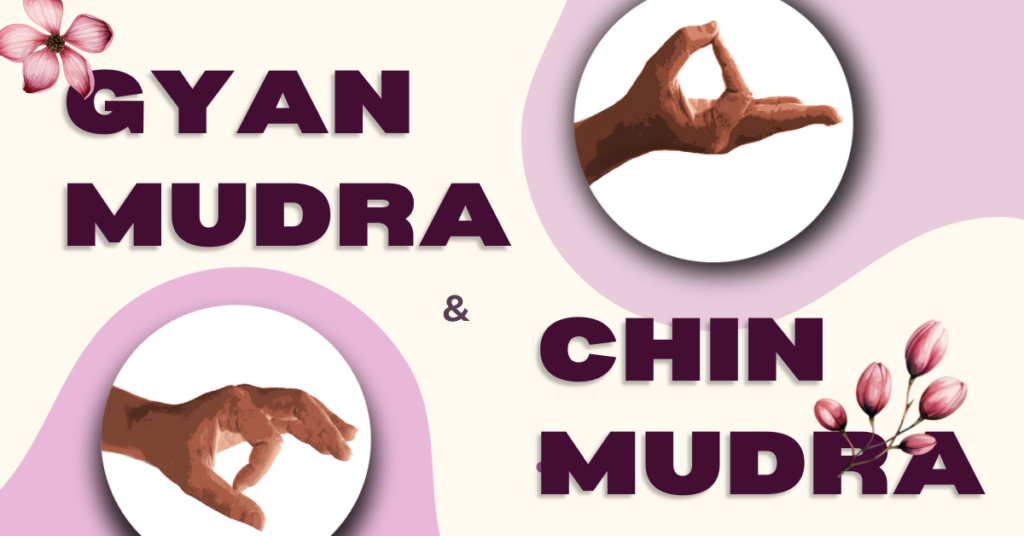
When fingertips touch lightly, it creates a gentle energy flow. This is commonly used in meditation mudras like Gyan (Jnana) Mudra for concentration and wisdom.
Finger Bases Touching
Touching the base of the finger creates a deeper energetic effect. This is used in therapeutic mudras for healing purposes.
Finger Pressing
Applying slight pressure increases stimulation. This is useful for energizing the body or correcting imbalances.
Fingers Folded or Extended
Folding or extending fingers changes the energy direction. For example:
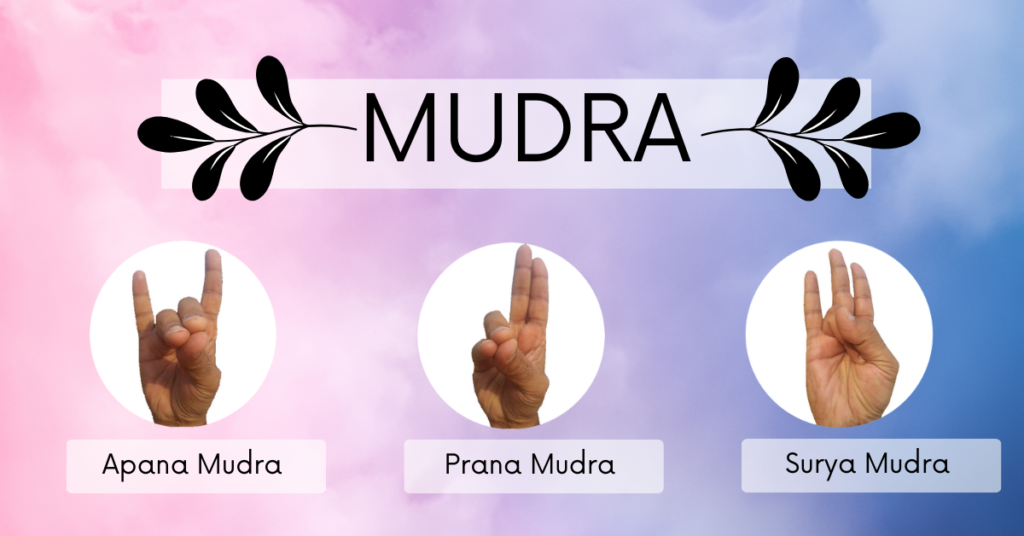
- Folding the index finger in Prana Mudra conserves energy.
- Extending certain fingers enhances specific elements.
Palms Facing Up or Down
Palms facing up receive energy, while palms facing down release excess energy.
Each variation creates a unique energy pattern, which is why different hasta mudras have different effects on health and consciousness.
Popular Hasta Mudras to Learn
Learning how Hasta Mudras work is only the first step. The real understanding comes through practice. Every mudra uses a different combination of fingers and has its own traditional purpose in yoga. Instead of trying many mudras at the same time, begin with one, practise it regularly, and observe how it fits naturally into your meditation or pranayama routine.
Some of the most commonly practised Hasta Mudras are:
Gyan (Jnana) Mudra –
commonly practised during meditation to support concentration and mental clarity.
Chin Mudra –
often used in yogic breathing and meditation to cultivate calmness and awareness.
Prana Mudra
– traditionally associated with vitality and the balanced flow of energy.
Vayu Mudra
– practised in yoga to help balance the air element (Vayu).
Apana Mudra
– traditionally used to support the body’s natural cleansing processes.
There is no need to master every mudra at once. Spending a little time with one mudra before moving to the next often makes the practice easier to understand and more meaningful.
Are Hasta Mudras Safe for Everyone?
Hasta Mudras are generally gentle practices and can be performed by people of different age groups. Since they do not involve strenuous physical movement, they are usually easy to include in a daily yoga routine. However, mudras are not intended to replace medical treatment or professional healthcare advice. If you have a serious medical condition, persistent symptoms, or are recovering from illness or surgery, it is advisable to consult a qualified healthcare professional and an experienced yoga teacher before relying on mudra practice for therapeutic purposes.
Frequently Asked Questions
How long should I practise a Hasta Mudra?
Beginners can start with 5–10 minutes and gradually increase the duration to 15–30 minutes, depending on the specific mudra and personal comfort.
Can Hasta Mudras be practised while sitting on a chair?
Yes. Mudras do not require any particular sitting posture. If sitting on the floor is uncomfortable, they may be practised while sitting upright on a chair with the spine comfortably straight.
Can I practise more than one mudra in a day?
Yes. Many practitioners combine different mudras in the same session. However, beginners may find it easier to practise one mudra consistently before adding others.
Do Hasta Mudras replace medical treatment?
Hasta Mudras are traditionally practised to support overall balance and well-being. If you have a medical condition or specific health concerns, it is always wise to seek appropriate professional guidance before depending on any yogic practice for therapeutic purposes.
Conclusion
Hasta mudras are an important part of the yogic tradition, offering a simple yet meaningful way to deepen meditation, pranayama, and daily yoga practice. Rooted in the wisdom of ancient India, these hand gestures are traditionally understood to help direct awareness, support the balanced flow of prana, and cultivate harmony between the body and mind.
By learning the relationship between the fingers, the Panch Tatwa (five elements), and the traditional principles behind mudras, practitioners can approach these techniques with greater understanding and purpose. Like every aspect of yoga, their value unfolds gradually through regular, mindful, and patient practice.
In a world that often encourages constant activity, Hasta mudras gently remind us that even the smallest conscious actions can become a doorway to greater calmness, self-awareness, and inner balance.
About the AuthorYogacharya Dhruv Ji is a Yoga Teacher and practitioner committed to preserving and sharing the authentic wisdom of traditional Yoga and Kriya Yoga. Dhruv Ji received his training in Yoga and Kriya Yoga under the esteemed guidance of Swami Birajananda Giri Maharaj, a revered spiritual teacher known for his deep understanding of yogic philosophy, meditation, and the ancient practices of self-realization. |
Disclaimer
At Yoga Vasundhara, our aim is to share the traditional wisdom of yoga in a simple and practical way. Every yoga practitioner brings a unique combination of age, physical condition, health, and life experience to the practice. Because of these natural differences, the same yogic technique may not be suitable or produce the same experience for everyone. Whether you are practising asanas, pranayama, mudras, meditation, or other yogic disciplines, it is important to progress at a pace that is appropriate for your own body and circumstances.
If you have a medical condition, are recovering from an injury or surgery, are pregnant, or have any concerns about your health, consult a qualified healthcare professional and an experienced yoga teacher before beginning any new practice.
Yoga Vasundhara encourages the safe and mindful practice of yoga. Always listen to your body, practise within your own limits, and discontinue any technique that causes pain, discomfort, or unusual symptoms.