
Kriya Yoga: A successful journey towards the spiritual path

Kriya Yoga: A Brief Overview
Kriya Yoga is a spiritual discipline rooted in ancient Indian yogic traditions, designed to accelerate inner growth and self-realization. The word kriya means “action,” and in this context it refers to conscious, disciplined practices that harmonize body, breath, and mind. Kriya Yoga gained worldwide recognition in the modern era through Paramahansa Yogananda, who presented it as a practical, scientific approach to spirituality.
At its core, Kriya Yoga centers on the regulation of prana, or life energy, through specific breathing techniques. By guiding this energy along the spine, practitioners aim to calm the nervous system and still the fluctuations of the mind. This inner stillness is believed to naturally lead to heightened awareness and deeper meditation. Unlike purely physical yoga systems, it places minimal emphasis on postures and greater emphasis on breath, concentration, and meditation.
Classically, Kriya Yoga is described as having three essential components: tapas (self-discipline or effort), svadhyaya (self-study), and Ishvara pranidhana (surrender to the higher reality). Together, these elements cultivate both inner purification and spiritual insight. Regular practice is said to reduce restlessness, sharpen intuition, and foster emotional balance.
It is traditionally taught through direct initiation by a qualified teacher, as its techniques are subtle and intended to be practiced with guidance. This lineage-based transmission helps preserve both the accuracy of the methods and their spiritual intent. Practitioners are encouraged to integrate it into daily life, using it not as an escape from responsibilities but as a means to live with greater clarity and purpose.
In essence, it offers a concise yet profound path for those seeking inner transformation. By working directly with breath and awareness, it aims to bridge the gap between everyday life and spiritual realization, presenting enlightenment not as a distant ideal but as a gradual, attainable experience.
Is Kriya Yoga a type of Pranayama?
It is closely related to pranayama, but it is not limited to pranayama alone. To understand the relationship clearly, it is helpful to see pranayama as a core component within a much broader spiritual system.
Pranayama, in classical yoga, refers to the regulation and control of breath in order to influence prana, the vital life force. Techniques such as slow breathing, alternate nostril breathing, and breath retention are designed to calm the nervous system, purify energy channels (nadis), and prepare the mind for meditation. In this sense, pranayama serves as a bridge between the physical body and the subtle mind.
It builds directly upon this foundation. At its heart are advanced, highly refined pranayama techniques that work with breath, attention, and subtle energy along the spinal axis. The most well-known Kriya technique involves consciously guiding the breath and awareness up and down the spine, synchronizing inhalation and exhalation with mental focus. This process is believed to accelerate spiritual evolution by rapidly calming mental activity and awakening higher states of awareness.
However, reducing Kriya Yoga to “just pranayama” would be incomplete. While pranayama is central, it is a comprehensive spiritual path that also includes meditation, ethical discipline, devotion, and self-inquiry. In Patanjali’s Yoga Sutras, it is described as a combination of tapas (disciplined effort), svadhyaya (self-study), and Ishvara pranidhana (surrender to the divine). These elements extend far beyond breathing techniques and address the practitioner’s entire way of life.
What distinguishes Kriya pranayama from common breathing exercises is its depth and purpose. The goal is not simply relaxation or health benefits, though these often occur. Instead, Kriya pranayama is designed to still the mind at its root by directly influencing the subtle nervous system. According to yogic philosophy, when breath becomes calm and refined, thought naturally slows, allowing meditation to arise spontaneously rather than through force.
Another key distinction is that it is traditionally taught through initiation by an experienced teacher. This ensures that the techniques are practiced safely, correctly, and with the right inner attitude. The emphasis is on regular, devoted practice rather than experimentation or casual use. Over time, practitioners report increased inner silence, heightened awareness, and a deeper sense of connection with their inner self.
In summary, it is not merely a pranayama practice, but it is deeply rooted in pranayama. Breath control acts as the main engine of transformation, while meditation, ethical living, and spiritual surrender guide the practitioner toward self-realization. Pranayama is the doorway; it is the path that unfolds beyond it.
How is this different from other pranayama practices?
It differs from other pranayama practices in purpose, method, depth, and spiritual scope. While all pranayama works with breath and energy, Kriya is a specialized, meditative pranayama designed primarily for inner transformation rather than general breath control or health benefits.
- Purpose and Goal
Most pranayama techniques—such as kapalabhati, bhastrika, anulom-vilom, or ujjayi—are practiced to improve lung capacity, balance the nervous system, cleanse energy channels, or support physical and mental health. Their benefits are often preparatory: they help make the body and mind fit for meditation.
Kriya pranayama, however, is practiced with a direct spiritual aim. Its primary goal is to quiet mental fluctuations and accelerate self-realization. Health benefits are considered secondary effects rather than the main objective.
- Method of Practice
In common pranayama, the practitioner focuses mainly on breathing patterns—speed, rhythm, nostrils, or breath retention. Attention stays mostly with the breath itself.
In Kriya, breath is combined with focused awareness and subtle energy movement. The practitioner mentally guides prana along the spinal pathway, synchronizing breath with concentration at specific inner points. This union of breath, mind, and energy is what makes Kriya more meditative than mechanical.
- Depth of Nervous System Influence
General pranayama works on the respiratory system and autonomic nervous system. It calms or energizes, depending on the technique.
Kriya is said to work directly on the subtle nervous system, especially the spine and brain. By refining the breath to an extremely subtle level, it naturally slows thought without force. Meditation arises as a consequence, not as an added step.
- Role in Meditation
In many yoga systems, pranayama is a preparatory limb practiced before meditation.
In this technique, pranayama is itself a form of meditation. The practitioner remains inwardly absorbed throughout the practice, making the transition to deep meditation seamless.
- Transmission and Discipline
Most pranayama techniques can be learned from books or general classes.
Kriya is traditionally taught through initiation by a qualified teacher, emphasizing accuracy, discipline, and ethical preparation. Regular, devoted practice is considered essential.
In essence, other pranayama practices prepare the ground; Kriya cultivates the inner awakening directly. It is not better or superior, but more specific in its spiritual intent, making it a distinct and focused yogic path.
Is there any scientific evidence related to the benefits of Kriya Yoga?
Yes — there is scientific research suggesting benefits from practices closely related to this technique, but the evidence is mixed, limited in scope, and not yet definitive for all traditional claims. It’s important to look at what research does and doesn’t support when assessing it’s effects.
Research on Related Breathwork (Sudarshan Kriya)
Most scientific studies focus on Sudarshan Kriya Yoga (SKY) — a specific cyclical breathing technique taught by the Art of Living Foundation — rather than classical Kriya Yoga as taught in traditions like Paramahansa Yogananda’s lineage. However, this research still provides useful insight because SKY shares core breath-based mechanisms with Kriya practices.
- Mental health benefits: Over 100 peer-reviewed studies indicate that SKY can reduce stress, anxiety, depression, and PTSD symptoms, and improve overall mental wellbeing. These effects have been observed across different populations worldwide.
- Lifestyle and general health: A large cross-sectional study found that adults who practiced SKY regularly were more likely to report healthier lifestyle habits — including better sleep, lower stress, and improved general health markers.
- Physiological measures: Some long-term interventions have reported changes such as improved antioxidant enzyme levels, reduced blood pressure, and better autonomic (nervous system) balance in yoga practitioners including pranayama components.
- Brain and Nervous System Effects
A few studies specifically on this techniques (or closely overlapping breath-and-meditation practices) show promising neurobiological changes:
- A controlled study involving health care workers found that six weeks of Kriya Yoga practice increased alpha and delta EEG brain wave power — patterns linked with relaxation — and significantly reduced perceived stress.
- A study from India reported that regular Kriya Yoga training was associated with changes in the cingulate gyrus (an area involved in awareness and attention), suggesting potential neurobiological effects beyond subjective reports. (The Times of India)
- What the Research Suggests
Supported benefits:
- Stress reduction — consistent findings link breath-based practices like SKY with lower stress markers and improved mood.
- Emotional regulation — people practicing these techniques often report better emotional control.
- Lifestyle improvements — more frequent practice correlates with healthier habits.
- Brain changes — some EEG and neuroimaging studies suggest changes in brain function related to attention and relaxation. (The Times of India)
- Limitations in the Scientific Evidence
Despite positive findings, there are important caveats:
- Few high-quality RCTs on classical Kriya Yoga:
Most rigorous studies focus on Sudarshan Kriya or general yogic breathwork, not specifically on traditional Kriya Yoga as a lineage practice taught by Yogananda or other masters. The techniques, intensity, and contexts vary, so results from one system don’t automatically apply to all. - Methodological limitations:
Smaller sample sizes, short durations, or lack of active control groups in many studies make it hard to draw firm conclusions about causation. Researchers frequently call for larger, well-controlled randomized trials with biomarkers and long-term follow-up. - Spiritual claims are not measurable:
Traditional yogic goals like spiritual evolution, awakening, or union with the divine are subjective and metaphysical, so they’re not directly assessable by scientific methods. Research focuses instead on measurable psychological and physiological outcomes. - Summary
In summary, scientific evidence supports certain benefits of breath-based practices related to it, especially in the areas of stress reduction, emotional wellbeing, and some brain effects. However, there is limited rigorous research specifically on classical Kriya Yoga, and many traditional spiritual claims remain beyond the scope of scientific measurement.
If you practice Kriya Yoga, it’s reasonable to expect potential improvements in stress management, mental clarity, and lifestyle wellbeing, but claims around deeper spiritual outcomes aren’t yet backed by controlled scientific evidence.
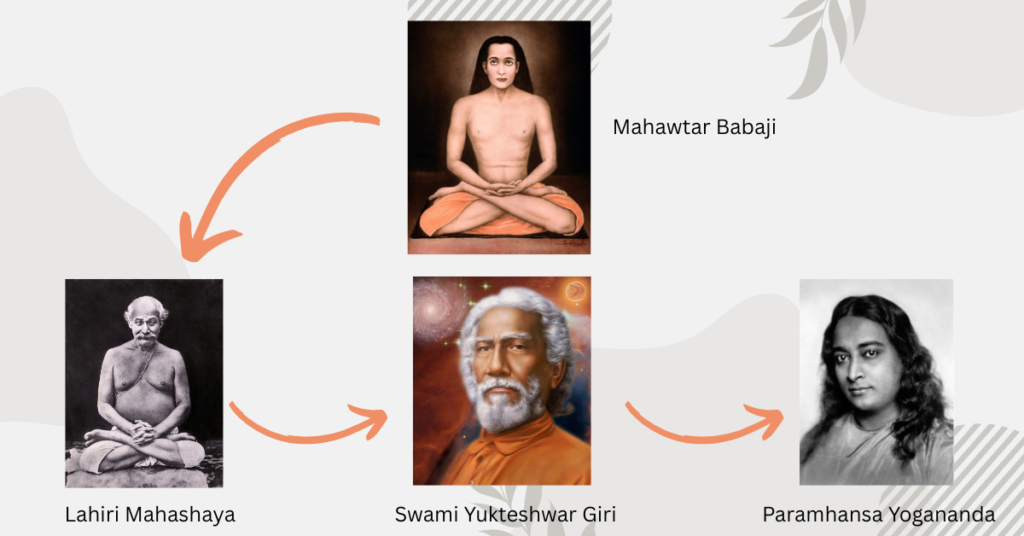
Prominent masters of kriya yoga, and who discovered kriya yoga?
It is an ancient spiritual science rather than a newly invented system, and its origins are traditionally traced to enlightened masters rather than a single historical founder. Over time, a lineage of prominent teachers preserved, revived, and introduced Kriya Yoga to the modern world.
Origins of Kriya Yoga
According to yogic tradition, Kriya Yoga has existed for thousands of years but was lost and rediscovered multiple times. It is said that this technique was known to the ancient Indian sages and is indirectly mentioned in classical texts such as Patanjali’s Yoga Sutras, where “Kriya Yoga” has been described as a path of disciplined practice, self-study, and surrender to the divine. However, the specific pranayama-based method associated with modern Kriya Yoga was not widely accessible for centuries.
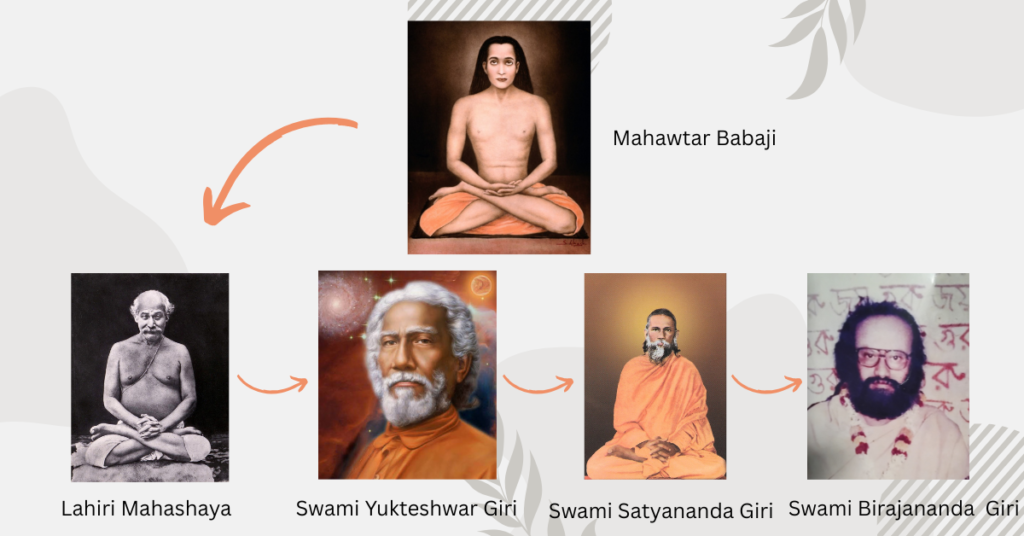
The revival of Kriya Yoga in modern times is traditionally attributed to Mahavatar Babaji, a mysterious yogi believed to be an immortal or highly realized master. Babaji is said to have reintroduced Kriya Yoga in the 19th century, emphasizing it as a direct and efficient method for spiritual awakening in the modern age.
Lahiri Mahasaya
The first historical figure clearly associated with the public revival of Kriya Yoga was Lahiri Mahasaya (1828–1895). Initiated by Mahavatar Babaji, Lahiri Mahasaya broke with convention by teaching Kriya Yoga to householders rather than restricting it to monks or ascetics. He demonstrated that deep spiritual realization was possible while living an ordinary life, which greatly expanded the appeal of Kriya Yoga.
Sri Yukteswar
Lahiri Mahasaya’s disciple Sri Yukteswar Giri (1855–1936) was a renowned scholar and yogi who systematized the teachings of Kriya Yoga. He emphasized harmony between Eastern spirituality and Western science, presenting Kriya Yoga as a rational, disciplined path rather than a mystical belief system. His book The Holy Science reflects this integrative approach.
Paramahansa Yogananda
Kriya Yoga became known worldwide largely through Paramahansa Yogananda (1893–1952), a disciple of Sri Yukteswar. Yogananda traveled to the United States in 1920 and spent over three decades teaching yoga and meditation. His autobiography, Autobiography of a Yogi, introduced millions of readers to Kriya Yoga and its lineage. Through the Self-Realization Fellowship (SRF), he established a structured system for teaching Kriya Yoga globally, ensuring its continuity beyond India.
Other Influential Masters
Other notable figures include Swami Satyananda Giri, Swami Birajananda Giri (Satyananda Giri’s disciple), Yogiraj Shyama Charan Lahiri’s descendants and disciples, and later teachers who adapted Kriya-inspired practices in various forms. While interpretations and methods may differ, the central emphasis on breath, awareness, and inner transformation remains consistent.
How the World Came to Know Kriya Yoga
The global recognition of Kriya Yoga is primarily due to Yogananda’s writings, lectures, and institutional efforts. His presentation of Kriya Yoga as a universal, non-sectarian science of self-realization resonated with modern seekers worldwide.
In summary, Kriya Yoga was not invented by one person but preserved and revived through a lineage of realized masters. From Mahavatar Babaji to Lahiri Mahasaya, Sri Yukteswar, and Paramahansa Yogananda, each played a crucial role in bringing this ancient spiritual practice to the world.
Disclaimer
This article simply aims to provide you information about yoga and different practices related to yoga, we do not in any way direct you towards a specific method of yoga practice/ pranayama or meditation technique or brathing practices. We always recommend that people should understand their diseases and disadvantages and take advice of experts. Because you may face many inconveniences due to your physical condition, disease, etc., it is advised that you must take the advice of a doctor and yoga expert before starting. We will not be responsible under any circumstances.