
Anulom Vilom Pranayama: 8 Groundbreaking Methods For A Complete Life
Pranayama is one of the most profound and practical gifts of the ancient yogic tradition. In this article, we will discuss in detail the meaning, origin, method, benefits, precautions, and scientific relevance of Pranayama in general, and in this first part of the article on Pranayama, we will briefly discuss the field of Anulom Vilom Pranayama.
Meaning of Pranayama
The Sanskrit word pranayama = prana + Ayama.
- Prana means life force, vital energy, or bio-energy that sustains all living beings.
- Ayama means expansion, regulation, or control.
Thus, pranayama means the expansion and regulation of vital life energy through controlled breathing. It is not simply inhalation and exhalation; it is a conscious process of directing prana to balance the body, mind, and emotions.
Status of Pranayama in Patanjali’s Ashtanga Yoga
In Patanjali’s Ashtanga Yoga, pranayama holds the fourth position out of the eight limbs:
- Yama (ethical restraints)
- Niyama (personal observances)
- Asana (postures)
- Pranayama (breath regulation)
- Pratyahara (withdrawal of senses)
- Dharana (concentration)
- Dhyana (meditation)
- Samadhi (self-realization)
Pranayama acts as a bridge between the external and internal practices. Patanjali states that through pranayama, the veil covering inner awareness is removed, making the mind fit for concentration and meditation.
Is Pranayama Necessary for Meditation?
Yes, pranayama is considered essential for deep and stable meditation. An uncontrolled breath reflects an unstable mind. By regulating breathing, pranayama calms the nervous system, reduces mental fluctuations, and prepares the mind for meditation. Without pranayama, meditation often remains superficial and restless.
Interesting Facts About Pranayama
- Breathing patterns directly influence emotions—slow breathing induces calmness, while rapid breathing creates anxiety.
- Ancient yogis believed that a person has a fixed number of breaths in a lifetime; slowing breath increases longevity.
- Pranayama affects not only lungs but also brain waves, heart rate, digestion, and immunity.
- Breath is the only autonomic function we can consciously control, making pranayama a powerful self-regulation tool.
Who Invented the Science of Pranayama?
Pranayama was not invented by a single individual. It evolved through centuries of yogic exploration by ancient Indian sages (Rishis). References to pranayama are found in the Vedas, Upanishads, Bhagavad Gita, Hatha Yoga Pradipika, and Yoga Sutras of Patanjali. Sage Patanjali systematized pranayama into a structured yogic framework.
How many types of pranayama are practiced?
Traditionally, classical texts mention 8 major pranayamas, while modern yoga systems describe 15–20 variations. These include calming, energizing, balancing, and cleansing techniques.
Important Techniques of Pranayama
Some widely practiced pranayama techniques are:
- Nadi Shodhana (alternate nostril breathing)
- Kapalbhati
- Bhastrika
- Anulom Vilom
- Bhramari
- Ujjayi
- Sheetali and Sheetkari
- Surya Bhedana
Each technique has a specific purpose and effect on the body and mind.
Who Can Perform Pranayama?
Pranayama can be practiced by:
- Children, adults, and elderly people
- Healthy individuals and those with mild ailments
- Men and women alike
With proper guidance and modifications, pranayama is suitable for almost everyone.
We should include pranayama in our daily yoga routine.
Daily practice of pranayama:
- Improves lung capacity and oxygen supply
- Reduces stress, anxiety, and depression
- Enhances immunity and digestion
- Improves focus, memory, and emotional stability
- Balances hormonal and nervous systems
Just 15–20 minutes daily can bring noticeable positive changes.
Pranayama for Beginners
Beginners should start with:
- Simple awareness of breath
- Anulom Vilom
- Deep abdominal breathing
- Bhramari pranayama
Duration should be short initially, focusing on comfort and consistency rather than intensity.
Why People with Breathing Trouble Should Practice Pranayama
Pranayama strengthens respiratory muscles, clears nasal passages, and improves lung efficiency. It is highly beneficial for:
- Asthma
- Allergies
- Bronchitis
- Chronic obstructive pulmonary disease (COPD)
Regular practice helps reduce dependency on medications (with medical supervision).
Pranayama in Ancient Era
In ancient times, pranayama was practiced by yogis in forests and ashrams as part of spiritual discipline. It was considered a sacred practice for purification of nadis (energy channels) and awakening higher consciousness.
When Should We Practice Pranayama?
The best time is:
- Early morning (Brahma Muhurta)
- On an empty stomach
- In a clean, quiet, and well-ventilated place
Evening practice is acceptable after a gap of 4–5 hours after meals.
Correct Method of Doing Pranayama
- Sit in a comfortable meditative posture
- Keep spine straight and body relaxed
- Practice slow, rhythmic breathing
- Focus on breath awareness
- Avoid strain, force, or breath retention beyond comfort
Precautions During Pranayama
- Learn from a qualified yoga instructor
- Do not practice on a full stomach
- Avoid excessive force or speed
- Stop if dizziness or discomfort occurs
Contraindications and Limitations
Certain pranayamas should be avoided or modified in cases of:
- Pregnancy
- High blood pressure
- Heart disease
- Recent surgery
Medical consultation and expert guidance are essential in such cases.
Who Should Not Perform Pranayama?
People with severe cardiac issues, uncontrolled hypertension, severe respiratory infections, or mental instability should avoid advanced pranayama practices unless supervised by experts.
Main Five Types of Pranayama and Their Health Effects
- Anulom Vilom – balances nervous system, and it is also stress reducing
- Kapalbhati – detoxifies body, improves digestion
- Bhastrika – energizes body, boosts metabolism
- Bhramari – calms mind, relieves anxiety and insomnia
- Ujjayi – improves concentration and respiratory health
Holistic Approach of Pranayama
Pranayama works on:
- Physical body (lungs, heart, organs)
- Mental body (thoughts, emotions)
- Energetic body (prana flow)
- Spiritual growth (self-awareness and inner peace)
It is a holistic healing system, not a symptomatic treatment.
Basic Preparations for Pranayama Practice
- Clean surroundings
- Loose, comfortable clothing
- Empty stomach
- Calm mental state
- Proper posture
Difference Between Rhythmic Breathing Exercise and Pranayama
Rhythmic breathing focuses mainly on physical benefits, while pranayama includes awareness, control, retention, and pranic flow. Pranayama is deeper, more subtle, and spiritually oriented.
Medical Background and Scientific Support for Pranayama
Modern science recognizes pranayama’s role in:
- Regulating autonomic nervous system
- Reducing cortisol (stress hormone)
- Improving oxygen saturation
- Enhancing heart rate variability
What does medical science recommend for pranayama?
Doctors and researchers suggest pranayama as a complementary therapy for:
- Stress-related disorders
- Hypertension
- Anxiety and depression
- Respiratory diseases
Evidence-Based Research on Pranayama
Numerous studies published in reputed journals show that pranayama:
- Lowers blood pressure
- Improves lung function
- Reduces anxiety and depression scores
- Enhances cognitive function
Institutions like AIIMS, Harvard Medical School, and WHO have acknowledged yoga and pranayama as effective preventive health tools. Pranayama is an effective, holistic technique for connecting the body with the breath and mind. From ancient sages to modern scientists, its benefits have been universally recognized. When practiced correctly and consistently, pranayama becomes a lifelong companion for health, peace, and inner transformation. Integrating pranayama into daily life is not just a wellness choice—it is a step toward conscious, balanced living. Today we will briefly discuss “Anulom Vilom”. In the next section, we will discuss Anulom Vilom in more detail.

What Is Anulom Vilom?
Anulom Vilom is a classical breathing technique (pranayama) described in yogic scriptures based on alternate nostril breathing.
The term comes from Sanskrit:
- Anulom means “with the natural order,”
- Vilom means “in the reverse order.”
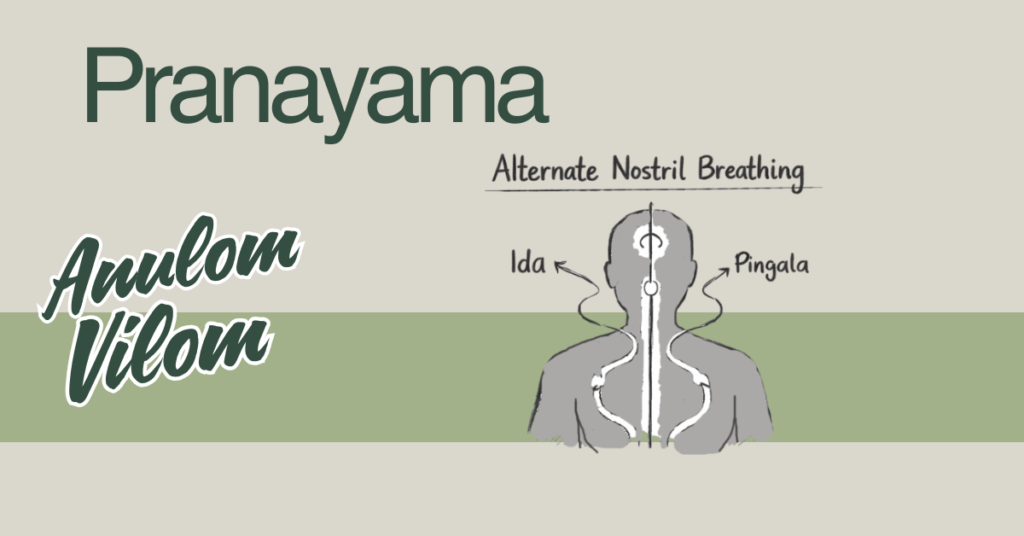
- Together, Anulom Vilom denotes alternating nostril breathing in a planned sequence. By harmonizing the two primary energy channels outlined in yoga philosophy, this practice is intended to bring the vital energy (prana) of the body into equilibrium: Anulom Vilom helps stabilize the nervous system, promote mental clarity, and overall physical and mental well-being by balancing these channel:
- Ida Nadi (left nostril, moon energy – calming, cooling)
- Pingala Nadi (right nostril, sun energy – heating, activating)
How to Do Anulom Vilom (Step-by-Step Method)
- Sit comfortably in a meditative posture such as Padmasana, Sukhasana, or Vajrasana, keeping the spine straight and shoulders relaxed.
- Relax by closing your eyes and taking a few regular breaths.
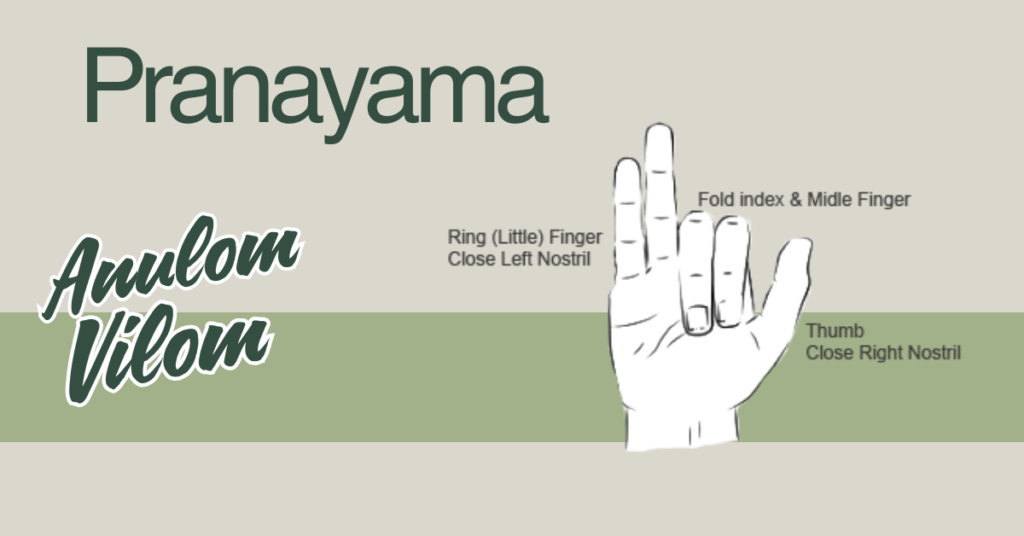
- Use your right hand in Vishnu Mudra:
- Fold your index finger and middle fingers into the palm.
- Use your thumb to close your right nostril.
- Use your ring finger to close your left nostril.
Breathing sequence:
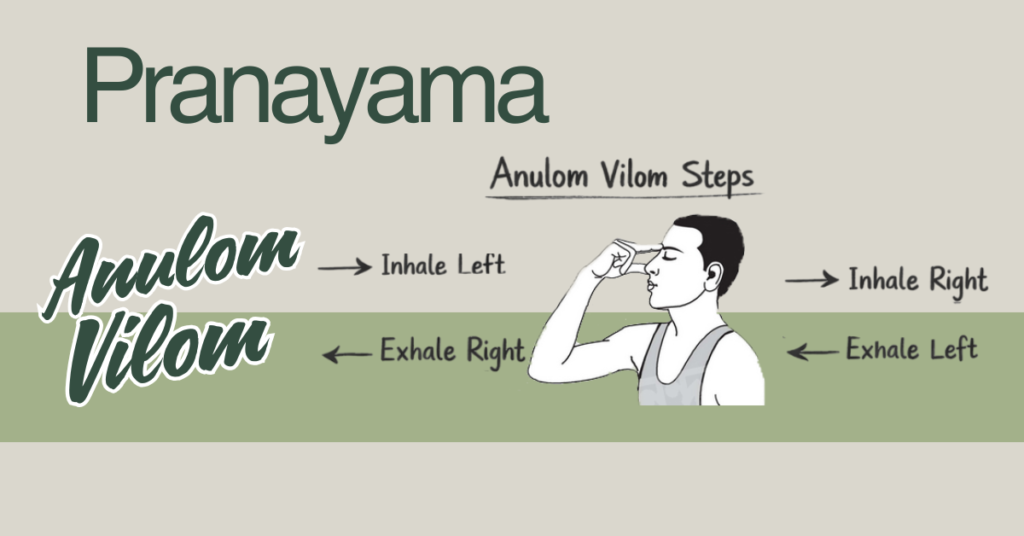
- Close your right nostril with the thumb and inhale slowly through your left nostril.
- Close your left nostril with your ring finger and exhale through the right nostril.
- Inhale through the right nostril.
- Close your right nostril with the thumb and exhale through your nostril.
This completes one round. Continue smoothly and rhythmically without strain.
Benefits of Anulom Vilom
Regular practice of Anulom Vilom offers wide-ranging benefits:
- Calms the nervous system, which reduces stress and anxiety.
- Improves oxygen flow and lung efficiency
- Helps relieve migraine, tension headaches, and joint stiffness (arthritis)
- Enhances cognitive function, memory, and concentration
- Strengthens respiratory and immune systems
- Aids digestion and metabolism by improving pranic circulation
- Helps regulate blood pressure when practiced gently and regularly
Over time, it promotes emotional balance, mental clarity, and inner calm.
Who Should Avoid or Be Cautious?
Although Anulom Vilom is generally safe, the following should be avoided: These people should only practice yoga with the help of a trained yogi or a doctor.
- People with severe asthma or COPD
- Individuals with uncontrolled high blood pressure
- Those with serious heart conditions
- Women in advanced pregnancy
If dizziness, discomfort, or breathlessness occurs, stop the practice immediately.
When Is the Best Time to Practice?
The ideal times to practice Anulom Vilom are:
- Early morning, before eating (best time for pranayama)
- Evening, before sleep, to calm the mind
It can also be practiced at other times, provided the stomach is empty (at least 3–4 hours after meals).
How Long Should One Practice?
- Beginners should start with 5 minutes daily
- Gradually increase to 15–30 minutes as comfort and capacity improve
- Consistency is more important than duration
Slow, relaxed breathing yields better results than forceful or hurried practice.
Difference Between Anulom Vilom and Nadi Shodhana
Despite being frequently used interchangeably, there is a subtle distinction:
- Without breath retention, Anulom Vilom focuses solely on alternate nostril inhalation and exhalation.
- Nadi Shodhana is a more advanced practice that includes specific stages of kumbhaka (retention of breath).
As a result, Anulom Vilom is better for beginners and general wellness, whereas Nadi Shodhana is practiced with guidance to achieve more profound yogic effects.
Can Anulom Vilom Help in Cancer?
Some research and clinical observations suggest that long-term pranayama practice, including Anulom Vilom, may:
- Improve quality of life
- Reduce stress, anxiety, and fatigue
- Support immune function and emotional resilience
However, cancer is a complex medical condition. Anulom Vilom should not be regarded as a substitute for medical treatment but rather as a supportive and complementary practice. It is essential to consult with doctors and follow medical instructions.
Conclusion
Anulom Vilom is a straightforward yet potent pranayama that restores harmony to the mind, body, and energy system. It is a great way to get started with yogic breathing practices because it is simple to learn and appropriate for the majority of people. With regular, mindful practice, Anulom Vilom can become a lifelong tool for stress management, better health, and inner harmony.
Disclaimer
This article only inspires you to start Pranayama, and it also provides information about it, we do not in any way direct you towards a specific method of yoga & Pranayama practice. We always recommend that people should understand their diseases and disadvantages and take advice of experts. Because you may face many inconveniences due to your physical condition, disease, etc., it is advised that you must take the advice of a doctor and yoga expert before starting. We will not be responsible under any circumstances.