
Kapalbhati Pranayama: Benefits, Steps, Types and Precautions
Kapalbhati Pranayama is a traditional yogic practice in which air is expelled actively through the nose using rhythmic abdominal contractions. After each forceful exhalation, the next breath comes in gently without a conscious pulling action. Understanding this breathing pattern is an important first step in learning the technique correctly.
Kapalbhati is commonly discussed for its potential effects on breathing, alertness and overall wellbeing. This guide explains how to practise Kapalbhati Pranayama, explores its traditional forms and potential benefits, and covers common mistakes, practice duration and precautions to help you approach the technique safely.
Kapalbhati Pranayama at a Glance
- Breathing technique: A series of active, controlled exhalations followed by relatively passive inhalations.
- Traditional context: Described in Hatha Yoga as a cleansing practice and commonly taught alongside pranayama in modern yoga classes.
- Key learning point: Correct abdominal movement and controlled breathing matter more than speed.
- For beginners: Start gently and learn the technique before increasing the pace or number of strokes.
- Before practising: Kapalbhati may not be appropriate for people with certain health conditions, so medical guidance may be necessary. Review the precautions before practising, especially if you have a medical condition or are pregnant.
What Is Kapalbhati Pranayama?
Kapalbhati is a traditional practice of Hatha Yoga associated with rhythmic breathing and the movement of the abdominal muscles. The word Kapalbhati brings together two Sanskrit elements: kapala, associated with the head, and bhati, which expresses the idea of radiance or a bright appearance. It is commonly translated as “Skull-Shining Breath” and is also written as Kapal Bhati or Kapalabhati in some yoga resources. The translation alone, however, does not explain the practice’s traditional purpose.
Kapalbhati has a specific place in classical yoga literature. The Hatha Yoga Pradipika includes it among the six cleansing practices known as shatkarma and describes rapid breathing in comparison with the action of a blacksmith’s bellows. In contemporary yoga classes, Kapalbhati is also commonly taught alongside pranayama techniques, reflecting differences in how the practice is classified and taught.
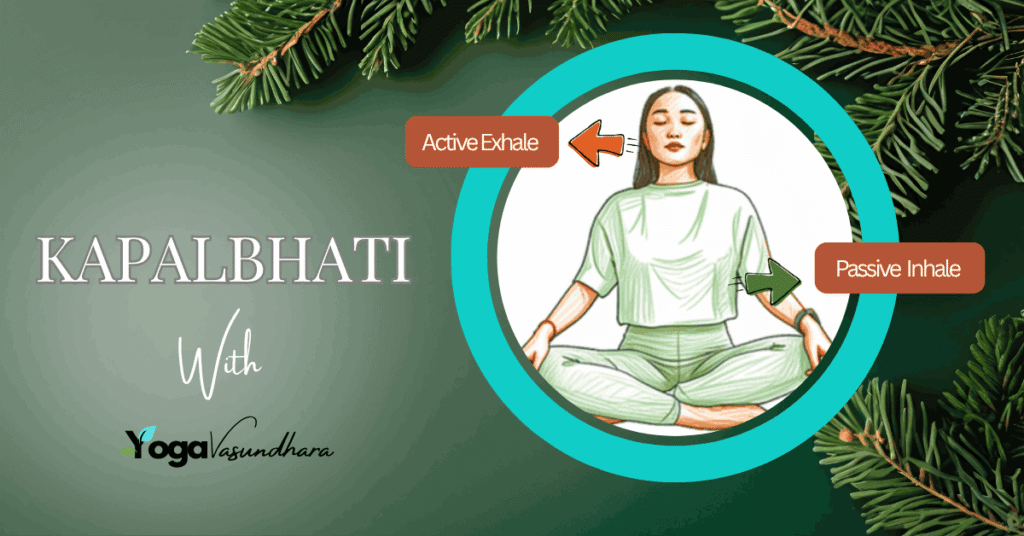
In the commonly taught form, Kapalbhati is distinguished by its repeated, active exhalations and relatively passive inhalations. The abdominal muscles drive each exhalation, while the next inhalation occurs naturally without deliberate force.
How Does Kapalbhati Pranayama Work?
Kapalbhati involves coordinated abdominal movement and breathing. Understanding how these work together helps explain the technique and why controlled practice matters.
How Is Kapalbhati Different from Normal Breathing?
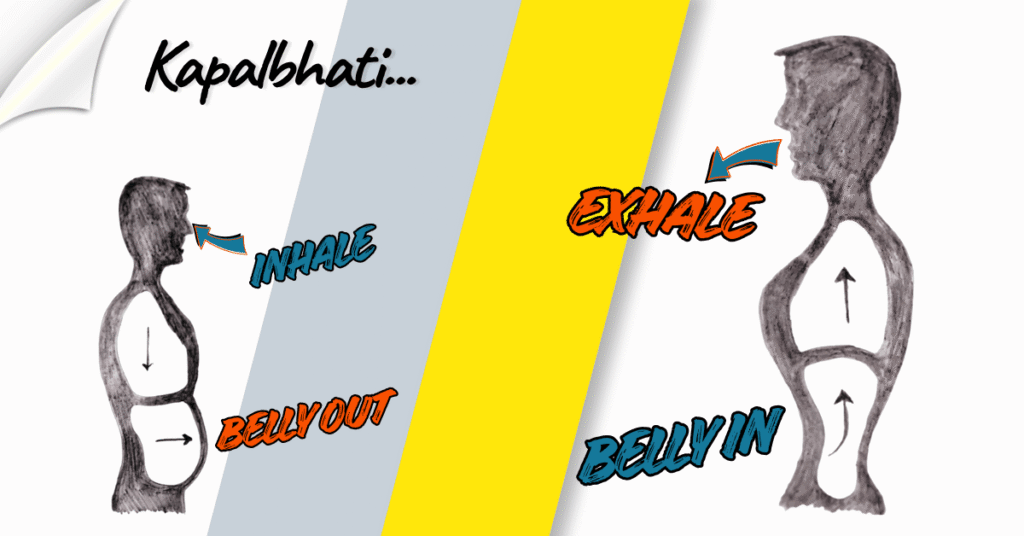
In ordinary, relaxed breathing, inhalation and exhalation usually occur without deliberate abdominal contractions. Kapalbhati brings conscious attention to the outward movement of air and uses repeated abdominal contractions to produce it.
This does not mean that stronger or faster contractions necessarily make the practice better. The breathing rhythm should remain controlled, with minimal unnecessary movement in the shoulders and upper body. The practice relies on a controlled rhythm between the outward breath and the inward movement of the abdomen, while keeping unnecessary tension out of the body.
Why Technique Matters
Excessive speed or force can make it harder to maintain control, so the technique should be learned gradually and adjusted to individual comfort and ability.
For this reason, Kapalbhati should not be treated as a competition in breathing speed or as a technique in which discomfort must be overcome. Learning the breathing pattern gradually and recognising personal limits are important parts of responsible practice.
What Are the Benefits of Kapalbhati Pranayama?
Kapalbhati’s benefits should be considered in light of both its traditional role in yoga and the available scientific evidence. Traditional texts describe its place in yogic practice, while research examines specific health outcomes.
Potential Effects on Respiratory Function
Kapalbhati involves repeated, active exhalations produced with the help of the abdominal muscles. Researchers have investigated whether this practice influences measures of respiratory function. Some studies have reported encouraging findings, but the evidence remains limited. It is not yet clear whether Kapalbhati produces consistent improvements in respiratory function across different populations. It should not be used as a substitute for medical assessment or treatment of respiratory conditions.
Kapalbhati Pranayama and Brain Function
Some research has examined whether Kapalbhati is associated with changes in attention and other measures of cognitive performance. These findings are of interest, but more rigorous research is needed to determine how consistent the effects are, how long they last and whether they translate into meaningful everyday benefits.
Kapalbhati should therefore not be presented as a proven method for improving memory or treating cognitive conditions.
Can Kapalbhati Help You Feel More Alert?
Some practitioners describe feeling more alert after performing Kapalbhati. This is a subjective experience, however, and should not be confused with proof of a lasting improvement in mental performance. Responses may vary with technique, pace, experience and individual tolerance.
The practice should remain comfortable and controlled rather than being used to force a particular sensation.
Can Kapalbhati Pranayama Reduce Belly Fat?
Kapalbhati produces repeated abdominal muscle contractions, but abdominal movement does not mean that fat is being selectively removed from the belly. There is insufficient evidence to conclude that Kapalbhati alone causes targeted fat loss or substantial weight reduction.
For readers interested in weight management, it is more accurate to consider breathing practices as one possible part of a broader yoga routine rather than a standalone weight-loss method.
Kapalbhati, Yogic Cleansing and Digestion
In Hatha Yoga, Kapalbhati is traditionally associated with the yogic cleansing practices known as shatkarma. This context helps explain its place in the tradition, but it does not establish that the practice removes medically defined toxins or treats digestive disorders.
Claims about detoxification, digestion or disease prevention need specific evidence before they can be described as established health benefits.
How to Do Kapalbhati Pranayama
Follow these steps to learn the commonly taught form of Kapalbhati Pranayama, focusing on controlled exhalation, relaxed posture and a comfortable breathing rhythm.
Step 1: Choose a Stable, Comfortable Seat
Sit cross-legged on a yoga mat or folded blanket, choosing a position that allows you to remain upright without discomfort. You may also sit on a stable chair if sitting on the floor is difficult. Sit comfortably with your back held straight without stiffness, resting your hands on your thighs or knees.
Step 2: Relax and Settle Your Breathing
Keep your shoulders relaxed, your face soft and your jaw unclenched. Close your eyes if comfortable. Breathe naturally through the nose for a few moments, allowing the breath to settle before beginning.
Step 3: Exhale Actively
Contract the abdominal muscles to push air out through the nostrils. The abdomen moves inward during each active exhalation and relaxes as the next inhalation occurs naturally. With each active exhalation, draw your abdomen inward briefly, then let it relax as the next inhalation occurs naturally. Avoid rocking your torso or lifting your shoulders as you breathe out.
Step 4: Allow the Inhalation to Occur Naturally
After each active exhalation, relax the abdominal muscles and let the next inhalation occur naturally. Avoid deliberately pulling air in or making the inhalation forceful.
Step 5: Continue at a Manageable Pace
Repeat the breathing movement at a steady, manageable pace. If you begin to strain, force the breath or lose control of the movement, stop the round and return to normal breathing rather than trying to maintain the pace.
Step 6: Finish the Round and Rest
Stop the abdominal contractions and return to normal breathing. Sit quietly for a short while and notice how you feel before deciding whether to continue. Beginners should learn the technique under qualified guidance before progressing to faster or longer rounds.
Signs Your Kapalbhati Technique Is on Track
During the commonly taught technique:
- The abdomen moves inward during active exhalation and relaxes as inhalation occurs naturally.
- The shoulders and upper body remain relatively still.
- The breath is rhythmic rather than forced.
- You can stop the practice and return to normal breathing comfortably.
Stop if you experience dizziness, pain, unusual breathlessness or significant discomfort. Do not push through these symptoms to complete a round.
Types and Variations of Kapalbhati Pranayama
The Gheranda Samhita (in the 12th sloka [verse] of Chapter 1 ) describes three forms of Kapalbhati: Vatakrama, Vyutkrama and Sheetkrama. They differ in their methods: Vatakrama is a breathing practice, whereas Vyutkrama and Sheetkrama are water-based cleansing techniques. Modern yoga classes most commonly focus on Vatakrama when teaching Kapalbhati Pranayama.
1. Vatakrama Kapalbhati
Vatakrama is the air-based form of Kapalbhati and the variation most commonly taught in contemporary yoga classes. It is also the form most relevant to research examining the effects of Kapalbhati breathing practices.
2. Vyutkrama Kapalbhati
Vyutkrama is a traditional cleansing technique in which water is drawn through the nostrils and expelled through the mouth. Unlike Vatakrama, it involves water-based nasal cleansing rather than a breathing exercise.
3. Sheetkrama Kapalbhati
In Sheetkrama, water is taken in through the mouth and then released through the nose as part of a traditional yogic cleansing method. Its method differs from both Vyutkrama and the breathing-based Vatakrama practice.
Which Form Should Beginners Learn?
Beginners who want to learn the breathing practice commonly taught in modern yoga classes should start by understanding Vatakrama. Vyutkrama and Sheetkrama are different cleansing techniques and require specific instruction rather than the breathing steps described in this guide.
The names and descriptions of these practices come from traditional yoga literature. Modern teaching systems may classify or explain them differently, so readers should follow a reliable source or qualified teacher when learning a specific method.
How Long Should You Practise Kapalbhati Pranayama?
There is no single practice duration that suits everyone doing Kapalbhati Pranayama. The appropriate length depends on your experience, ability to maintain correct technique and response to the practice. If you are new to Kapalbhati, learn to maintain a steady breathing rhythm and allow yourself enough rest between rounds before increasing the number of strokes.
How Long Should Beginners Practise?
There is no starting count that suits every beginner. The Ministry of AYUSH’s Common Yoga Protocol gives one example: up to three rounds of 20 strokes. Other official protocols may use different counts, so this example should not be treated as a universal prescription.
Rest between rounds and allow your breathing to return to normal before continuing. Prioritise a controlled technique and comfortable recovery over completing a fixed number of strokes.
How Many Rounds Should You Do?
A round consists of a sequence of active exhalations followed by a rest period. The appropriate number of rounds depends on your experience and ability to maintain a controlled technique without discomfort.
Increase the number of rounds gradually rather than raising the pace and duration at the same time. End the session if you cannot maintain a steady breathing rhythm or begin to feel unwell.
Can You Practise Kapalbhati Every Day?
Regular practice may be part of a yoga routine for people who can perform the technique appropriately. You do not have to practise Kapalbhati every day. Decide how often and how long to practise based on your comfort and ability to maintain the correct technique, rather than trying to match someone else’s routine. Beginners should establish correct technique before considering any increase in duration or frequency.
What Is the Best Time to Practise?
Kapalbhati is commonly practised in the morning, before eating. If you choose another time of day, avoid practising immediately after a meal. Choose a quiet setting where you can sit comfortably and focus on your breathing.
If you experience dizziness, pain or unusual breathlessness, stop and return to normal breathing.
Common Kapalbhati Mistakes and How to Correct Them
Learning Kapalbhati Pranayama involves more than repeating abdominal movements. Recognising common mistakes early can help prevent unnecessary strain.
1. Forcing the Inhalation
The mistake: Forcing the next inhalation instead of letting it happen naturally after breathing out.
How to correct it: After exhaling, relax the abdominal muscles and allow the next inhalation to occur naturally. If you feel the need to gasp for air, stop the round and return to normal breathing.
2. Moving the Shoulders and Upper Body
The mistake: Raising the shoulders, rocking the torso or moving the chest noticeably with every stroke.
How to correct it: Reduce the force and pace of the exhalations. Keep the upper body comfortable and relatively steady while the abdominal muscles perform the main movement.
3. Starting Too Fast
The mistake: Trying to match the speed of an experienced practitioner before learning the basic movement.
How to correct it: Begin with a manageable rhythm and focus on consistency. Increase the pace only under appropriate guidance and only if the technique remains controlled. Faster breathing is not automatically better.
4. Tensing the Face, Jaw or Neck
The mistake: Tightening the facial muscles, clenching the teeth or straining the neck during exhalation.
How to correct it: Before starting, release any tightness in your face, jaw and neck.
If tension returns, pause and reassess your posture and effort rather than forcing yourself to continue.
5. Using Excessive Abdominal Force
The mistake: Pulling the abdomen inward as forcefully as possible with each stroke.
How to correct it: Use a controlled contraction that expels air without causing pain or strain. The purpose is to coordinate the abdominal movement with the breath, not to exert maximum force.
6. Practising Without Appropriate Preparation
The mistake: Beginning a vigorous round when physically uncomfortable, immediately after a substantial meal, or without understanding the technique.
How to correct it: Learn the basic breathing technique before increasing the duration or intensity, preferably under the guidance of a qualified yoga teacher.
The central principle is to prioritise control over speed. If the technique repeatedly becomes strained, return to simpler breathing and seek guidance from a qualified yoga teacher before progressing.
Precautions and Contraindications of Kapalbhati Pranayama
Kapalbhati involves repeated, active exhalations and abdominal contractions. Although it is practised in many yoga traditions, its forceful breathing pattern may not be suitable for everyone.
Who Should Avoid Kapalbhati or Seek Medical Advice?
Certain health conditions require particular caution because the practice can place additional demands on the body.
- Heart disease or uncontrolled high blood pressure: Avoid starting Kapalbhati without advice from a healthcare professional familiar with your condition.
- Hernia or gastric and duodenal ulcers: The repeated tightening of the abdomen may pose a concern for people with these conditions. Seek medical guidance before considering the practice.
- Pregnancy: Avoid Kapalbhati during pregnancy unless your maternity healthcare professional specifically confirms that the practice is appropriate for you.
- Recent surgery: Wait until your treating clinician confirms that forceful abdominal movements and breathing exercises are appropriate.
- Respiratory or other medical conditions: If you have a respiratory condition, a history of stroke, glaucoma or another health condition that could be affected by forceful breathing, consult your healthcare professional before attempting Kapalbhati.
These precautions should not be interpreted as a diagnosis or a substitute for individual medical advice. The appropriate recommendation depends on the condition, its severity and the person’s overall health.
Practise Without Excessive Force
Kapalbhati should not be performed as a test of endurance. Avoid forcing the exhalation, increasing the speed abruptly or continuing when the breathing pattern becomes uncomfortable.
Kapalbhati is generally practised before eating, rather than immediately after a meal. Avoid practising when you feel unwell or cannot breathe comfortably.
When Should You Stop?
Stop the practice if you experience dizziness, pain, unusual breathlessness, nausea or significant discomfort. Return to normal breathing and do not resume the session if symptoms persist.
Chest pain, severe breathlessness or fainting require urgent medical assessment. Do not assume that these symptoms are a normal part of pranayama.
Kapalbhati Pranayama vs Bhastrika Pranayama
Kapalbhati and Bhastrika are two distinct yogic breathing practices that are sometimes confused because both involve repeated, rhythmic breathing.
Key Differences Between Kapalbhati and Bhastrika
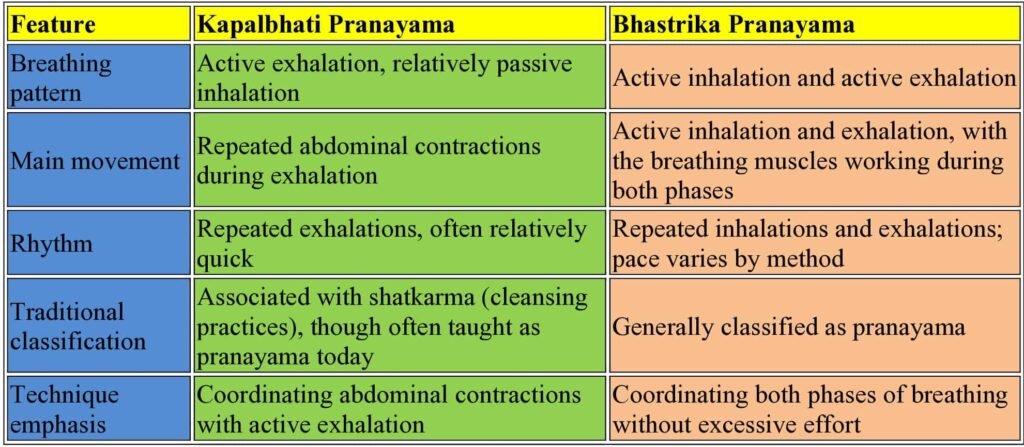
The comparison describes commonly taught forms; techniques and classifications can differ across yoga traditions.
Which Practice Should You Choose?
The benefits of each practice depend on the practitioner’s needs, experience and circumstances. The appropriate choice depends on your experience, health, the method being taught and the purpose of your yoga routine.
When starting Kapalbhati, learn to breathe out with a deliberate abdominal movement while keeping the rest of the body relaxed. Bhastrika requires attention to both the inward and outward phases of breathing. Because both practices can be vigorous, learn them from a qualified yoga teacher and seek medical advice when a health condition may affect their suitability.
Learn the distinct breathing pattern of each technique instead of trying to turn one into the other by breathing faster or more forcefully. For a detailed explanation of Bhastrika, see our guide to Bhastrika Pranayama.
How to Include Kapalbhati in a Yoga Routine
Kapalbhati can be included in a structured yoga session alongside postures, other breathing practices and meditation. Some yoga protocols place it after preparatory movements and asanas, followed by other pranayama techniques and meditation. The precise sequence varies according to the tradition and the practitioner’s needs.
Allow your breathing to return to its natural rhythm before moving on to another breathing exercise or meditation. There is no need to add more forceful breathing exercises to make your yoga session feel more effective; choose practices that suit your experience and comfort.
A balanced routine should leave room for relaxation and quiet observation, not just active practice. If you are new to Kapalbhati or have a health condition that may affect its suitability, seek appropriate guidance before including it in your routine.
What Does Scientific Research Say About Kapalbhati?
A systematic review published in 2025 examined randomised controlled trials investigating Kapalbhati’s possible effects on respiratory function and cognitive performance. It identified four eligible trials published between 2014 and 2024. Although some findings were promising, the small evidence base limits how confidently the results can be generalised to different populations or used to establish lasting health benefits.
What Are the Limitations of the Research?
Studies examining Kapalbhati have not all used the same procedures or assessed the same outcomes, which makes their findings difficult to compare directly. Research involving younger participants may also tell us little about how people in other age groups respond to the practice.
Scientists are still investigating the processes that might explain changes in breathing or brain activity during Kapalbhati. These explanations should be treated as possibilities until further evidence supports them.
Although traditional yoga assigns Kapalbhati a cleansing role, this does not establish that it removes toxins from the body or can be used to treat illness. Such claims need direct and reliable scientific evidence.
What Can We Conclude?
Kapalbhati has attracted scientific interest, but the evidence does not yet provide a complete picture of its effects. Future studies need to examine its outcomes and possible risks more thoroughly. Until stronger evidence becomes available, it is sensible to practise Kapalbhati within its traditional yogic context and not rely on it to prevent, manage or cure a medical condition.
Frequently Asked Questions About Kapalbhati Pranayama
1. What happens during Kapalbhati Pranayama?
In Kapalbhati, the practitioner draws the abdomen inward to produce short, deliberate breaths out through the nose. The next inhalation is allowed to happen without the same forceful effort. In traditional Hatha Yoga, the practice is also discussed in connection with cleansing techniques.
2. What benefits might Kapalbhati offer?
Researchers have examined whether Kapalbhati practice may influence breathing-related measures and certain aspects of mental performance. The findings so far are not conclusive enough to guarantee particular results for every practitioner.
3. How does Kapalbhati differ from Bhastrika?
The main distinction lies in the effort used during each part of the breath. Kapalbhati emphasises a forceful outward breath followed by a comparatively unforced inhalation. In Bhastrika, both breathing in and breathing out are performed actively.
4. Can Kapalbhati help reduce abdominal fat?
Practising Kapalbhati alone has not been established as an effective way to lose fat specifically around the abdomen. Changes in body fat generally depend on a broader combination of dietary habits, physical activity and other individual factors.
5. Is Kapalbhati suitable for everyone?
No. Pregnancy, uncontrolled blood pressure, heart conditions, hernia and recovery from surgery are among the circumstances that may make this practice unsuitable without medical guidance. Anyone with an existing health concern should consult an appropriate healthcare professional before attempting forceful breathing exercises.
6. What should you do if you become dizzy while practising Kapalbhati?
End the practice as soon as dizziness begins and breathe normally while sitting or resting somewhere safe. Do not restart the exercise until you have recovered fully. If the dizziness persists, happens repeatedly or occurs with other concerning symptoms, seek medical attention.
Conclusion
Kapalbhati Pranayama combines rhythmic abdominal movement with active exhalation and has a longstanding place in yogic practice. Understanding its traditional context, learning the correct technique and respecting individual limitations are essential to practising it responsibly. Rather than pursuing speed or a fixed number of strokes, focus on control, consistency and comfort. With appropriate guidance, Kapalbhati can be considered one element of a balanced yoga routine.
Disclaimer
This article explains Kapalbhati Pranayama for general learning and does not replace guidance tailored to an individual’s health needs. People’s ability to practise Kapalbhati comfortably varies according to their health, physical condition and experience with pranayama. People with existing health conditions, those who are pregnant, or anyone unsure whether this practice is appropriate for them should consult a qualified healthcare professional before attempting it. Beginners are advised to learn the technique from an experienced yoga teacher and avoid forceful breathing, excessive speed or prolonged practice beyond their comfort level. If you develop light-headedness, pain, breathing difficulty or any unexpected physical reaction during the exercise, end the session and allow your breathing to return to normal. Practise with awareness, respect your individual limitations and do not treat the potential benefits discussed here as guaranteed medical outcomes.
About the AuthorYogacharya Dhruv Ji is a Yoga Teacher and practitioner committed to preserving and sharing the authentic wisdom of traditional Yoga and Kriya Yoga. Dhruv Ji received his training in Yoga and Kriya Yoga under the esteemed guidance of Swami Birajananda Giri Maharaj, a revered spiritual teacher known for his deep understanding of yogic philosophy, meditation, and the ancient practices of self-realization. |