
Virabhadrasana (Warrior Pose): Understanding the Three Warrior Poses
Virabhadrasana, commonly known as Warrior Pose, is a family of standing yoga postures that develops strength, stability, balance, and concentration. The three commonly practised forms—Warrior I, Warrior II, and Warrior III—place different demands on the body, from grounded leg strength to single-leg balance. Although the postures resemble a warrior’s stance, their practice is not simply about physical strength. With steady breathing and focused attention, Virabhadrasana can also become a practice of steadiness, awareness, and control.
The name Virabhadrasana comes from Virabhadra, the powerful warrior described in Hindu mythology as being created by Lord Shiva. In yoga tradition, the image of the warrior can also be understood symbolically—as representing courage, steadiness, discipline, and the ability to remain focused when facing challenges.
What Is Virabhadrasana?
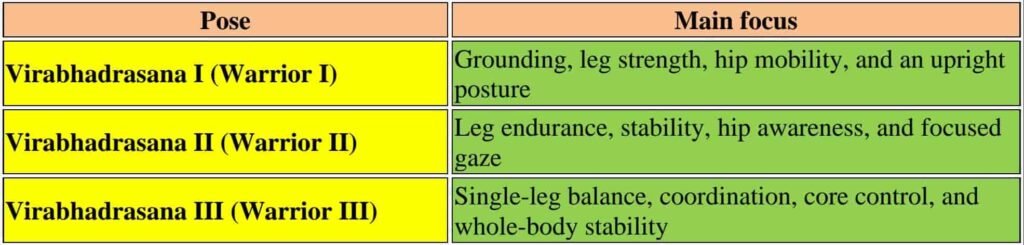
Virabhadrasana includes three commonly practised forms: Warrior I, Warrior II, and Warrior III. Warrior I emphasizes grounding and an upright stance, Warrior II develops stability in a wide stance, and Warrior III introduces a stronger balance challenge. Beginners can start with Warrior I or Warrior II before progressing to Warrior III.
In this guide, “Virabhadrasana” is used as a general term for the Warrior series, while Virabhadrasana I, II, and III refer to the individual postures.
Meaning and Story Behind Virabhadrasana
The word Virabhadrasana is derived from Sanskrit:
- Vira : warrior or hero
- Bhadra : auspicious or friend
- Asana : pose or posture
The name therefore refers to the posture associated with Virabhadra, the warrior figure of Hindu tradition. The Warrior Pose is named after Virabhadra, a powerful warrior described in Hindu mythology as being created by Lord Shiva. According to one well-known account, Virabhadra emerged from Shiva’s hair after the death of his wife, Goddess Sati.
The story gives the asana its warrior imagery, while the practice can be approached as an opportunity to cultivate steadiness, determination, and focused awareness.
Three Types of Virabhadrasana
Virabhadrasana is commonly practised in three main forms: Warrior I, Warrior II, and Warrior III. Although they share the same name and warrior theme, each posture has a different physical focus. Research on the biomechanics of standing yoga poses has also found differences in muscle activation and joint loading among Warrior I, II, and III.
- Virabhadrasana I (Warrior I)
A standing lunge in which the arms reach upward. The posture emphasizes grounding through the feet, strength in the legs, stability, and an upright spine. It is generally a good starting point for beginners learning the Warrior series. - Virabhadrasana II (Warrior II)
A wide-legged standing posture with the arms extending in opposite directions. It develops awareness of the legs and hips while asking the practitioner to maintain a steady, balanced stance and focused gaze. - Virabhadrasana III (Warrior III)
A balancing posture in which the body extends forward while one leg lifts behind. It requires greater control, coordination, and single-leg balance, so beginners may practise it with support before attempting the full posture.
Benefits of Virabhadrasana (Warrior Pose)
Virabhadrasana engages the legs, hips, core, shoulders, and postural muscles while requiring balance, coordination, steady breathing, and focused attention. The specific demands vary between Warrior I, II, and III.
Physical Benefits
- Strengthens the legs and glutes: The standing and lunging positions engage the thighs, hips, calves, and glutes while building muscular strength and endurance.
- Supports hip and chest mobility: The different Warrior variations move the hips, legs, shoulders, and chest through a range of controlled positions.
- Strengthens the arms and shoulders: Holding the arms actively can engage the shoulders and upper-body muscles, particularly in Warrior I and II.
- Improves core stability: Maintaining an upright or balanced position requires controlled engagement of the muscles around the trunk.
- Supports balance and coordination: Warrior III especially challenges single-leg balance, coordination, and control.
Yogic Benefits
- Supports focus and concentration: Maintaining alignment, balance, and steady breathing encourages present-moment awareness.
- May promote relaxation: Slow, controlled breathing during yoga practice may help create a calmer state of mind.
- Encourages steadiness and confidence: Progressing through the Warrior poses can develop a greater sense of physical control and awareness.
Muscles Worked in Virabhadrasana
The muscles involved vary according to the Warrior variation and the practitioner’s alignment. Warrior III places greater demands on single-leg balance and lower-leg and hamstring muscle activity.
The main muscle groups engaged can include:
Quadriceps: Help stabilize and control the bent front leg, particularly in Warrior I and Warrior II.
Glutes: Contribute to hip stability and lower-body strength.
Hamstrings: Assist with hip and leg stability, especially during Warrior III.
Calves and feet: Help maintain grounding and balance.
Core muscles: Support the trunk and help maintain postural control, particularly in Warrior III.
Shoulders and upper back: Remain active when the arms are extended or raised in Warrior I and Warrior II.
Hip and pelvic stabilizers: Help control the position of the hips and legs during the different Warrior variations.
How to Prepare for Virabhadrasana
A few simple movements can prepare the body for the Warrior series:
- Gentle standing or walking warm-up to bring awareness to the legs and feet.
- Tadasana to establish standing alignment.
- Gentle hip and ankle movements before deeper lunges.
- A few controlled squats or shallow lunges to prepare the legs.
- Practise Warrior I or II at a comfortable depth before progressing to Warrior III.
How to Do Virabhadrasana (Step-by-Step Instructions)
Virabhadrasana I (Warrior I)
Stand in Tadasana (Mountain Pose) with your feet comfortably together.
Step your left foot back about 3–4 feet, adjusting the distance to create a stable and comfortable stance. Turn the back foot slightly outward while keeping the heel grounded.
Bend the front knee comfortably, keeping it tracking in the same direction as the front toes. Avoid allowing the knee to collapse inward.
Gently turn the pelvis toward the front as comfortably as your stance permits. Do not force the hips into position. Keep both feet grounded and maintain length through the spine.
Inhale and raise your arms upward, with the palms facing each other. Keep the shoulders relaxed while maintaining active arms.
Stay in the posture for several comfortable breaths. Beginners may start with 3–5 comfortable breaths and gradually increase the duration as the posture becomes familiar.
Exhale, lower your arms, carefully return to Tadasana. Repeat on the other side.
Virabhadrasana II (Warrior II)
From Tadasana, step your left foot back about 3–4 feet, adjusting the distance according to your comfort and stability.
Turn the back foot outward while keeping the heel grounded and the leg active.
Bend the front knee comfortably, keeping it tracking in the same direction as the front toes. As your practice develops, you may gradually deepen the bend without compromising your breathing or stability.
Extend your arms out to the sides, parallel to the floor, with the palms facing down.
Keep your torso upright and gaze softly over the front hand.
Continue breathing steadily for several comfortable breaths. Straighten the front leg, return to Tadasana, and repeat on the other side.
Virabhadrasana III (Warrior III)
From Warrior I, shift your weight gradually onto the front leg.
Slowly lean your torso forward while lifting the back leg behind you.
Keep the hips as level as comfortably possible and do not force the lifted leg to reach parallel to the ground.
Extend the arms forward if comfortable, or keep your hands on your hips while developing balance.
Keep your gaze steady and your breathing natural. Stay for several comfortable breaths.
Slowly lower the lifted leg, return to standing, and repeat on the other side.
How to Practise Virabhadrasana with Better Alignment
Keep the front knee tracking in the same direction as the front toes, and avoid letting it collapse inward.
Engage the core gently to support the spine and avoid forcing an excessive arch in the lower back.
Let the shoulders soften downward while keeping the arms active throughout the posture.
In Warrior I, allow the pelvis to turn toward the front as comfortably as your stance permits.
In Warrior II, keep the pelvis open toward the long side of the mat without forcing the hips into position.
Keep the breath steady and natural rather than holding the breath while maintaining the posture.
Breathing During Virabhadrasana
Coordinate the breath with the movement rather than holding it.
- Inhale as you lengthen the spine or raise the arms.
- Continue with slow, natural breathing while holding the posture.
- Exhale as you lower the arms, release the posture, or transition to the next position.
- If your breathing becomes strained, reduce the intensity or come out of the pose.
There is no need to force deep breathing. The aim is to maintain comfortable, controlled breathing throughout the practice.
Common Mistakes While Practising Virabhadrasana
1. Letting the Front Knee Collapse Inward
Mistake: The front knee moves toward the inner side of the foot.
Correction: Keep the knee tracking in the same direction as the front toes. If this becomes difficult, reduce the depth of the bend and focus on maintaining control.
2. Forcing the Hips Into Position
Mistake: Trying to turn the pelvis completely forward in Warrior I.
Correction: Allow the pelvis to turn toward the front only as far as your stance comfortably permits. Avoid forcing the hips into alignment.
3. Overarching the Lower Back
Mistake: Lifting the chest by creating an excessive curve in the lower back.
Correction: Maintain length through the spine and gently engage the abdominal area rather than pushing the pelvis forward or forcing the chest upward.
4. Tensing the Shoulders
Mistake: Allowing the shoulders to rise toward the ears, particularly when the arms are lifted.
Correction: Keep the arms active while allowing the shoulders to remain relaxed.
5. Holding the Breath
Mistake: Becoming so focused on maintaining the posture that the breath becomes restricted or stops.
Correction: Return to comfortable breathing and reduce the intensity of the posture if necessary. The breath should remain steady and natural.
6. Trying to Reach the Full Pose Too Quickly
Mistake: Forcing a deep lunge or attempting to make the body completely horizontal in Warrior III before developing sufficient stability.
Correction: Reduce the depth of the posture, adjust your stance, or use appropriate support while you gradually develop control and balance.
Modifications and Variations of Virabhadrasana
Different modifications can make the Warrior poses more accessible while allowing practitioners to work within their current level of strength, mobility, and balance.
Reverse Warrior
From Warrior II, keep the front knee comfortably bent and lean the torso slightly back while raising the front arm overhead. Avoid collapsing into the lower back.
Humble Warrior
From Warrior I, bring the hands behind the back, interlace the fingers if comfortable, and fold the torso forward inside the front leg. Practise only within a comfortable range.
Warrior II Against a Wall
Use a wall for additional stability while practising Warrior II. Maintain the normal position without leaning heavily into the wall.
Warrior II Using a Chair
Place a sturdy chair beneath the front thigh for additional support while holding Warrior II. This can reduce the demand on the front leg and make the posture more accessible.
Hands-on-Hips Modification
For Warrior I or Warrior III, keep the hands on the hips instead of extending the arms overhead or forward. This can make it easier to concentrate on lower-body alignment and balance.
Supported Warrior III
Practise Warrior III with one or both hands supported by a wall or another stable surface. Use the support to develop balance and control before attempting the unsupported posture.
Shorter Stance
Beginners or people who find a long stance uncomfortable can shorten the distance between the feet. Choose a position that allows you to maintain stability without forcing the front knee or hips.
Dynamic Warrior Flow
Move slowly between Warrior I, Warrior II, and Warrior III when you have sufficient control and experience. Keep the transitions smooth rather than rushing between positions.
Precautions and Contraindications
Virabhadrasana should be practised within a comfortable range and modified according to individual needs.
Extra care may be needed if you have:
- A significant knee, hip, shoulder, or spinal injury.
- Severe or persistent pain that may be aggravated by the posture.
- A recent surgery or injury.
- High blood pressure or a cardiovascular condition, particularly when practising variations that involve raising the arms overhead; ask an appropriate healthcare professional whether these variations are suitable for you.
- Vertigo or significant balance problems, especially before attempting Warrior III.
- Pregnancy, when modifications may be necessary depending on the stage of pregnancy and individual circumstances.
Do not force the legs, hips, or spine into a position that causes pain. If you experience sharp pain, dizziness, unusual shortness of breath, or significant discomfort, come out of the posture and seek appropriate professional advice.
Research on yoga safety also supports adapting practice to individual circumstances and paying attention to potential adverse effects.
Can Pregnant Women Practise Virabhadrasana?
Some pregnant women may be able to practise modified Warrior poses, but the appropriate variation depends on the stage of pregnancy, individual health, balance, and previous yoga experience.
When cleared for practice by an appropriate healthcare professional:
- Use a wider stance for greater stability.
- Avoid forcing deep lunges.
- Avoid movements that cause discomfort or excessive abdominal pressure.
- Use a wall or chair for additional support when needed.
- Modify or avoid balance-intensive poses such as Warrior III if balance becomes difficult.
Pregnancy-specific yoga should be adapted to the individual’s circumstances rather than following a one-size-fits-all approach.
Beginner Progression for Virabhadrasana
If you are new to the Warrior series, progress gradually rather than trying to master all three poses at once.
A practical progression is:
Warrior I → Warrior II → Supported Warrior III → Warrior III
Start by developing a stable stance and comfortable breathing in Warrior I. Move to Warrior II when you can maintain the front-knee position and an upright torso with control. Once you are comfortable with these standing poses, practise Warrior III using a wall or another suitable support before attempting the unsupported version.
The goal is not to reach the deepest version of the pose. Consistent control, comfortable breathing, and stable alignment are more important.
Frequently Asked Questions (FAQs)
Can I practise Virabhadrasana daily?
Yes, many people can include Warrior poses regularly in a yoga routine. However, frequency and intensity should be adjusted according to your fitness level, recovery, and individual needs.
Is Virabhadrasana suitable for beginners?
Yes. Warrior I and Warrior II can be suitable starting points for beginners when practised with appropriate alignment and modifications. Warrior III requires greater balance and can be introduced gradually with support.
Does Warrior Pose help with weight loss?
Virabhadrasana can contribute to physical activity by engaging large muscle groups and increasing muscular effort. However, one yoga pose alone should not be considered a weight-loss method. Overall physical activity, nutrition, sleep, and other lifestyle factors play a larger role.
How long should I hold Virabhadrasana?
Beginners can start with around 3–5 comfortable breaths per side and gradually increase the duration as they become more comfortable. The appropriate duration depends on the variation and individual ability.
Which Virabhadrasana is best for beginners?
Warrior I and Warrior II are generally easier starting points than Warrior III because they do not require the same level of single-leg balance. Beginners can gradually progress to Warrior III with suitable support.
Which muscles does Virabhadrasana work?
Virabhadrasana engages the legs, glutes, core, shoulders, and other postural muscles. The emphasis varies between Warrior I, II, and III, with Warrior III placing greater demands on the muscles involved in single-leg balance and posterior-chain control.
Can I use a wall or chair while practising Warrior Pose?
Yes. A wall or sturdy chair can provide additional support during modified versions of Warrior II or Warrior III and can help beginners focus on alignment and stability.
Can I practise Virabhadrasana if I have knee pain?
If you have knee pain, avoid forcing the knee into a deep bend or continuing a posture that causes pain. A shorter stance, reduced depth, or appropriate support may make the practice more comfortable, but persistent or significant knee pain should be assessed by an appropriate healthcare professional.
Final Summary
Virabhadrasana, or Warrior Pose, is a family of standing yoga poses that can develop lower-body strength, stability, balance, mobility, and concentration. Warrior I emphasizes grounding and an upright stance, Warrior II develops stability in a wide-legged position, and Warrior III introduces a greater balance challenge.
Practising Virabhadrasana with comfortable breathing, controlled movement, and appropriate alignment is more important than forcing the body into a deeper position. Beginners can start with Warrior I and II and gradually progress to supported Warrior III as their stability and confidence improve.
About the AuthorYogacharya Dhruv Ji is a Yoga Teacher and practitioner committed to preserving and sharing the authentic wisdom of traditional Yoga and Kriya Yoga. Dhruv Ji received his training in Yoga and Kriya Yoga under the esteemed guidance of Swami Birajananda Giri Maharaj, a revered spiritual teacher known for his deep understanding of yogic philosophy, meditation, and the ancient practices of self-realization. |
Disclaimer
The information provided in this article is for general educational purposes and is not a substitute for medical advice, diagnosis, or treatment. Yoga practices may need to be modified according to an individual’s health, physical condition, experience, and circumstances.
If you have an existing health condition, are recovering from an injury or surgery, are pregnant, or are unsure whether a particular yoga posture is appropriate for you, consult a qualified healthcare professional or experienced yoga teacher before practising.
Practise within your comfortable range and do not force any posture. If you experience pain, dizziness, breathing difficulty, or other unusual symptoms, stop the practice and seek appropriate professional advice.