
6 Yoga Poses for Women Seeking a Healthier, Stronger Belly

Belly fat can be influenced by many factors, including diet, physical activity, sleep, stress, age, and changes in the body over time. While yoga cannot selectively remove fat from one particular area of the body, regular yoga practice can support a stronger core, better posture, flexibility, physical activity, and a more balanced lifestyle.
For women who wish to work on their abdominal strength and overall fitness through yoga, regular practice can become a steady part of a balanced daily routine.
The goal is not to look for an overnight solution to reduce belly fat, but to develop healthy habits that support the body over time.
Can Yoga Help Reduce Belly Fat?
Yoga poses that engage the abdominal and supporting muscles can help strengthen the core and improve body awareness. When combined with a balanced diet, adequate sleep, regular movement, mindful breathing, and consistency, yoga can support overall health and healthy weight management.
Remember that meaningful changes in body fat take time. Rather than focusing only on the appearance of the belly, focus on building a healthier and more balanced lifestyle through regular yoga practice.
Which Yoga Poses Can Help Strengthen the Abdominal Area?
Yoga does not selectively remove stored fat from a particular part of the body, but certain asanas can engage and strengthen the abdominal and supporting muscles. Regular practice can also support better posture, flexibility, body awareness, and a more active lifestyle.
When practised consistently, these asanas can become part of a broader routine to reduce belly fat and support overall fitness.
6 Yoga Poses for a Stronger Core
- Setu Bandhasana (Bridge Pose)
- Bhujangasana (Cobra Pose)
- Naukasana (Boat Pose)
- Dhanurasana (Bow Pose)
- Paschimottanasana
- Ardha Halasana
1. How to Perform Setu Bandhasana (Bridge Pose)
Setu Bandhasana is a gentle backbend that engages the glutes, hips, thighs, and supporting core muscles while encouraging awareness of spinal and pelvic alignment.
How to practise:
- Lie on your back on a yoga mat with your knees bent and your feet flat on the floor, hip-width apart.
- Keep your arms beside your body, with your palms facing downward.
- Keep your feet parallel and position them comfortably close to your pelvis.
- Inhale and slowly lift your hips and lower back away from the floor.
- Keep your thighs parallel and avoid allowing the knees to fall outward.
- Gently draw your chest towards your chin without forcing the neck.
- Keep breathing slowly and comfortably while holding the pose.
- To release, exhale and slowly lower your back and hips to the mat.
For beginners: Lift the hips only as high as feels comfortable and focus on keeping the knees aligned.
Practise for about 20–30 seconds at first, gradually increasing the duration as your practice develops.
2. How to Perform Bhujangasana (Cobra Pose)
Bhujangasana, or Cobra Pose, is a gentle backbend that strengthens the back and engages the abdominal region while improving spinal mobility.
How to practise:
- Lie on your stomach with your legs extended and the tops of your feet resting on the mat.
- Place your palms beside your chest, with your elbows close to your body.
- Inhale and gently lift your head, chest, and upper abdomen using your back muscles while keeping your pelvis and legs grounded.
- Keep your shoulders relaxed and avoid pressing the body upward beyond what feels comfortable.
- Look forward or slightly upward without compressing the neck.
- Breathe slowly and comfortably while holding the pose.
- Exhale and gently lower your chest and head back to the mat.
For beginners: Keep the lift low and focus on lengthening the spine rather than trying to straighten the arms.
Practise for about 15–30 seconds, or for a few comfortable breaths, and repeat 2–3 times according to your ability.
For a more detailed guide, see Bhujangasana (Cobra Pose): Benefits, Step-by-Step Guide, Precautions & Variations.
3. How to Perform Naukasana (Boat Pose)
Naukasana, or Boat Pose, is a balancing asana that engages the abdominal and supporting muscles while also requiring concentration and stability.
How to practise:
- Sit on your yoga mat with your legs extended in front of you and your spine upright.
- Bend your knees and place your feet on the mat.
- Inhale and gently lean your upper body slightly backward while keeping your spine long.
- Lift your feet from the floor and gradually extend your legs as far as is comfortable.
- Extend your arms forward, keeping them roughly parallel to the floor.
- Engage your core and maintain a steady, comfortable breath.
- Hold the posture for 5–10 breaths.
- Exhale and slowly lower your feet and return to a comfortable seated position.
For beginners: Keep your knees bent rather than straightening the legs completely. You can also keep the toes lightly touching the floor until you develop better balance and core strength.
Do not strain to hold the pose. Practise for a few comfortable breaths and gradually increase the duration as your practice develops.
4. How to Perform Dhanurasana (Bow Pose)
Dhanurasana, or Bow Pose, is a deeper backbend that engages the back, hips, thighs, and abdominal region while improving flexibility and body awareness.
How to practise:
- Lie on your stomach with your legs extended and your arms resting beside your body.
- Bend your knees and bring your heels towards your hips.
- Reach your arms backward and hold your ankles with your hands.
- Inhale and gently lift your chest and thighs away from the floor, allowing your body to form the shape of a bow.
- Keep your head and neck comfortable and look forward without straining.
- Breathe slowly and steadily while maintaining the posture.
- Hold the pose for a few comfortable breaths.
- Exhale and slowly release your ankles and lower your chest and legs back to the mat.
For beginners: Do not try to lift the chest and thighs as high as possible. A smaller lift is sufficient while you become familiar with the posture.
Practise only within your comfortable range of movement. Avoid forcing the backbend or holding your breath.
5. How to Perform Paschimottanasana (Seated Forward Bend)
Paschimottanasana is a seated forward bend that stretches the back of the body, including the spine, hamstrings, and hips. It can also encourage a calm and inward-focused quality during yoga practice.
How to practise:
- Sit on your mat with both legs extended straight in front of you and your feet together or comfortably apart.
- Sit upright and lengthen your spine, keeping your shoulders relaxed.
- Inhale and raise your arms overhead.
- Exhale and gently fold forward from the hips, keeping the spine as long as possible.
- Reach towards your feet, ankles, or shins—whichever you can comfortably reach.
- Keep your knees gently extended without forcing them down.
- Breathe slowly and comfortably while holding the posture.
- To release, inhale and slowly return to an upright seated position.
For beginners: Bend your knees slightly if your hamstrings feel tight. You do not need to touch your toes or bring your forehead to your thighs. The aim is a comfortable forward fold, not maximum stretching.
Hold the posture for about 20–30 seconds or a few comfortable breaths. Never bounce or force the body into the stretch.
6. How to Perform Ardha Halasana (Half Plough Pose)
Ardha Halasana is a simple leg-raising asana that engages the abdominal and supporting muscles while developing control and stability. It can be a useful addition to a beginner-friendly yoga practice.
How to practise:
- Begin by resting comfortably on your back, extending both legs along the mat and placing your arms alongside your torso.
- Turn your palms towards the floor and allow your shoulders to soften away from your ears.
- Inhale and slowly raise both legs, keeping them as straight as is comfortable.
- Continue lifting until your legs are approximately at a right angle to the floor, if this feels comfortable.
- Keep your lower back stable and avoid excessive arching or discomfort. Do not force it against the floor.
- Breathe slowly and comfortably while holding the position.
- Exhale and slowly lower both legs towards the floor with control.
- Rest briefly before repeating.
For beginners: Raise the legs only as high as you can while maintaining control. You may also practise one leg at a time if lifting both legs feels difficult.
Hold for about 15–30 seconds or a few comfortable breaths, then lower the legs slowly. You may perform two or three rounds, depending on what feels comfortable for you. Avoid holding your breath or allowing the lower back to strain.
How to Structure a 20–30 Minute Yoga Practice
Those new to yoga can begin with shorter holds and fewer repetitions, gradually extending the practice as their comfort and familiarity with the poses improve. A simple, consistent sequence is often easier to maintain.
Try the following routine:
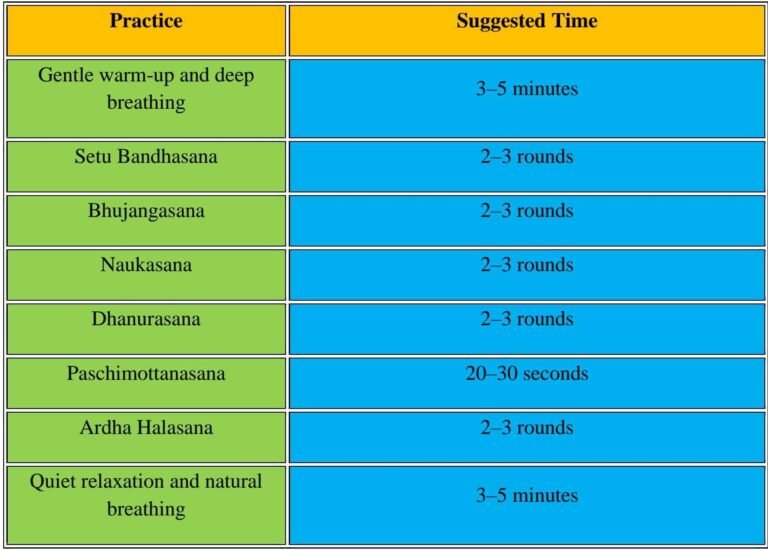
Move slowly between the asanas and rest whenever you need to. Beginners can start with shorter holds and fewer repetitions and gradually increase the duration as their practice becomes more comfortable.
For better overall results, combine this yoga routine with regular walking or other enjoyable physical activity, balanced meals, adequate sleep, and mindful breathing. The aim is to build a sustainable yogic routine rather than depend on a quick fix for belly fat.
Why Good Posture Matters
Posture does not directly reduce belly fat, but maintaining a balanced posture can improve body awareness and help you use the core muscles more naturally during everyday activities and yoga practice.
For those whose daily routine involves extended periods of sitting, whether at a desk or elsewhere:
- Sit with your spine comfortably upright rather than constantly slouching.
- Keep your shoulders relaxed instead of rounding them forward.
- Keep both feet supported when possible.
- Avoid staying in the same position for long periods; get up and move regularly.
- During yoga, focus on alignment and steady breathing rather than trying to pull the stomach in forcefully.
Good posture is therefore best viewed as part of a healthy daily routine—not as a substitute for yoga practice, physical activity, balanced nutrition, or adequate rest.
Everyday Habits That Complement Your Yoga Practice
Instead of following rigid rules, focus on a few sustainable habits that support your yoga practice and overall well-being.
- Eat mindfully: Choose balanced, mostly whole-food meals and avoid eating beyond comfortable fullness.
- Make water your regular drink: Sip water throughout the day and adjust how much you drink based on your activity, surroundings, and how your body feels.
- Practise consistently: Aim for regular yoga and include other forms of movement, such as walking, throughout the week.
- Sleep well: Give your body enough time to rest and recover.
- Manage stress: Combine yoga, mindful breathing, meditation, or quiet time with your daily routine.
Consistency matters more than following a fixed number of meals, litres of water, or workouts.
These simple habits can support your ongoing efforts to reduce belly fat while maintaining a balanced yogic lifestyle.
Ideal Yogic Diet for a Balanced Routine
A yogic approach to food emphasizes simplicity, freshness, moderation, and mindful eating. The purpose is not to follow a restrictive diet, but to develop a healthier relationship with food.
For everyday meals, include a variety of:
- Fresh vegetables and seasonal fruits
- Grain-based staples in their less-refined forms, such as oats, brown rice, and whole-wheat preparations
- Lentils, beans, and other pulses
- Nuts and seeds in moderate amounts
- Curd or yogurt, along with other suitable protein sources
- Freshly prepared, home-cooked meals when possible
Try to limit frequent consumption of highly processed foods, sugary drinks, deep-fried foods, and foods that are eaten mainly out of habit rather than hunger.
Eat slowly, pay attention to your body’s signals of hunger and fullness, and avoid making extreme dietary restrictions in the hope of losing belly fat quickly.
A balanced yogic diet works best when combined with regular asana practice, adequate sleep, daily movement, and a calm, consistent lifestyle.
What Foods Can Contribute to Belly Fat?
No single food automatically causes belly fat. However, regularly consuming foods and drinks that are high in added sugar, refined carbohydrates, unhealthy fats, or calories can make healthy weight management more difficult.
It is helpful to limit frequent consumption of:
- Sugary drinks — soft drinks, sweetened beverages, and other drinks high in added sugar can add substantial calories without providing much satiety.
- Highly refined bakery foods — cakes, pastries, biscuits, and similar foods are often high in refined carbohydrates, added sugar, and fat.
- Deep-fried foods — frequent consumption can add a large amount of calories to the diet.
- Highly processed snacks — chips, packaged sweets, and similar snacks can be easy to overeat.
- Alcohol — alcoholic drinks can add calories and may also encourage overeating in some situations.
The goal is not to completely fear or eliminate individual foods. Instead, build most meals around nourishing foods and keep highly processed, sugary, and fried foods as occasional choices.
Choosing Foods That Fit a Yogic Approach to Healthy Eating
Just as no single food causes belly fat, no individual food can selectively burn fat from the abdomen. However, choosing nutritious, filling foods can make it easier to maintain a balanced diet and support healthy weight management.
Consider including:
- Vegetables: Green vegetables and other seasonal vegetables provide fibre and important nutrients.
- Fruits: Apples, berries, papaya, and other whole fruits can be part of a balanced diet.
- Nuts and seeds: These provide healthy fats and can be included in moderate portions.
- Pulses and other protein-rich foods: Lentils, beans, and similar foods can help make meals more satisfying.
- Curd or yogurt: Unsweetened curd or yogurt can be included according to individual dietary preferences and tolerance.
- Whole grains: Oats, brown rice, and other minimally processed whole grains can provide fibre and sustained energy.
Instead of looking for a food that “burns belly fat,” focus on a varied, balanced diet that you can follow consistently alongside yoga and regular physical activity.
Adding Other Forms of Movement to Your Yoga Practice
Yes. Yoga can be combined with other forms of movement to create a more active and sustainable routine.
Along with regular yoga practice, you can include activities such as:
- Walking: A simple way to stay active throughout the day.
- Cycling: Useful for adding more cardiovascular movement to your routine.
- Swimming: Provides whole-body movement with relatively low impact on the joints.
- Strength training: Helps build and maintain muscle and can complement a yoga practice.
- Everyday movement: Taking short walking breaks, using stairs, or spending less time sitting can also help you stay active.
There is no need to include every type of activity in your routine. Choose forms of movement that you enjoy and can practise consistently.
Yoga can remain the foundation of your routine, while walking, strength training, or another enjoyable activity can complement it. The overall goal is to build an active lifestyle rather than depend on one exercise or one yoga pose to reduce belly fat.
What Can You Realistically Expect Within a Week?
You cannot meaningfully lose body fat from the belly overnight or within just a few days. Sustainable changes in body fat generally require consistent habits over time.
You may notice your waist appearing a little less distended within a few days when bloating or digestive discomfort settles, but such a change should not be mistaken for a reduction in stored body fat.
If you want to make a healthy start over the next seven days, focus on simple habits:
- Practise the yoga sequence regularly.
- Walk or stay physically active each day.
- Choose balanced, mostly whole-food meals.
- Reduce frequent consumption of sugary drinks, highly processed foods, and deep-fried foods.
- Drink water regularly according to your needs.
- Spend a few minutes practising slow, mindful breathing.
- Maintain a regular sleep schedule.
Avoid crash diets, extreme fasting, or unproven “fat-burning” drinks in the hope of getting quick results. A week can be a good starting point for building healthier habits, but meaningful changes in body composition take longer and depend on consistency.
Remember: a temporary reduction in abdominal bloating should not be confused with loss of belly fat.
Why Do Women Develop Belly Fat?
Belly fat can develop for many of the same reasons in women as in men, including changes in diet, physical activity, sleep, stress, age, and overall energy balance. However, women may also experience changes in body composition at different stages of life.
Factors that may influence where the body stores fat include:
- Age: Metabolism, muscle mass, and body composition can change with age.
- Hormonal changes: Hormonal changes during different stages of life can influence body composition and fat distribution.
- Pregnancy and the postpartum period: The body naturally undergoes significant changes during and after pregnancy.
- Menopause: Changes associated with menopause can affect how body fat is distributed.
- Stress and poor sleep: Ongoing stress and inadequate sleep can make healthy weight management more difficult.
These factors do not mean that belly fat is unavoidable or that one specific hormone is responsible. A balanced approach—including regular yoga, physical activity, nutritious food, adequate sleep, and stress management—can support overall health and healthy weight management.
If you are concerned about sudden or unexplained changes in body weight or body composition, it is better to discuss them with a qualified healthcare professional rather than assuming that yoga or diet alone is the cause or solution.
What Causes Lower Belly Fat in Women?
There is no separate type of body fat that can be removed simply by exercising the lower abdomen. The amount and distribution of abdominal fat are influenced by factors such as genetics, age, hormones, overall body composition, diet, physical activity, sleep, and lifestyle.
The lower abdomen may also appear more prominent because of factors that are not directly related to body fat, such as:
- Bloating or digestive discomfort
- Posture and pelvic alignment
- Reduced abdominal and core strength
- Changes in the body after pregnancy
- Natural shifts in body shape and fat distribution as we age
How Can You Reduce Lower Belly Fat?
The same principle applies to lower belly fat as to overall abdominal fat: you cannot selectively burn fat from one area.
Instead, focus on sustainable habits such as:
- Regular yoga and full-body movement
- Core-strengthening asanas such as Naukasana and Ardha Halasana
- A balanced, nutritious diet
- Adequate sleep
- Stress management
- Consistent daily activity
Core exercises can strengthen the abdominal muscles, but they do not selectively remove the fat covering those muscles. Patience and consistency are more useful than trying to find a quick lower-belly-fat solution.
What Is Visceral Belly Fat?
Subcutaneous fat is stored just beneath the skin and can usually be pinched, while visceral fat is stored deeper inside the abdomen around internal organs.
Excess visceral fat is associated with a higher risk of several health problems, which is why maintaining a healthy amount of body fat is important for overall well-being.
You cannot selectively remove visceral fat with one particular yoga pose. However, healthy lifestyle habits can support overall body composition and metabolic health.
These include:
- Regular yoga and other physical activity
- A balanced diet based mainly on nutritious, minimally processed foods
- Adequate and consistent sleep
- Stress management and mindful breathing
- Avoiding long periods of inactivity
The important point is that you do not need to identify or “target” visceral fat through a special exercise. A consistent, healthy lifestyle is the more sustainable approach.
If you have concerns about your weight, waist circumference, or metabolic health, a healthcare professional can help assess your individual risk.
Final Thoughts
Efforts to reduce belly fat are not about finding one special yoga pose, food, or quick remedy.
Body fat changes gradually, and sustainable results come from consistent habits rather than short-term efforts.
The six yoga poses in this article can be part of a regular practice to strengthen the core and supporting muscles, improve flexibility and body awareness, and encourage a more active lifestyle.
For women who want to support healthy weight management, combine your yoga practice with:
- Balanced and mindful eating
- Walking regularly or choosing other forms of movement that you enjoy
- Adequate sleep and rest
- Slow, mindful breathing and stress management
- Consistency over time
Most importantly, do not judge your progress only by the appearance of your abdomen. Building strength, mobility, better daily habits, and a calmer relationship with your body are also meaningful parts of a healthy yogic lifestyle.
Yoga works best when it becomes a regular part of life—not when it is used as a quick solution for belly fat.
Disclaimer
This article is intended for general educational and informational purposes only. Yoga and the lifestyle practices discussed here are not a substitute for medical advice, diagnosis, or treatment.
If you are pregnant, recently postpartum, have an existing medical condition, experience pain or dizziness during practice, or are unsure whether a particular yoga pose is suitable for you, consult a qualified healthcare professional or experienced yoga teacher before practising.
Practise within your comfortable range and never force a posture or hold your breath.
Frequently Asked Questions
1. Can yoga reduce belly fat?
Yoga can support healthy weight management by strengthening muscles, supporting regular physical activity, improving body awareness, and encouraging healthier lifestyle habits. However, yoga cannot selectively remove fat from the belly. Consistent practice combined with balanced nutrition, adequate sleep, and regular movement is a more sustainable approach.
2. Which yoga poses are best for reducing belly fat?
Setu Bandhasana, Bhujangasana, Naukasana, Dhanurasana, Paschimottanasana, and Ardha Halasana can be included in a regular yoga routine. These poses engage different muscles and can support strength, flexibility, and body awareness.
3. Can I lose belly fat in 7 days with yoga?
You should not expect significant belly-fat loss in just seven days. However, a week can be a useful starting point for establishing healthier habits such as regular yoga, walking, balanced eating, mindful breathing, and better sleep.
4. Can yoga reduce lower belly fat?
Yoga cannot selectively burn fat from the lower abdomen. Core-focused poses can strengthen the abdominal muscles, while regular physical activity and healthy lifestyle habits support overall body composition.
5. Can women reduce belly fat with yoga at home?
Yes. Many yoga poses can be practised at home with a mat and enough space to move safely. Beginners should start gradually, focus on proper alignment, and avoid forcing difficult postures.
6. How long should I practise yoga for belly-fat support?
The ideal practice time can vary from person to person. A consistent 20–30 minute practice can be a practical starting point, especially when combined with regular daily movement and other healthy habits.
7. Can yoga reduce belly fat after pregnancy?
The body changes considerably during and after pregnancy, so recovery and exercise needs vary from woman to woman. Gentle yoga may be appropriate for some women, but postpartum practice should be introduced gradually with guidance from a qualified healthcare professional or experienced prenatal/postnatal yoga teacher.
8. Does yoga burn belly fat overnight?
No. Yoga cannot remove belly fat overnight. A temporary change in abdominal appearance may sometimes be related to bloating or water balance rather than actual fat loss. Sustainable changes in body fat take time and consistency.
About the AuthorYogacharya Dhruv Ji is a Yoga Teacher and practitioner committed to preserving and sharing the authentic wisdom of traditional Yoga and Kriya Yoga. Dhruv Ji received his training in Yoga and Kriya Yoga under the esteemed guidance of Swami Birajananda Giri Maharaj, a revered spiritual teacher known for his deep understanding of yogic philosophy, meditation, and the ancient practices of self-realization. |